Paul Craig Roberts: Does Truth Have a Future in America?

Corruption, Government
Paul Craig Roberts
Paul Craig Roberts

Does Truth Have A Future In America? 

EXTRACT:

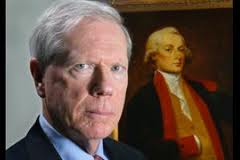
Hope or no hope, truth is becoming harder to come by. During the Vietnam war when Daniel Ellsberg leaked the Pentagon Papers, the New York Times published them. However, during the Iraq war when a National Security Agency whistleblower leaked the information to the New York Times that the Bush regime was spying on Americans without obtaining warrants from the FISA court as required by law, the New York Times told the White House and sat on the story for one full year until Bush was reelected. The newspaper might even have turned in the whistleblower. When the Guardian and other newspapers were threatened by the US government, they turned on Julian Assange and WikiLeaks, the suppliers of their headline stories.

To see the fate of whistleblowers, read Sibel Edmonds’ book, Classified Woman. Few people are willing to undergo such wear and tear in an effort to get truth to the American people.

There is another constraint on revealing truth. The human capital of people with inside knowledge is destroyed if they speak out. Position, contacts, invitations, income, and social life are all forfeited when an insider becomes a dissenter or a truth-teller.

Read full article with links.


Steven Aftergood: Congress to Public: Butt Out — We Don’t Need No Stinkin’ Intelligence Oversight or Public Accountability — ESPECIALLY on Drones and Assassinations

Corruption, Government
Steven Aftergood
Steven Aftergood

Intelligence Oversight Steps Back from Public Accountability

The move by Congress to renew the FISA Amendments Act for five more years without amendments came as a bitter disappointment to civil libertarians who believe that the Act emphasizes government surveillance authority at the expense of constitutional protections.  Amendments that were offered to provide more public information about the impacts of government surveillance on the privacy of American communications were rejected by the Senate on December 27 and 28.

Beyond the specifics of the surveillance law, the congressional action appears to reflect a reorientation of intelligence oversight away from public accountability.  The congressional intelligence committees once presented themselves as champions of disclosure. They no longer do so.

The first annual report of the Senate Select Committee on Intelligence, chaired by the late Sen. Daniel K. Inouye, stated in 1977 that “While most of the work of the Committee is, of necessity, conducted in secrecy, we believe that even secret activities must be as accountable to the public as possible.”

Click on Image to Enlarge

Of course, the question of how much accountability is “possible” has always been debatable.  But the basic principle of maximum possible disclosure was endorsed by subsequent Committee leaders including Sen. Barry Goldwater and Sen. Daniel P. Moynihan, who also wrote in 1981 that “intelligence activities should be as accountable as possible to the public.” In 1999, Senators Richard Shelby and Bob Kerrey affirmed on behalf of the Intelligence Committee that “as much information as possible about intelligence activities should be made available to the public.”

But in recent years the Committee’s periodic statement of principles has changed in a subtle but significant way.  In its most recent report in 2011, the Committee said it seeks “to provide as much information as possible about its intelligence oversight activities to the American public consistent with national security concerns.” Instead of disclosure and public accountability for intelligence activities, the Committee would promise only to reveal as much as possible about its oversight activities.

What makes this rhetorical shift noteworthy is that it seems to correspond in broad strokes to a shift in the character and activity of the Committee away from public accountability for intelligence.  Past Committees did not always press for public accountability (and were not often successful when they did), and the current Committee has not been completely indifferent to it, but there does seem to be a perceptible trend.

Continue reading “Steven Aftergood: Congress to Public: Butt Out — We Don't Need No Stinkin' Intelligence Oversight or Public Accountability — ESPECIALLY on Drones and Assassinations”

SchwartzReport: Schools Can Be Net Zero and Earn $2000 a Month with Excess Solar Power

02 Diplomacy, 05 Energy

schwartz reportNet Zero’s Net Worth: How Renewable Energy Is Rescuing Schools from Budget Cuts


Educators across the country are finding millions of dollars in savings through cheap and simple forms of renewable energy.

Erin L. McCoy

Yes! 5 November 2012

As the new Richardsville Elementary School rose from its foundations on a rural road north of Bowling Green, Ky., fourth-grader Colton Hendrick was watching closely.

He would climb to the top of the playground equipment across the street and watch construction crews hauling in bamboo flooring and solar panels.

“He wants to be an architect some day,” recalled Manesha Ford, elementary curriculum coordinator and leader of the school’s energy team. “He would sit and draw, draw all the different aspects.”

Richardsville Elementary actually earns $2,000 a month selling excess energy to the local power company.

But Richardsville Elementary would not only capture Hendrick’s imagination—it would come to inspire his classmates and school districts around the world. When Richardsville opened its doors in fall 2010, it was the first “net zero” school in the nation, meaning that the school produces more energy on-site than it uses in a year.

Solar tubes piping sunlight directly into classrooms eliminate much of the school’s demand for electric light, while a combination of geothermal and solar power cut down on the rest of the energy bill. Concrete floors treated with a soy-based stain don’t need buffing. The kitchen, which in most schools contributes to 20 percent of the energy bill, houses a combi-oven that cooks healthier meals and eliminates frying. This means an exhaust fan doesn’t pipe the school’s temperature-controlled air to the outdoors all day long. Meanwhile, “green screens” in the front hall track the school’s energy usage so kids can see the impact of turning off a light in real time.

These and other innovations make Richardsville better than net zero. It actually earns about $2,000 a month selling excess energy to the Tennessee Valley Authority.

Read full article.


Howard Rheingold: 24 Jan to 1 Mar Webinar on “Toward a Literacy of Cooperation: Introduction to Cooperation Studies”

03 Economy, 04 Education, 11 Society, Advanced Cyber/IO, Civil Society, Collective Intelligence, Cultural Intelligence, Gift Intelligence
Howard Rheingold
Howard Rheingold

We're convening “Toward a Literacy of Cooperation: Introduction to Cooperation Studies,”  January 24 -March 1.

A detailed syllabus: http://socialmediaclassroom.com/host/cooperation4

Cost: $300; $250 if you've taken a Rheingold U course before; $500 if your company reimburses you.

In addition to the monetary cost, a commitment to participate is required. The real magic is in learning the meta-skill of forming a learning community with strangers around the world in just a few weeks. To get the most out of this experience, you will need to devote 2-3 hours a week to reading, writing, mindmapping. It's the equivalent of a graduate-level seminar.

Read the syllabus carefully. Check the schedule. The reason I'm looking for learners three weeks early is that it works better if everyone gets a week or two head start on the readings. The community is limited to 35 learners. Although the syllabus is freely world-readable, the forums, blogs, and live-sessions are limited to committed participants. This will be the fourth time that this course has been convened. I've learned a great deal about facilitating this community from my co-learners along the way.If you are seriously interested, let me know, and I'll notify you when it's time to pay me via PayPal.

DefDog: Panetta at Press Club — Pathetic! & Comment by Robert Steele with Remedial Reading List

Corruption, Government, Idiocy, Ineptitude, Military
DefDog
DefDog

While touted as strategy, I fail to see any, more like wishful thinking and hope…..and as we all know, Hope is Not a Strategy….

Remarks by Secretary Panetta at the National Press Club, Washington, D.C.

SECRETARY OF DEFENSE LEON E. PANETTA:  Thank you very much, Theresa, for that kind introduction.  And thank you for the invitation to be here today.  I look forward to the opportunity to go back and pick walnuts back in Carmel Valley.  I've told this story before, but it makes the point.  When I was young, my father — when he first planted that walnut orchard, as it grew, he would go around with a pole and hook and shake each of the branches.  And my brother and I would be underneath collecting the walnuts.  When I got elected to Congress, my Italian father said, “You've been well trained to go to Washington, because you've been dodging nuts all your life.”

True.  It was great training.

Continue reading “DefDog: Panetta at Press Club — Pathetic! & Comment by Robert Steele with Remedial Reading List”

SchwartzReport: Genetic Modication – Case Study in Fraud, Waste, & Abuse Starting with Corruption of Information and Falsification of Intelligence

Commerce, Corruption, Earth Intelligence, Government, Knowledge

schwartz reportGenetic Engineering and the GMO Industry: Corporate Hijacking of Food and Agriculture

“I recognized my two selves: a crusading idealist and a cold, granitic believer in the law of the jungle” – Edgar Monsanto Queeny, Monsanto chairman, 1943-63, “The Spirit of Enterprise”, 1934.

When rich companies with politically-connected lobbyists and seats on government-appointed bodies bend policies for their own ends, we are in serious trouble. It is then that our democratic institutions become hijacked and our choices, freedoms and rights are destroyed. Corporate interests have too often used their dubious ‘science’, lobbyists, political connections and presence within the heart of governments, in conjunction with their public relations machines, to subvert democratic machinery for their own benefit. Once their power has been established, anyone who questions them or who stands in their way can expect a very bumpy ride.

The power and influence of the GMO sector

Read full article.

Continue reading “SchwartzReport: Genetic Modication – Case Study in Fraud, Waste, & Abuse Starting with Corruption of Information and Falsification of Intelligence”

DefDog: Senate Benghazi Report Slams State, White House & Pentagon But Still Covering Up…Seven Missing Charges Itemized by Phi Beta Iota

IO Deeds of War, IO Impotency, IO Multinational, IO Privacy, IO Secrets
DefDog
DefDog

CIA gets a free pass for dereliction on multiple fronts.  Noteworthy: Neither State nor Africa Command had any idea of the size and scope of the CIA arms smuggling operation based in Benghazi.  Also noteworthy that NSA has nothing at all on the attack in the days leading up to it or during the attack.  Deja bu.

REPORT:  Flashing Red-HSGAC Special Report-1

FOX: Senate committee report on Benghazi terrorist attack faults State Department

WSJ:  Senate Report Widens Fault for Benghazi Failures

Washington Post:  Sen. Joe Lieberman: Lack of security in Benghazi was ‘irresponsible’

Continue reading “DefDog: Senate Benghazi Report Slams State, White House & Pentagon But Still Covering Up…Seven Missing Charges Itemized by Phi Beta Iota”

noble gold