David Isenberg: James Howcroft on Making Intelligence Relevant in the 21st Century

Advanced Cyber/IO, Articles & Chapters
David Isenberg
David Isenberg

Making Intelligence Relevant for the Missions of the 21st Century

by James Howcroft

Small Wars Journal | December 19, 2012

The international challenges which threaten the security of the United States and our partners in the 21st century are not primarily posed by conventional military forces. Despite the “pivot” toward a conventional peer competitor in Asia, the predominant source of conflict in the 21st century has been and will continue to be driven by events in fragile or failing states. Of the 27 active conflicts in the world today, only one is a traditional interstate war.  Due to the forces of globalization, strife and conflict in these regions now can directly impact the security of citizens within our borders. Unaddressed conflict in these regions gives rise to organized crime networks which engage in trafficking of weapons, drugs, people and WMD components.  Ethnic violence results in civil wars which often lead to humanitarian catastrophes and refugee migrations.  Ungoverned space may result in terrorist sanctuaries and the spread of radical ideologies and beliefs.  The most likely deployment mission will not be to engage against a traditional state’s military, but to engage in an unconventional conflict against non-state foes that use asymmetric tactics.

International security organizations and individual nations have various terms and definitions to address the range of possible operations to address security problems in fragile or failing states:  Peace Operations, Peace Support Operations or Stability Operations are commonly used terms.  The U.S Department of Defense (DOD) describes Stability Operations as: Military missions, tasks, and activities conducted outside the United States in coordination with other instruments of national power to maintain or reestablish a safe and secure environment, provide essential governmental services, emergency infrastructure reconstruction and humanitarian relief (Department of Defense Instruction 3000.05, “Stability Operations,” September 16, 2009, para. 3). Most often, regional security organizations, such as NATO or the African Union, empowered by the legitimacy of a UN Security Council mandate, form the headquarters or nucleus for ad hoc “coalitions of the willing” to carry out these missions.  ISAF in Afghanistan, the African Union Mission in Somalia (AMISOM) and the NATO-led coalition operations in Libya are recent examples of this model.  Due to the nature of the missions the military, while a major actor, is only one member of a wider interagency, comprehensive, “whole of government” team assembled to address security, governance, humanitarian and economic developmental needs.

There are numerous, complex challenges to producing and disseminating timely, accurate and fused intelligence to support these operations.  Each step of the intelligence process must be adapted to meet the evolving needs of commanders, decision makers, soldiers and civilian partners on the ground.  In this era of declining defense budgets, what lessons should intelligence professionals be incorporating into training and educational programs to make success more likely during the next deployment to a fragile or failed state?   The following eight examples provide some insights to performing well in a complex environment. It is incumbent on leaders to communicate with and empower their intelligence officers to anticipate mission and information challenges. Incorporating aspects of these examples in training and education programs will help to ensure success on the next deployment.

Continue reading “David Isenberg: James Howcroft on Making Intelligence Relevant in the 21st Century”

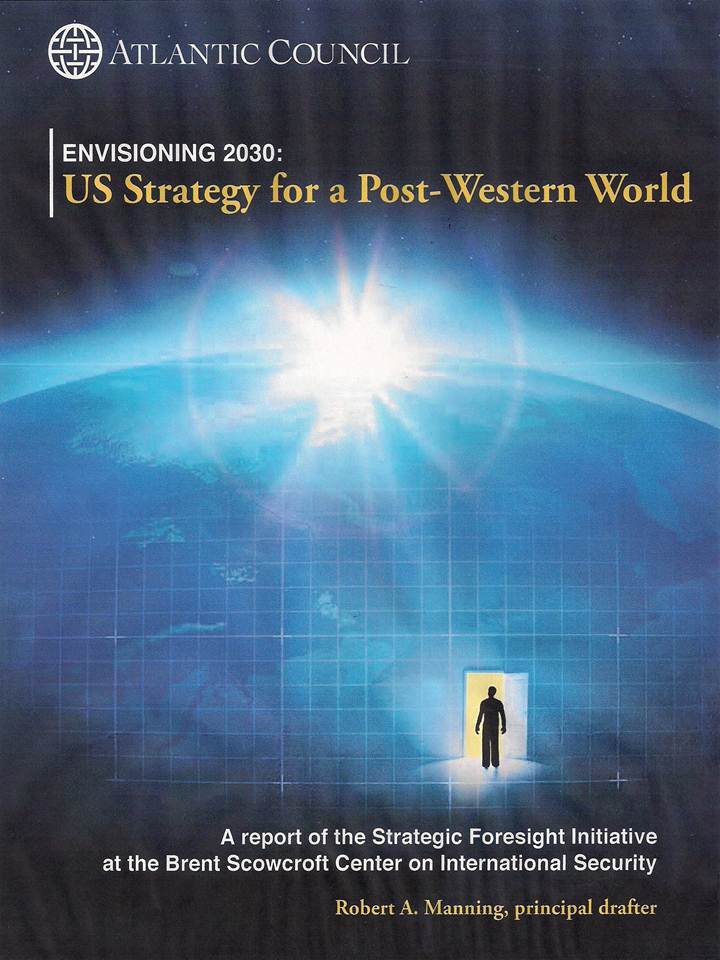
Reference: Atlantic Council Envisioning 2030: US Strategy for a Post-Western World

02 China, 05 Iran, 06 Russia, Collective Intelligence, Commercial Intelligence, Communities of Practice, Earth Intelligence, Ethics, IO Impotency, Officers Call, Peace Intelligence, Strategy, White Papers
Click on Image to Enlarge

Document:  Envisioning 2030: US Strategy for a Post-Western World (Atlantic Council, 10 December 2030)

Executive Summary

Agree that we are at a potentially historic transition point.  However, the Atlantic Council lacks the strategic analytic model to make the most of its otherwise formidable brain trust.  Agree on the need for a new mental map, but they chose the wrong map.  See the HourGlass Strategy as an alternative (also below the line).

The report misses multiple big possibilities including the eight tribes, M4IS2, and OSE.

1. Frame second-term policies from a more strategic and long-term perspective, recognizing the magnitude of the moment and the likelihood that the United States’ actions now will have generational consequences.

Absolutely.  Understanding emergent public governance trends rooted in true cost and whole system analytics, which harness the distributed intelligence of the five billion poor, not in this report.

2. Continue to emphasize what has been called “nation-building at home” as the first foreign policy priority, without neglecting its global context.

Left unsaid is the need to establish a plan, coincident with the creation of a 450-ship Navy, a long-haul Air Force, and an air-liftable Army, to close most of our military bases around the world, and bring all of our troops – and their purchasing power – home.

Continue reading “Reference: Atlantic Council Envisioning 2030: US Strategy for a Post-Western World”

Search: purpose of military intelligence

Searches

School Solution:  To fabricate the worst possible threat, each service taking its own liberties, so as to justify the buying of the most outrageously complex and generally unreliable weapons and mobility systems with extremely heavy logistics tails, none of which can be supported by national or tactical intelligence “systems” also built by variations of the lowest bidder on government-specifications cost-plus terms.  The Office of the Secretary of Defense  (Acquisition, Intelligence, Policy) is responsible for producing as much paper as possible, ideally with no fewer than three acronyms per line, so as to keep tens of thousands of lower-grade civilians employees busy, thus justifying the maximum possible number of senior executive positions irrespective of any actual responsibility.  As a precaution against the military actually doing anything sensible, any contractor  employing or otherwise subsidizing a minimum of five retired general officers will be permitted veto power over any honest analysis that slips through.

A Pro Chuck Hagel Answer Below the Line

Continue reading “Search: purpose of military intelligence”

Mike Nelson: Adam Theirer’s Annual Cyberlaw and Info-Tech Policy Book Review

Advanced Cyber/IO, Economics/True Cost, Knowledge
Mike Nelson
Mike Nelson

Always useful!

Important Cyberlaw & Info-Tech Policy Books (2012 Edition)

by on December 17, 2012 · Add a Comment

The number of major cyberlaw and information tech policy books being published annually continues to grow at an astonishing pace, so much so that I have lost the ability to read and review all of them. In past years, I put together end-of-year lists of important info-tech policy books (here are the lists for 2008, 2009, 2010, and 2011) and I was fairly confident I had read just about everything of importance that was out there (at least that was available in the U.S.). But last year that became a real struggle for me and this year it became an impossibility. A decade ago, there was merely a trickle of Internet policy books coming out each year. Then the trickle turned into a steady stream. Now it has turned into a flood. Thus, I’ve had to become far more selective about what is on my reading list. (This is also because the volume of journal articles about info-tech policy matters has increased exponentially at the same time.)

So, here’s what I’m going to do. I’m going to discuss what I regard to be the five most important titles of 2012, briefly summarize a half dozen others that I’ve read, and then I’m just going to list the rest of the books out there. I’ve read most of them but I have placed an asterisk next to the ones I haven’t.  Please let me know what titles I have missed so that I can add them to the list. (Incidentally, here’s my compendium of all the major tech policy books from the 2000s and here’s the running list of all my book reviews.)

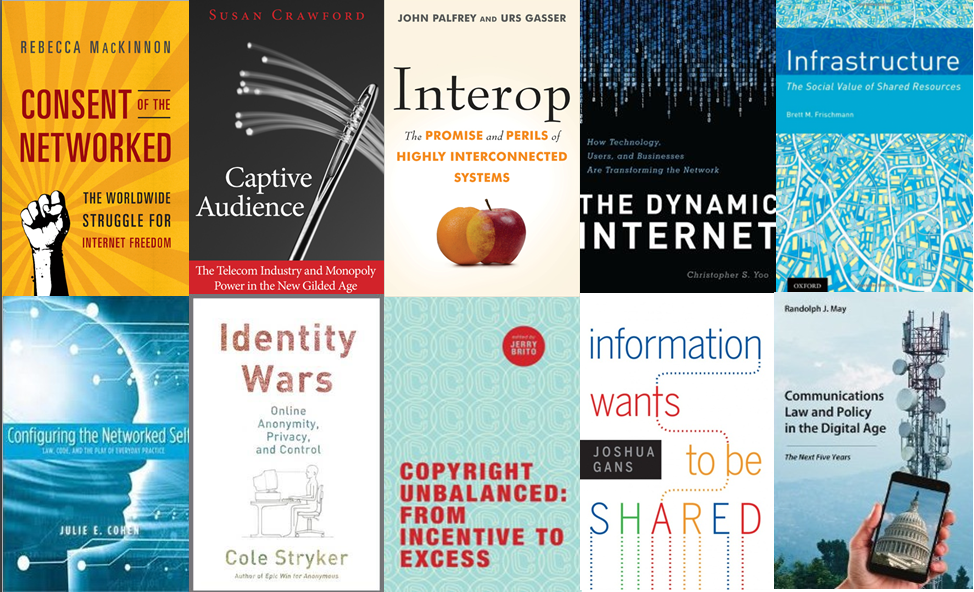
Click on Image to Enlarge

Phi Beta Iota: A total “WOW.”

Includes, in this order (click here to read reviews, below to reach Amazon page):

Rebecca MacKinnon – Consent of the Network: The Worldwide Struggle for Internet Freedom

Susan Crawford – Captive Audience: The Telecom Industry and Monopoly Power in the New Gilded Age

John Palfrey & Urs Gasser – Interop: The Promise and Perils of Highly Interconnected Systems

Christopher Yoo – The Dynamic Internet: How Technology, Users, and Businesses are Transforming the Network

Brett Frischmann –Infrastructure: The Social Value of Shared Resources

and others.

Sepp Hasslberger: MSV Explorer Amphibious Vehicle Powered by Free Energy

IO Technologies, Military
Sepp Hasslberger
Sepp Hasslberger

MSV Explorer amphibious vehicle powered by free energy technology poised to be first to general market

British inventor and CEO, Chris Garner, has come up with the MSV Explorer, an amphibious vehicle that not only treks on land and through water, but is powered by an exotic free energy method he calls “self-sustaining” that will enable the vehicle to travel indefinitely without stopping for fuel. Coming next month.


(by Sterling D. Allan
Pure Energy Systems News
(With a lot of exclusive material)

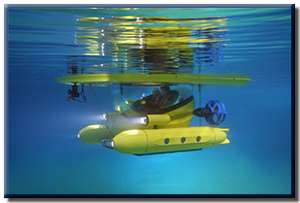
podBritish inventor and CEO, Chris Garner, has come up with the MSV Explorer, an amphibious vehicle that not only treks on land and through water, but is powered by an exotic free energy method he calls a “super high-performance, electro mechanical gyro generator system.”

The revolutionary system will not only propel their MSV Explorer craft, but is poised to revolutionize energy in general, as this will apply not just to propulsion and travel (namely, go as far as you want without ever stopping for fuel) but to energy generators (ditto). Anything that can move a vehicle can also provide prime mover power for a genset, making electricity, either for a home, business, vehicle, or utility.

The company, MSVEX, is presently running in-house tests, which they expect to be completed in about a week. After that, they will be doing third-party testing to validate the technology, probably at the University of Plymouth (UK), or another university, depending on available facilities.

pod below waterDue to the sexy appearance of the craft, the story has been picked up all over the mainstream press, who can't help but call the energy source “perpetual motion”, rather than just saying that the technology harnesses a new force of nature not yet fully understood. The Daily Mail, for example, says: “Mr. Garner claims to have found a solution to the age-old puzzle of perpetual motion and is now poised to go public with his scientific breakthrough.” (Link)

Garner prefers to describe it as “self-sustaining energy”.

Third-Party Test Results of Self-Sustaining Power” Coming Soon

Phi Beta Iota:  This would be a great SEAL “picket-line pod” (PLP), a whole series of which could be dropped off from an amphibious landing craft.  It could also be used for sustainable short- and mid-term ocean surface surveillance, to include remotely piloted stealth versions.

Graphic: Nine HUMINT/OSINT Circles

Advanced Cyber/IO, Communities of Practice, Cultural Intelligence
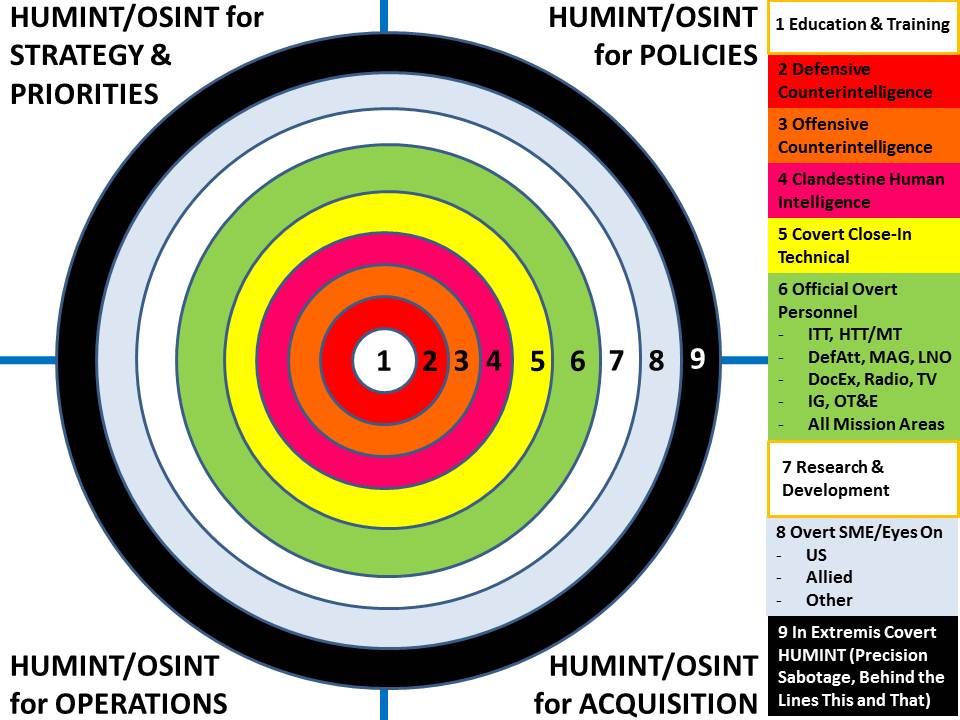
Click on Image to Enlarge

Slide:  HUMINT Circles 2.0

Citation:  Robert David STEELE Vivas, “Graphic: Nine HUMINT/OSINT Circles,”
Phi Beta Iota the Public Intelligence Blog, 17 December 2012

This corrects the earlier oversight of not integrating education & training (our first defense and our most reliable eyes and ears are our own people), along with research & development, must be fully integrated with, not isolated from, the fifteen slices of Human Intelligence (HUMINT) / Open Source Intelligence (OSINT).

noble gold