Josh Kilbourn: 46 Million Americans on Foodstamps

01 Poverty, 03 Economy, 09 Justice, 11 Society, Civil Society, Commerce, Corruption, Government
Joshua Kilbourn

Over 46 Million Americans On Foodstamps For The First Time Ever

Tyler Durden

Zerohedge.com, 12/05/2011

While the capital markets may be cheering that in the past month 120,000 people supposedly found jobs, even if these were largely temporary or part-time just in time for the year end shopping sprees, we wonder how they will react when learning that according to the latest update from the Supplemental Nutrition

Click on Image

Assistance Program (SNAP), some 423,000 Americans found their way to minimum way subsistence, courtesy of Food Stamp handouts from Uncle Sam. Since the start of the Second Great Depression, food stamp participation has increased by 18.7 million, and is now at an all time higher 46.3 million. All Bush's fault, or something. At least the chart below appears to be plateauing… Actually, sorry, no isn't.

See Also:

Food Stamp Use Surges By Most In Years As Alabama Foodstamp Recipients Double In May

US Food Stamp Usage Hits New Record

6M young U.S. adults live with their parents

Cost of federal unemployment benefits so far: $434 billion

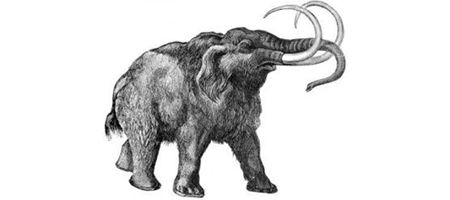
Koko: Mammoth find raises hopes of successful cloning

Earth Intelligence
Koko

Koko Sign:  Like diversity.

Mammoth find raises hopes of successful cloning

Emma Woollacott

TG Daily,  December 5, 2011

A Japanese team which has been hoping to clone a mammoth says that a specimen discovered this summer looks likely to yield up the necessary DNA.

The team, from Japan's Kinki University and the Sakha Republic's mammoth museum, announced its plans last January before setting off for Siberia in search of frozen mammoth tissue.

And they've now announced that one of their finds – a thigh bone discovered in northern Sakha – contains well-preserved bone marrow with intact cell nuclei.


Click on Image to Enlarge

Global warming has decreased the proportion of the Siberian tundra that's covered with permafrost, meaning that new mammoth carcases have increasingly been coming to light. However, past efforts to recreate the mammoth – which have been going on since the 1990s – have failed as cell nuclei have been in too poor a condition.

This latest specimen, though, is reported to be in very good condition, and scientific techniques for extracting viable DNA have improved. As a result, according to Japan's Kyodo News, the Japanese team is now confident that it can replace the nuclei of egg cells from an African elephant with nuclei taken from the mammoth bone marrow.

This would create create embryos which can be implanted into elephants' wombs for gestation.

Any resulting baby mammoth would be the first to walk the earth for thousands of years. The species is believed to have largely died out at the end of the Pleistocene, 10,000 years ago, with a dwarf species hanging on for another 5,000 years.

Patrick Meier: Crowd-Sourcing Making Putin Nervous

Advanced Cyber/IO, Civil Society, Ethics, Government, Hacking
Patrick Meier

Crowdsourcing vs Putin: “Mapping Dots is a Disease on the Map of Russia”

4 December 2011

I chose to focus my dissertation research on the impact of information and communication technologies (ICTs) during elections in repressive states. Why? Because the contentious relationship between state and society during elections is accentuated and the stakes are generally higher than periods in-between elections. To be sure, elections provide momentary opportunities for democratic change. Moreover, the impact of ICTs on competitive events such as contentious elections may be more observable than the impact on state-society relations during the regular calendar year.  In other words, the use of ICTs during election periods may shed some light on whether said technologies empower coercive regimes at the expense of civil society or vice versa.

Full Blog with Three Major Graphics Below the Line

Continue reading “Patrick Meier: Crowd-Sourcing Making Putin Nervous”

Mini-Me: GOP War on Honest Voting

Corruption, Government
Who? Mini-Me?

The GOP's War on Voting Comes to Washington

House Republicans want to kill the federal agency charged with making sure voting machines work.

Siddhartha Mahanta

Mother Jones, Dec. 1, 2011

Republicans in state legislatures across the country have spent the past year mounting an all-out assault on voting rights, pushing a slew of voter ID and redistricting measures that are widely expected to dilute the power of minority and low-income voters in next November's elections. Now that effort has come to Capitol Hill, where the House* will vote Thursday on a GOP-backed bill to eviscerate the Election Assistance Commission (EAC)—the last line of defense against fraud and tampering in electronic voting systems around the country.

[UPDATE: The bill passed 235-190 on a mostly party-line vote.]

Read full article.

Josh Kilbourn: War Against Iran Has Been Underway

04 Inter-State Conflict, 07 Other Atrocities, 10 Security, 11 Society, Corruption, Government, IO Deeds of War, Military, Peace Intelligence, Power Behind-the-Scenes/Special Interests
Joshua Kilbourn

Is Iran Already Under Attack?

The Atlantic, Dec 2, 2011

Adam Chandler, the Goldblog deputy-editor-for-monitoring-Iran-obsessively-even-though-Goldblog-himself-also-monitors-Iran-obsessively, pointed out to me the other day that perhaps the West has already begun the attack on Iran's nuclear facilities, that perhaps we ought to reframe this issue a bit. The attacks he mentioned are not the usual sub-rosa, eyebrow-raising tech and computer virus sort of attacks, but outright physical attacks. This is more a semantic issue, I suppose (and yes, I realize the Iranian regime is virulently anti-semantic), but operations against Iran are seeming to move away from the pure Mossad-in-the-70s-style attacks to straight-up military confrontations. I don't know if this is a sign of escalation or desperation or both, though it seems fair to say that less subtlety on the part of Israel, the U.S. and whoever else is doing this suggests that the previous tactics were deemed insufficient.

Following a (perhaps not-so-mysterious) explosion on a military base last month that took with it the life of Gen. Hassan Tehrani Moghaddam–one of the Iranian missile program's most distinguished OGs–comes news of a second explosion in Isfahan this past Monday, which according to sources “struck the uranium enrichment facility there, despite denials by Tehran.”

Of course, accurate news out of Tehran is hard to come by, but if you want to take this a step further, one might consider Tuesday's (perhaps not-so-spontaneous) storming of the British embassy by Iranian “students” to be quite an effective smokescreen in keeping news of this second explosion from making serious waves. If you've had a lot of coffee, it's also worthy to note that on Monday evening, following the explosion in Iran, four missiles fired from southern Lebanon struck Israel–the first such incident in over two years.

I'm not entirely convinced, but it's not unreasonable to group these recent explosions with the Stuxnet virus of last summer that haywired an uranium enrichment facility in Natanz; last October's explosion at a Shahab missile factory; the killing of three Iranian nuclear scientists in the past two years, last November's attempted assassination of Fereydoun Abbasi-Davan–a senior official in the nuclear program — and rumblings of a second supervirus deployed this month as proof that the West's war on Iran's nuclear program is getting less covert by the minute.

Howard Rheingold: Expert Information Access Strategies

Advanced Cyber/IO, Blog Wisdom, Methods & Process
Howard Rheingold

SkillCraft: Information Access Strategies

EXTRACT:

So, how does expertise affect these information access strategies? A study of professional athletes’ demonstrated the idea that experts use a “just-in-time” strategy, where information that is required to do well in their respective sports is accessed at the time it necessary. Such strategies also appear to be employed in everyday tasks such as making tea or a peanut butter sandwich (Hayhoe & Ballard, 2005). It seems that experts merely use the same strategies in their specific tasks to perform better. Through the acquisition of a “just-in-time” strategy experts are able to look at what they needed to, when they needed to, faster than novices (Land & McLeod, 2000).

Read more.

noble gold