Journal: US Corruption at the Border and at the Top

Corruption, Government, Law Enforcement

Marcus Aurelius Recommends

SecHLS must be happy,,,,,

U.S. worker's case reveals how drug cartels get help from this side of border
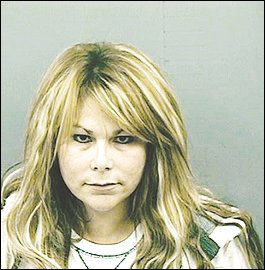
Martha Garnica

The cartels have grown so sophisticated, law enforcement officials say, that they are employing Cold War-era spy tactics to recruit and corrupt U.S. officials.

“In order to stay in business, the drug trafficking organizations have to look at different methods for moving product,” said Thomas Frost, an assistant inspector general in the Department of Homeland Security. “The surest method is by corrupting a border official. The amount of money available to corrupt employees is staggering.”

Phi Beta Iota: This is an especially well-done, detailed article by The Washington Post, and not one of the run-of-the-mill apologias from the camp followers.  What is not fully discussed is the MASSIVE corruption as well as the in-extremis one-time recruitments (e.g. fishermen shown photo of their captive family, one run only) on all four borders–north and west as well as south-gulf-florida and east.  Furthermore, the reality is that corruption starts at the top, and global corruption starts in New York City and Washington, D.C.   Corruption riddles every aspect of US Government planning, programming, budgeting, and operations across the twelve core policies, from agriculture to water.

Continue reading “Journal: US Corruption at the Border and at the Top”

Reference: Max Manwaring on Strategy & Insurgency

Monographs

SHADOWS OF THINGS PAST AND IMAGES OF THE FUTURE: LESSONS FOR THE INSURGENCIES IN OUR MIDST

Max G. Manwaring, November 2004, Strategic Studies Institute

Phi Beta Iota: Every passing day reminds us that Dr. Col Max Manwaring has made so many extraordinary contributions to our strategic understanding across so many fronts, and yet his work does not appear to have been appreciated to the degree that we consider warranted.  Below is one small portion of his teachings from this reference.

This monograph concludes with the idea that the complex realities of contemporary political-insurgency wars must be understood as holistic processes that rely on various civilian and military agencies and contingents working together in an integrated fashion to achieve mutually agreed political-strategic ends. In this connection, at a minimum, three strategic-level imperatives are needed to begin to deal effectively with unconventional conflict situations. They are:

(1) civil-military and military-to-military dialogue regarding viable security and stability,

(2) fundamental education and understanding requirements, and

(3) the strategic application of U.S. military power.

The associated  recommendations take us beyond doing “something” for something’s sake to the cooperative, holistic, and long-term planning and implementation of the strategic ends, ways, and means that directly support the achievement of a political endgame.

Journal: Theater, Circus, or Politics?

09 Justice, 11 Society, Civil Society, Collective Intelligence, Cultural Intelligence

Full Story Online

Tea Partiers Bring Cause to Washington

KATE ZERNIKE September 12, 2010

Republicans in Tea Party Costumes

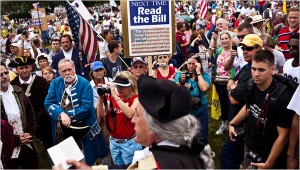
A crowd gathered around as a man dressed as George Washington read a passage from the Bible during the Tea Party Tax Payer March on Washington on Sunday.

. . . . . . .

“I believe we’ve got the Republican Party’s attention — we’ve been beating the establishment all over the country,” said Dick Armey, the former Republican House majority leader and the chairman of FreedomWorks, to a burst of cheering. “It’s time we give the same lesson to the other party.”

Mr. Pence taunted the Democratic leadership: “A recession is when you your neighbor loses his job. A depression is when you lose your job. A recovery is when Nancy Pelosi loses her job.”

Phi Beta Iota: The Tea Party appears to have been captured by the Republicans.  This is one of the reasons we are taking an interest in the Coffee Party, which appears to be genuinely committed to non-partisan deliberative dialog and fact-based consensus.  We are still dismayed that Ralph Nader, Jackie Salit, Cynthia McKinney, Ron Paul, and Bob Barr, among others, cannot come together to lead a demand for Electoral Reform in two phases, half in 2010, half in 2012.  That would appear to be the single issue where most can agree, and the single reform that would restore the connection between the public, public revenue, and public spending.

Y Combinator Hacker News Community’s Model for Info-Sharing & Potential for Collective Intelligence

03 Economy, 04 Education, 11 Society, Academia, Civil Society, Collective Intelligence, Commerce, Cultural Intelligence, Government, Hacking, Law Enforcement, Media, Military, Mobile, Non-Governmental, Peace Intelligence, Technologies

Hacker News” has a welcome page and guidelines page offering an overview of what the organizers expect from those planning on posting comments and why it's good overall for the community.  I (Jason Liszkiewicz) was impressed with this. Hacker News has a solid number of participants and provides a simple and mature format for exploring and contributing thoughtful feedback, insight and resources.

It has a jobs link (mainly for engineers and programmers) and the “Ask Hacker News” link which enables the community to share information and reply to what is shared. Such a model (deemed an “experiment”) that provides mature and thoughtful information-sharing is something we need more of. Communities inter-linking with communities (or at least over-lapping) to spill over each others insights can be invaluable and potentially priceless.

Example: Ask HN: What do you perceive as worth spending money on?

This simple and useful model is something I hoped would emerge + converge from the SMS/text messaging developers at ChaCha.com (humans online responding to text messaged questions) or somewhere else. Converging multi-community info-sharing online, offline, and through the mobile world on a global scale is an exciting possibility.

The next level to all of this exists in the form of ideas or fragmented applications but it seems not beyond that, yet.

Email earthintelnet|at|gmail.com or post something at this new forum to discuss these ideas. Or, provide some mature and thoughtful feedback at the Hacker News community.

Reference: Spot the Office Psychopath(s)

Articles & Chapters, Blog Wisdom

PSYCHOPATHS AMONG US

EXTRACT: By the late 1970s, after fifteen years in the business, Bob Hare knew what he was looking for when it came to psychopaths. They exhibit a cluster of distinctive personality traits, the most significant of which is an utter lack of conscience. They also have huge egos, short tempers, and an appetite for excitement — a dangerous mix. In a typical prison population, about 20 percent of the inmates satisfy the Hare definition of a psychopath, but they are responsible for over half of all violent crime.

EXTRACT: The Psychopathy Checklist consists of a set of forms and a manual that describes in detail how to score a subject in twenty categories that define psychopathy. Is he (or, more rarely, she) glib and superficially charming, callous and without empathy? Does he have a grandiose sense of self worth, shallow emotions, a lack of remorse or guilt? Is he impulsive, irresponsible, promiscuous? Did he have behavioural problems early in life? The information for each category must be carefully drawn from documents such as court transcripts, police reports, psychologists' reports, and victim-impact statements, and not solely from an interview, since psychopaths are superb liars (“pathological lying” and “conning/manipulative” are PCL-R categories). A prisoner may claim to love his family, for example, while his records show no visits or phone calls.

Hare Psychopathy Checklist (Wikipedia Overview)

Actual List for Consideration Below the Line

Continue reading “Reference: Spot the Office Psychopath(s)”

Sick Systems on a Micro to Macro Level; Not All Vampires Suck Blood; Psychopaths Among Us

04 Education, 07 Health, 07 Other Atrocities, 09 Justice, Academia, Civil Society, Cultural Intelligence, Ethics, Law Enforcement, Media

The following pieces are from June 2010 and 2001. They were found separately within the same day and provide inter-connected insights. Link to the full version..below is an extremely shortened version:

PSYCHOPATHS AMONG US

Dr. Robert Hare claims there are 300,000 psychopaths in Canada, but that only a tiny fraction are violent offenders like Paul Bernardo and Clifford Olsen. Who are the rest? Take a look around.
By Robert Hercz (2001)

(three highlights from the article)

+ Hare has said that if he couldn't study psychopaths in prisons, the Vancouver Stock Exchange would have been his second choice (Forbes magazine called the Vancouver Stock Exchange the scam capital of the world). This brings a whole other meaning to “psycho-geography.”

+ Soon after he delivered a keynote speech at a conference for homicide detectives and prosecuting attorneys in Seattle three years ago, Hare got a letter thanking him for helping solve a series of homicides. The police had a suspect nailed for a couple of murders, but believed he was responsible for others. They were using the usual strategy to get a confession, telling him, ‘Think how much better you'll feel, think of the families left behind,' and so on. After they'd heard Hare speak they realized they were dealing with a psychopath, someone who could feel neither guilt nor sorrow. They changed their interrogation tactic to, “So you murdered a couple of prostitutes. That's minor-league compared to Bundy or Gacy.” The appeal to the psychopath's grandiosity worked. He didn't just confess to his other crimes, he bragged about them.

+ Know your own weaknesses, they advise, because the psychopath will find and use them. Learn to recognize the psychopath, they tell us, before adding that even experts are regularly taken in.

How to keep someone with you forever (common enslavement tactics)

Jun. 9th, 2010

Rule 1: Keep them too busy to think. Thinking is dangerous. If people can stop and think about their situation logically, they might realize how crazy things are.

Rule 2: Keep them tired. Exhaustion is the perfect defense against any good thinking that might slip through. Fixing the system requires change, and change requires effort, and effort requires energy that just isn't there. No energy, and your lover's dangerous epiphany is converted into nothing but a couple of boring fights.

Continue reading “Sick Systems on a Micro to Macro Level; Not All Vampires Suck Blood; Psychopaths Among Us”

Journal: Steve Denning–Change Accounting to Create Jobs

03 Economy, 11 Society
Steve Denning

Steve Denning, former Chief Knowledge Officer (CKO) at the World Bank, tried to teach  them that they were a knowledge bank, not a money bank.  It did not stick but others are listening to him and so do we.

Building on an earlier posting that was copied here, Journal: 21st Century Management–New Rules

, today he addresses why cost accounting is killing jobs (labor used to be a variable and very expensive cost to be driven down), why a new form of accounting, throughput accounting, is needed, and why “bad profit” is a negative not a positive–an argument similar to what those who advocate not counting prisons and hospitals as “productive.”

READ HIS NEW BLOG POSTING

noble gold