Reference: 2011 Brave New Dystopia

04 Education, 06 Family, 07 Other Atrocities, 11 Society, Civil Society, Collective Intelligence, Corporations, Money, Banks & Concentrated Wealth, Officers Call, Power Behind-the-Scenes/Special Interests, Secrecy & Politics of Secrecy
Chuck Spinney Recommends...

2011: A Brave New Dystopia

truthdig, Posted on Dec 27, 2010

By Chris Hedges

The two greatest visions of a future dystopia were George Orwell’s “1984” and Aldous Huxley’s “Brave New World.” The debate, between those who watched our descent towards corporate totalitarianism, was who was right. Would we be, as Orwell wrote, dominated by a repressive surveillance and security state that used crude and violent forms of control? Or would we be, as Huxley envisioned, entranced by entertainment and spectacle, captivated by technology and seduced by profligate consumption to embrace our own oppression? It turns out Orwell and Huxley were both right. Huxley saw the first stage of our enslavement. Orwell saw the second.

We have been gradually disempowered by a corporate state that, as Huxley foresaw, seduced and manipulated us through sensual gratification, cheap mass-produced goods, boundless credit, political theater and amusement. While we were entertained, the regulations that once kept predatory corporate power in check were dismantled, the laws that once protected us were rewritten and we were impoverished. Now that credit is drying up, good jobs for the working class are gone forever and mass-produced goods are unaffordable, we find ourselves transported from “Brave New World” to “1984.” The state, crippled by massive deficits, endless war and corporate malfeasance, is sliding toward bankruptcy. It is time for Big Brother to take over from Huxley’s feelies, the orgy-porgy and the centrifugal bumble-puppy. We are moving from a society where we are skillfully manipulated by lies and illusions to one where we are overtly controlled.

Orwell warned of a world where books were banned. Huxley warned of a world where no one wanted to read books. Orwell warned of a state of permanent war and fear. Huxley warned of a culture diverted by mindless pleasure. Orwell warned of a state where every conversation and thought was monitored and dissent was brutally punished. Huxley warned of a state where a population, preoccupied by trivia and gossip, no longer cared about truth or information. Orwell saw us frightened into submission. Huxley saw us seduced into submission. But Huxley, we are discovering, was merely the prelude to Orwell. Huxley understood the process by which we would be complicit in our own enslavement. Orwell understood the enslavement. Now that the corporate coup is over, we stand naked and defenseless. We are beginning to understand, as Karl Marx knew, that unfettered and unregulated capitalism is a brutal and revolutionary force that exploits human beings and the natural world until exhaustion or collapse.


Read full article (also below the line as a safety copy)…

Continue reading “Reference: 2011 Brave New Dystopia”

Journal: Globalization and the Middle Class

03 Economy, 07 Other Atrocities, 11 Society, Budgets & Funding, Civil Society, Commerce, Commercial Intelligence, Corruption, Cultural Intelligence
Who Am I?

Phi Beta Iota: Penguin is a new Contributing Editor who is still learning the system and also undecided about having a bio, even a relatively anonymous one.

This Week on The Globalist
December 18-24, 2010

Middle Class and Globalization: A Big Power Comparison (Part I)

In this time of economic strife, which nation stands to lose the most compared to its own expectations, projected path and historic experiences? The Richter Scale takes a closer look.

Middle Class and Globalization: A Historical Perspective (Part II)

The Richter Scale explores whether the United States is finally getting serious about reinvigorating its middle class.

The Globalist's Top Ten Books of 2010

In this 2010 year-end special, we look back at the best new books featured on The Globalist Bookshelf this year.

The Globalist's Top Ten Features of 2010

As 2010 draws to a close, we present our selection of the most thought-provoking features published on The Globalist this year.

The Top Headlines of 2010

From the economic recession to the World Cup, how did 2010's major events look to the world's headline writers?


Journal: Future Hotspots?

04 Inter-State Conflict, 05 Civil War, 06 Russia, 07 Other Atrocities, 08 Wild Cards, Military
DefDog Recommends...

Forecast 2011: Conflict Hotspots

23 December 2010

Protestor with face mask walks past street fire and crowds of other protestors, courtesy of Faramarz Hashemi/flickrPolitical hotzones 2011?

Where in the world will conflict flare in the new year? This special, expanded edition of ISN Insights examines three hotzones beyond the headlines: Pakistan, Tajikistan and the Northern Caucasus.


This special ISN Insights package contains the following content, easily navigated along the tab structure above – or via the hyperlinks below:

A 2011 Pakistani political forecast by Gregory Copley, President of the International Strategic Studies Association, who predicts a watershed year ahead for the Islamic Republic.

A look forward to the potential for further proliferation of terrorist activity in the North Caucasus – and how Russia should address it by Simon Saradzhyan, research fellow at the Harvard Kennedy School's Belfer Center.

A close examination of Tajikistan's make-or-break year ahead by John CK Daly, non-resident fellow at the Johns Hopkins Central Asia-Caucasus Institute.

See Also:

Review: Zones of Conflict–An Atlas of Future Wars

Review: The Water Atlas–A Unique Visual Analysis of the World’s Most Critical Resource

Journal: Covert War in Pakistan–Lessons Not Learned

04 Inter-State Conflict, 05 Civil War, 07 Other Atrocities, 08 Wild Cards, 10 Security, 11 Society, Cultural Intelligence, Government, IO Multinational, IO Sense-Making, Military
Thomas Leo Briggs

Something caught my eye while reading a Slate item written by Tom Scocca and posted on December 20, 2010, “Two Ways of Looking at Our Covert War in Pakistan.”

Mr. Scocca wrote:

“There are diplomatic tensions because we are fighting a full-on undeclared war on the territory of a country with which we are an ally, using covert agents as the commanding officers”.

So what’s new?  Didn’t we fight a full-on undeclared war on the territory of Laos from about 1961 to 1973?  Wasn’t Laos an ally while trying to maintain the fig-leaf of neutrality?  Wasn’t the United States government using ‘covert agents as commanding officers’?

Moreover the New York Times published an article by Mark Mazzetti and Dexter Filkins the same day titled “U.S. Military Seeks to Expand Raids in Pakistan”.

In particular I noticed the following that Mazzetti and Filkins attributed to senior military commanders in Afghanistan.

Continue reading “Journal: Covert War in Pakistan–Lessons Not Learned”

Reference: Anthony Cordesman On Intelligence

07 Other Atrocities, Blog Wisdom, Government, InfoOps (IO), Intelligence (government), Methods & Process, Officers Call, Policies, Real Time
Richard Wright

QUESTION: Did Cordesman address intelligence in SALVAGING AMERICAN DEFENSE–The Challenge of Strategic Overstretch?

ANSWER: Actually he did under “Challenge Seven” on inter-agency co-operation. In general his observations on inter-agency co-operation complement what you have often noted over the years. In this chapter he also has a scathing section called “The Impact of  New Intelligence Hierarchy” in which he notes “serious limitations” of the DNI, but more interestingly argues that what really need to be reformed are intelligence processes and culture. He also dislikes the phrase ‘information sharing' because it implies that information is proprietary to specific agencies rather than belonging to the government as a whole. He also notes that the Intellgience Community  “sometimes seem to have never learned that the Cold War is over.”

Finally he notes that what is really needed in the IC is “real time sharing and fusion of information of all kinds at all levels” rather than mindless protection of information that is of short term value.

It strikes me as very strange that someone like Cordesman who has been Mr. Inside for thirty years would come to roughly the same conclusions as Robert Steele, himself one of the most independent (and perceptive)  thinkers on intellgience and information operations issues that I know.

I read Cordsman's treatment of Intellgience issues as evidence that the so-called IC  is pretty close to becoming entirely irrelevant.

Journal: From WikiLeaks to OpenLeaks–and Local News

07 Other Atrocities, Civil Society, Collective Intelligence, Corporations, Counter-Oppression/Counter-Dictatorship Practices, InfoOps (IO), Journalism/Free-Press/Censorship, Media, Open Government, Real Time, Secrecy & Politics of Secrecy, Tools

Micah L. Sifry | December 17, 2010 – 4:01pm

Back in 2009, Daniel Domscheit-Berg applied to the Knight News Challenge in the name of Wikileaks for $532,000 to fund a project to “improve the reach, use and impact of a platform that allows whistle-blowers and journalists to anonymously post source material.” At the time Domscheit-Berg was known to the world by the pseudonym “Daniel Schmitt” and made frequent appearances on behalf of Wikileaks alongside its editor-in-chief Julian Assange (including at the October 2009 Personal Democracy Forum Europe conference in Barcelona). Now, as is widely known, he and Assange have parted ways and Domscheit-Berg is part of a group organizing the launch of OpenLeaks.org, which is being described as more of a technological service provider to media organizations than as a central hub for leaks, and which is promising to roll out a detailed description of its organization and plans in January 2011.

It's illuminating to compare the 2009 Wikileaks News Challenge proposal–which made it to the final round of the prestigious program but was ultimately rejected by the Knight News Challenge judges–to Domscheit-Berg & Co's current plans for OpenLeaks. Obviously, until OpenLeaks starts functioning, we are comparing two different versions of “vaporware,” but in the same way that Wikileaks itself has evolved over the last year, I think you can see a parallel evolution how Domscheit-Berg and the others in his group are thinking about how best to expand the open information model as well.

Read fascinating article and entirety of the original WikiLeaks proposal….

Journal: Dennis Kucinich Introduces Monetary Reform

03 Economy, 07 Other Atrocities, 11 Society, Budgets & Funding, Civil Society, Collective Intelligence, Commerce, Commercial Intelligence, Corporations, Counter-Oppression/Counter-Dictatorship Practices, Cultural Intelligence, Government, InfoOps (IO), Methods & Process, Money, Banks & Concentrated Wealth, Power Behind-the-Scenes/Special Interests, Strategy
Dennis Kucinich

Dear Friends of the American Monetary Institute,

IMPORTANT MONETARY NEWS ALERT:   MAJOR, HISTORIC PROGRESS BEING MADE

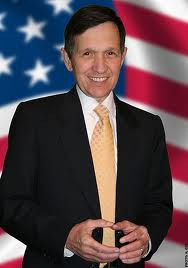
On Friday December 17th Congressman Dennis Kucinich (D,Ohio, 10th District) took a crucial and heroic step to resolve our growing financial crisis and achieve a just and sustainable money system for our nation by introducing the National Emergency Employment Defense Act of 2010, abbreviated NEED. The bill number is  HR6550.

While the bill focuses on our unemployment crisis, the remedy proposed contains all the essential monetary measures being proposed by the American Monetary Institute in the American Monetary Act. These are what decades of research and centuries of experience have shown to be necessary to end the economic crisis in a just and sustainable way, and place the U.S. money system under our constitutional checks and balances. Yes it can be done!

We expect this bill will also be re-introduced next year in the 112th Congress. By putting it in now Congressman Kucinich accomplishes these important things:

* First, the seriousness of intent is underscored;

* Second, it gives our nation the opportunity to view, discuss and understand the necessary provisions, giving the chance to make improvements for re-introduction;

* Third it serves as a beacon to our beleaguered people, cutting through the error, vested interest and disinformation that has blocked monetary reform understanding and action in the past.

The American Monetary Institute has activated its blog to discuss and review any questions about this act. Just click on the blog link at our homepage.

To participate in this process, please sign up at the bottom of our home page at . Then, after reading the proposed legislation feel free to make comments or put questions on the blog, including thoughtful suggestions on how it might be improved.

You can read a copy of the legislation here.

Warm regards to all,
Stephen Zarlenga
AMI

See Also:

Dennis Kucinich on the Proposed Monetary Reform

New Economy Network

Dennis Kucinich, Vice President for the Commonwealth–and Some Details

noble gold