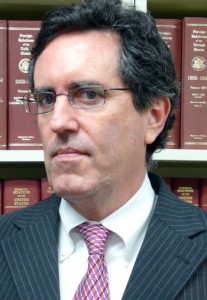
Chuck Spinney: German Economic Imperialism Killing Europe?

01 Brazil, 02 China, 03 Economy, 03 India, 04 Inter-State Conflict, 05 Civil War, 06 Russia, 07 Other Atrocities, 08 Wild Cards, 10 Transnational Crime, Analysis, Civil Society, Commerce, Corruption, Government, Law Enforcement, Money, Banks & Concentrated Wealth, Policy, Power Behind-the-Scenes/Special Interests, White Papers
Chuck Spinney

Will Germany Kill the Goose that Laid the Golden Egg?

Since the middle of the 19th Century, the central questions in European politics have been been have been the closely connected questions of nationalism and the rise of German power.  As my good friend and eminent historian Gabriel Kolko shows in the brilliant essay attached below, the post war solutions of NATO and the European Union, together with the exigencies of the Cold War, put these questions on hold, but their fundamentals remained, sleeping beneath the surface, and today, the conflicting questions of nationalism and German power are again coming to the fore to create ominous problems for Europe and the world.
There can be no question that, until 2007 or so, the European Union — particularly the opening of borders, the free flow of labour and capital, the disappearance of tariffs, and diminution of non-tariff trade restrictions, etc. combined to make life better for the mass of average Europeans.  Standards of living rose steeply and social services improved in parallel.  This was particularly evident in the poorer EU countries on the southern rim.  I saw and experienced this astounding improvement in the quality of life on a very personal level, living on a sailboat in southern Europe since the summer of 2005.  I will never forget the comment made to me by an Italian psychologist in Calabria in 2006, which is the heart of the provincial south of Italy, “It is a great time to be a European.” To be sure, he was an educated member of the upper middle class, and not representative of the average Calabrian, but it struck me that this Calabrian saw himself as a European.  It was not very long ago, that such a person would only loosely consider himself to be an Italian, not to mention a European.


TEDxAmsterdam 2011 – General Peter van Uhm

04 Inter-State Conflict, 10 Security, DoD, Ethics, IO Deeds of Peace, Methods & Process, Military, Officers Call, Peace Intelligence, Strategy

Tip of the Hat to Berto Jongman.

Phi Beta Iota:  Below is a typical comment.  Sadly, for this to be true, INTEGRITY in government is required.  As we have seen from Dick Cheney's hijacking of the US Government — and Obama's continuation of the Bush-era “war as a racket” policies now including the murder and imprisonment of US citizens without due process — sometimes the government's monopoly on force is the basis for a failed state, not its anti-thesis.

Very inspiring talk, i listened in silence to him and that doesn’t happen often.

As an ex VN soldier i fully support the generals opinion.

Even after losing his own son in Afghanistan he still firmly believes in his ideals and knows how to express them on a way that is understandable and inspiring to allot of people, i can only say general van Uhm made me proud to be Dutch today, and proud i served in the Dutch armed forces.

Chuck Spinney: Political Fluff on Iraq vs Real-World Appraisals

03 Economy, 04 Inter-State Conflict, 05 Civil War, 05 Iran, 07 Other Atrocities, 08 Wild Cards, 10 Security, Corruption, Government, Military, Officers Call
Chuck Spinney

After running for President in 2008 on a platform that criticized Iraq as a “dumb war,” Barack Obama just declared America’s misbegotten Iraqi adventure to be an “extraordinary achievement” in a speech to soldiers at Fort Bragg. That declaration of success is not enough for Congressman Duncan Hunter, who took Obama to task, saying, “And even now, as president, he refuses to acknowledge that victory was achieved,”

Such is the self-referencing nonsense produced in contemporary American political discourse shaped by a perpetual election cycle that disconnects debate from the real world and stifles rational governance, but keeps the masses entertained and distracted, much like the circuses did for the Roman masses in the waning days of the Empire. With American politicians are arguing endlessly how great a victory we achieved in Iraq, a natural question remains unasked: What does the rest of the world — particularly the Arab world — thinks of our ‘success'?

Attached, FYI, are two thoughtful alternative points of view on this question.

The first headline is from Rami Khouri's.  He is a columnist for the Lebanese Daily Star and is syndicated by the prestigious Agence-Global. The second headline is from Patrick Cockburn's, writing in the Independent [UK].  He is one of the most well informed western reporters now writing about the Middle East.

Praise Tunisia, not the Iraqi nightmare

By Rami G. Khouri, Daily Star, 14 December 2012

The United States under President George W. Bush drew on a deep well of nonsense, lies and fantasy when it entered Iraq in 2003. President Barack Obama continued this bipartisan American tradition when he said Monday that the departure of American forces from Iraq left behind a country that can be a model for other aspiring democracies. On the other side of the Arab world on the same day, the Tunisian people elected a new president, providing a more credible example of how Arabs can aspire to become democratic without foreign armies destroying their national fabric.  Read more.

Wars without victory equal an America without influence

World View: For all its military might, the US has failed to get its way in Afghanistan and Iraq, severely denting the prestige of the world's only superpower
Patrick Cockburn, Independent, 12 December 2011

Phi Beta Iota:  Mr. Cockburn's article contains one major assumption, to wit that the US  Government will not attack Iran nor condone an Israeli attack on Iran.  We disagree.  Now more than ever, Israel is bent on attacking Iran and drawing the US in–the deployment of US/NATO troops all around Syria, the plans for major NATO air operations ostensibly against Syria (long billed, falsely, as an Iranian puppet state) all point to precisely the opposite: a cresendo joint US-Israel mega-attack on Iran and Syria together.

Berto Jongman: The Kandahar Audio Casette Collection – Central to Understanding Emergence of Al Qaeda Prior to 9/11

09 Terrorism, 11 Society, Audio, Civil Society, Cultural Intelligence
A collection of more than 1500 audiocassettes from Kandahar.  The collection is central to understanding al-Qaida's emergence as an organisation before 9/11.
A first inventarisation and description can be found in: Flagg Miller. Insight from Bin Laden's audiocassette library in Kandahar. CTC Sentinel, 4(10), October 2011.
An analysis of Flag Miler can also be found in : J.Deol, Z. Kazmi (Eds) Contextualizing jihadi thought. New York: Horst & Company, Columbia University Press, 2012.

DefDog: Washington’s Integrity Part N to the Nth

03 Economy, 07 Other Atrocities, 09 Justice, 11 Society, Commerce, Corruption, Government, Law Enforcement, Money, Banks & Concentrated Wealth, Power Behind-the-Scenes/Special Interests
DefDog

More of the lack of integrity and the bilking of the middle class…..

Mr. Corzine Goes to Washington, With No Pull

William D. Cohan

Bloomberg.com, 11 December 2011

When it comes to shining a light on the cozy relationships between Wall Street and Washington, and how the rich and powerful get access to things the rest of us don’t, there can never be too many juicy examples.

Last month, thanks to Bloomberg Markets magazine, we were treated to the excellent story about how former Treasury Secretary Henry Paulson met with a bunch of bankers and hedge fund managers in New York during the summer of 2008 and shared with them some of his early thinking on the futures of the mortgage behemoths Fannie Mae and Freddie Mac.

Then, last week, Jon Corzine, the former chief executive officer of the defunct MF Global Inc. with a gold-plated resume — he was also a senior partner of Goldman Sachs Group Inc. and a U.S. senator and governor of New Jersey — testified before the House Agriculture Committee about his often-successful campaign to thwart the efforts of Washington regulators to enact rules that he and MF Global didn’t like.

Read full story.

See Also:

2012 Reflexivity = Integrity: Toward Earth/Life 4.0

Journal: Politics & Intelligence–Partners Only When Integrity is Central to Both

Journal: Reflections on Integrity UPDATED + Integrity RECAP

Chuck Spinney: Bombing Iran . . . Soon

04 Inter-State Conflict, 05 Iran, 08 Wild Cards, 10 Security, 11 Society, Corruption, DoD, Government, IO Deeds of War, Military
Chuck Spinney

Shaping the Popular Psyche in America's Post-Information Era:  Why the US & Israel May Agree to Bombing Iran

by FRANKLIN C. SPINNEY

Counterpunch, December 12, 2011

The arguments for attacking Iran are crazy, like those for attacking Iraq in response to 9-11. But that does not mean such an attack by the American and/or the Israelis will not occur.

Indeed, I think the political pressure for such an attack is increasing.  My reasons for saying this are as follows:

On 11 October, Patrick Seale wrote a very important essay, Will Israel Bomb Iran.  Seale described secret internal deliberations in the Israeli government over the twin questions of (1) how short a time window existed for Israel to launch a sneak attack on Iran and (2) how to suck in the United States into supporting such an attack, even if an Israeli attack was launched without US approval or if the US was kept in ignorance beforehand?  Seale, who is extremely well connected and very knowledgeable on the Middle Eastern affairs, also reported the Americans knew of the Israeli discussions, and the idea of Israeli decision makers thinking their window of opportunity was closing was causing alarm in Washington.

Continue reading “Chuck Spinney: Bombing Iran . . . Soon”

Steven Aftergood: CIA Classifies Open Source Works

04 Education, 07 Other Atrocities, Corruption, Cultural Intelligence, Director of National Intelligence et al (IC), Government, Intelligence (government), IO Impotency, Methods & Process, Officers Call
Steven Aftergood

Charter of Open Source Org is Classified, CIA Says

Open Source Works, which is the CIA’s in-house open source analysis component, is devoted to intelligence analysis of unclassified, open source information.  Oddly, however, the directive that established Open Source Works is classified, as is the charter of the organization.  In fact, CIA says the very existence of any such records is a classified fact.

“The CIA can neither confirm nor deny the existence or nonexistence of records responsive to your request,” wrote Susan Viscuso, CIA Information and Privacy Coordinator, in a November 29 response to a Freedom of Information Act request from Jeffrey Richelson of the National Security Archive for the Open Source Works directive and charter.

“The fact of the existence or nonexistence of requested records is currently and properly classified and is intelligence sources and methods information that is protected from disclosure,” Dr. Viscuso wrote.

This is a surprising development since Open Source Works — by definition — does not engage in clandestine collection of intelligence.  Rather, it performs analysis based on unclassified, open source materials.

Thus, according to a November 2010 CIA report, Open Source Works “was charged by the [CIA] Director for Intelligence with drawing on language-trained analysts to mine open-source information for new or alternative insights on intelligence issues. Open Source Works’ products, based only on open source information, do not represent the coordinated views of the Central Intelligence Agency.”

As such, there is no basis for treating Open Source Works as a covert, unacknowledged intelligence organization.  It isn’t one.

Continue reading “Steven Aftergood: CIA Classifies Open Source Works”

noble gold