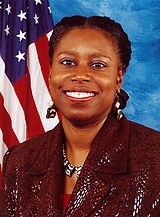
Cynthia McKinney: The Truth on Libya–Another War of Lies

04 Inter-State Conflict, 05 Civil War, 07 Other Atrocities, 10 Security, 11 Society, Corruption, Director of National Intelligence et al (IC), DoD, IO Deeds of War, Peace Intelligence
Cynthia McKinney

LIBYA AND THE BIG LIE: USING HUMAN RIGHTS ORGANIZATIONS TO LAUNCH WARS

Mahdi Darius Nazemroaya

The war against Libya is built on fraud. The United Nations Security Council passed two resolutions against Libya on the basis of unproven claims, specifically that Colonel Muammar Qaddafi was killing his own people in Benghazi. The claim in its exact form was that Qaddafi had ordered Libyan forces to kill 6,000 people in Benghazi. These claims were widely disseminated, but always vaguely explained. It was on the basis of this claim that Libya was referred to the U.N. Security Council at U.N Headquarters in New York City and kicked out of the U.N. Human Rights Council in Geneva.

False claims about African mercenary armies in Libya and about jet attacks on civilians were also used in a broad media campaign against Libya. These two claims have been sidelined and have become more and more murky. The massacre claims, however, were used in a legal, diplomatic, and military framework to justify NATO’s war on the Libyans.

Using Human Rights as a Pretext for War: The LLHR and its Unproven Claims

One of the main sources for the claim that Qaddafi was killing his own people is the Libyan League for Human Rights (LLHR). The LLHR was actually pivotal to getting the U.N. involved through its specific claims in Geneva. On February 21, 2011 the LLHR got the 70 other non-governmental organizations (NGOs) to sent letters to the President Obama, E.U. High Representative Catherine Ashton., and the U.N. Secretary-General Ban-ki Moon demanding international action against Libya invoking the “Responsibility to Protect” doctrine. Only 25 members of this coalition actually assert that they are human rights groups.

The letter is as follows:

Continue reading “Cynthia McKinney: The Truth on Libya–Another War of Lies”
Steve Aftergood: Updated CRS Reports on Secrecy

07 Other Atrocities, Corruption, Counter-Oppression/Counter-Dictatorship Practices, Cultural Intelligence, Government, IO Impotency
Steven Aftergood

Updated CRS Reports on Secrecy

Reports on secrecy-related topics from the Congressional Research Service that are newly updated (but otherwise not new) include these (all pdf).

Criminal Prohibitions on the Publication of Classified Defense Information, September 8, 2011

Protection of Classified Information by Congress: Practices and Proposals, August 31, 2011

The State Secrets Privilege: Preventing the Disclosure of Sensitive National Security Information During Civil Litigation, August 16, 2011

Newly updated CRS reports on other topics include these.

Intelligence Issues for Congress, September 14, 2011

The Palestinians: Background and U.S. Relations, August 30, 2011

U.S. Foreign Aid to the Palestinians, August 29, 2011

DefDog: The Importance of Selection Bias in Statistics

Advanced Cyber/IO, Analysis, Communities of Practice, Director of National Intelligence et al (IC), DoD, Officers Call, Policies, Threats
DefDog

This would be a great tool to determine the analytical capabilities of the IC….bet they would miss it….

The importance of “selection bias” in statistics

During WWII, statistician Abraham Wald was asked to help the British decide where to add armor to their bombers. After analyzing the records, he recommended adding more armor to the places where there was no damage!

This seems backward at first, but Wald realized his data came from bombers that survived. That is, the British were only able to analyze the bombers that returned to England; those that were shot down over enemy territory were not part of their sample. These bombers’ wounds showed where they could afford to be hit.

Said another way, the undamaged areas on the survivors showed where the lost planes must have been hit because the planes hit in those areas did not return from their missions.

Click on Image to Enlarge

Phi Beta Iota:  The US secret intelligence community is largely worthless, providing “at best” 4% of what the President or a major commander needs, and virtually nothing for everyone else.  They keep doing the wrong thing righter, instead of the right thing.  To do the right thing requires integrity.  Go figure.

See Also:

Dr. Russell Ackoff on IC and DoD + Design RECAP

2010: Human Intelligence (HUMINT) Trilogy Updated

Steve Aftergood: Citizen Scientists Using Mobile Phones

Advanced Cyber/IO, Civil Society, Collective Intelligence, Hacking, InfoOps (IO), Mobile, Policies, Real Time, Threats
Steven Aftergood

Using Mobile Phones to Engage Citizen Scientists in Research
E. A. Graham, S. Henderson, and A. Schloss
[Abstract] [PDF]

Mobile phone–based tools have the potential to revolutionize the way citizen scientists are recruited and retained, facilitating a new type of “connected” citizen scientist—one who collects scientifically relevant data as part of his or her daily routine.  Established citizen science programs collect information at local, regional, and continental scales to help answer diverse questions in the geosciences and environmental sciences. Hundreds of thousands of citizen scientists contribute to recurring research projects such as the Audubon Society’s annual Christmas Bird Count, which drew more than 60,000 observers in 2009, or the U.S. Environmental Protection Agency’s Volunteer
Monitoring program, through which trained volunteers improve the monitoring of water quality in lakes and streams across the United States. These programs have relied on traditional recruiting techniques and written observations. New methods for engaging participants through technology, specifically, mobile applications, or apps, provide unprecedented ways for participants to have immediate access to their own and others’ observations and research results.

Phi Beta Iota:  Changes to the Earth that used to take 10,000 years now take three.  Real-time science is no longer a dream, it is a necessity.  Governments and corporations as well as universities appear to be largely out of touch with the possibilities, but we do note that for years Taiwan has been paying a bounty to citizens who capture polluters in the act with a snapshot and GPS location.

WInslow Wheeler: USAF Cost Over-Runs–DoD Micro-Look

03 Economy, 04 Inter-State Conflict, 07 Other Atrocities, 10 Security, 11 Society, Budgets & Funding, Corruption, DoD, Government, IO Deeds of War, Military, Officers Call, Peace Intelligence
Winslow Wheeler

When a system is so slosh with money that it does not know what its costs are, it is time to take serious action.  But what do you do when no one cares?

The US Air Force misreports, even to itself (and to Congress and OSD), the cost to operate and support its own aircraft.  That is the bottom line of my recent attempt to uncover operating and support (O&S) costs for aircraft like the F-22 and the B-2.

It also gets more interesting: the official USAF data that are available show that, despite promises to the contrary, “stealth” aircraft are far, far more expensive to operate than the aging (and expensive to maintain) relics they are to replace.  Moreover, the data that are available are very likely an understatement.  Also, there are some other cost Queens in the USAF inventory; still others are hidden in the missing data.

The amounts of money involved are huge.  Generally, O&S costs for aircraft are twice (very probably more) the cost to acquire them.  For example, OSD predicts the $379 billion F-35 program will cost an additional $916 billion to operate and support.  (However, the O&S number is a low-ball prediction.)

What is happening about this?  Nothing.

These are some of the points in a 3,000 word study piece I recently completed.  The piece, with a one page summary, follows below.  It is also at the CDI website at , and you can also see journalists Colin Clark's take.

The text of the short study and its summary follows:

Continue reading “WInslow Wheeler: USAF Cost Over-Runs–DoD Micro-Look”

DefDog: US Surveillance Law Goes to Supreme Court

07 Other Atrocities, Civil Society, DHS, Director of National Intelligence et al (IC), Ethics, Government, IO Technologies, Law Enforcement
DefDog

Court allows challenge of U.S. surveillance law

By

Washington Post, 21 September 2011

A group of plaintiffs hoping to mount a challenge to U.S. surveillance law secured a major victory Wednesday when a federal appeals court upheld their standing to sue the government.

The Second Circuit Court of Appeals’ 6-6 decision allows a group of American lawyers, human rights activists and journalists to challenge the constitutionality of the Foreign Intelligence Surveillance Act as amended by Congress in 2008.

The revision expanded the government’s surveillance authority, permitting intelligence agencies to collect information on U.S. soil without a warrant identifying a particular individual — as long as the government could assure a surveillance court that its targeting procedures are designed to find people who are not U.S. persons and who are overseas.

U.S. government has typically attempted to block such challenges by arguing that litigation would reveal state secrets or that the plaintiffs lack standing to sue. But in March, a three-judge panel accepted the argument of the plaintiffs, represented by the American Civil Liberties Union, that the law had harmed them by forcing them to take draconian measures to avoid government interception of their phone calls and e-mails to overseas clients.

In other words, the plaintiffs in the case, Amnesty International v. Clapper, had standing.

Continue reading “DefDog: US Surveillance Law Goes to Supreme Court”

Steven Aftergood: Four Million Security Clearances Plus…

07 Other Atrocities, Corruption, Director of National Intelligence et al (IC), Government, Intelligence (government)
Steven Aftergood

Number of Security Clearances Soars

September 20th, 2011 by Steven Aftergood

The number of persons who held security clearances for access to classified information last year exceeded 4.2 million — far more than previously estimated — according to a new intelligence community report to Congress (pdf).

The report, which was required by the FY2010 intelligence authorization act, provides the first precise tally of clearances held by federal employees and contractors that has ever been produced.  The total figure as of last October 1 was 4,266,091 cleared persons. See “Report on Security Clearance Determinations for Fiscal Year 2010,” Office of the Director of National Intelligence, September 2011.

In 2009, the Government Accountability Office had told Congress that about 2.4 million people held clearances “excluding some of those with clearances who work in areas of national intelligence.”  (“More Than 2.4 Million Hold Security Clearances,” Secrecy News, July 29, 2009).  But even with a generous allowance for hundreds of thousands of additional intelligence personnel, that estimate somehow missed more than a million clearances.

Likewise, one of the many startling findings in the 2010 Washington Post series (and 2011 book) “Top Secret America” by Dana Priest and William M. Arkin, was that “An estimated 854,000 people, nearly 1.5 times as many people as live in Washington, D.C., hold top-secret security clearances.”

But remarkably, that too was a significant underestimate, according to the new report.  In actual fact, as of October 2010 there were 1,419,051 federal employees and contractors holding Top Secret clearances.

As high as the newly determined total number of clearances is, it may not be the highest number ever.  In the last decade of the cold war, a comparable or greater number of persons seems to have had security clearances.  In those years the size of the uniformed military was much larger than today, and a large fraction of its members were routinely granted clearances.  Thus, as of 1983, there were approximately 4.2 million clearances, according to 1985 testimony (pdf) from the GAO.  But that was an estimate, not a measurement, and the actual number might have been higher (or lower).  By 1993, the post-cold war number had declined to around 3.2 million clearances, according to another GAO report (pdf) from 1995.

The unexpectedly large number of security clearances today can presumably be attributed to several related factors:  the surge in military and intelligence spending over the past decade, increased government reliance on cleared contractors, and intensive classification activity that continues today.

Phi Beta Iota:  For $80-90 billion a year, $15 billion or so of which is the cost of maintaining one of the most extraordinarily inept and unreliable secrecy systems on the planet (much much larger than those of all dictators combined), we get, “at best” 4% of the intelligence (decision-support) that the President or a major commander needs, and nothing for everyone else.

See Also:

Graphic: Jim Bamford on the Human Brain

Graphic: Tony Zinni on 4% “At Best”

Open Source Agency: Executive Access Point

Review: No More Secrets – Open Source Information and the Reshaping of U.S. Intelligence

Review: Top Secret America – The Rise of the New American Security State

noble gold