Journal: Fake Gold Bars from China to India, Made in the USA–Federal Reserve and Bank of NY Accused–Meanwhile, Prison Planet and Bullion Vault Say No

02 China, 03 Economy, 03 India, 06 Russia, 10 Transnational Crime, Commerce, Commercial Intelligence, Ethics, Government
Full Story Online
Back-Up Copy Online
Original Online Source

Phi Beta Iota: We are NOT making this up.  People from around the world are starting to send us this stuff, and we love it–this clearly demonstrates the power of public intelligence in the aggregate, and the importance of multiniational information-sharing and multinational sense-making, the bulk of which is not now and never will be “secret.”  We would not be at all surprised to start seeing Goldman Sachs and Bank of New York executives dying like flies, with former Secretaries of the Treasury and Chairs (and NY Governors) of the Federal Reserve having pride of place on the hit list.  The Russians and Chinese (and soon the Indians) all have a right to take “extreme exception” to the state-sponsored crimes the above document discusses.

Preliminary Rebuttal

The Rumor About London Good Delivery Gold Bars That Are Allegedly Filled with Tungsten

BullionVault says: Accredited custodians only take in bars from other accredited vaults, and metal only enters the system from accredited refiners. Even when they bear the correct bar stamps, large gold bars are not usually accepted from people outside the Good Delivery circuit, which is why taking a Good Delivery bar into private possession seriously dents its value.

Phi Beta Iota: Hubris cannot be discounted, and since the Federal Reserve is part of the Good Delivery Circuit and its integrity has been severely impugned, this issue must join the matter of pre-9-11 gold evacuation from the World Trade Center as requiring further investigation.

Journal: Material Poverty (AF) vs Moral Poverty (US)

Collaboration Zones, Communities of Practice, Ethics, Key Players, Policies, Reform, Strategy, Threats

Full Story Online
Full Story Online

Afghans say poverty, not Taliban, main cause of war

Jonathon Burch – Wed Nov 18

Half our people have been driven mad–always in fear.”

KABUL (Reuters) – Most Afghans see not Taliban militants but poverty, unemployment and government corruption as the main causes of war in their country, according to a report by a leading aid group released on Wednesday.

After three decades of war, Afghanistan remains one of the poorest and least developed countries in the world. It is also one of the most corrupt. Unemployment stands at 40 percent and more than half the country live below the poverty line.

Full Story Online
Full Story Online

Retired military officers cash in as well-paid consultants

WASHINGTON — Six months after Marine Lt. Gen. Gary McKissock retired in 2002, he did what many other ex-military leaders do: He joined the board of directors of a defense contractor, a company doing business with his former service.

McKissock also had a second job. The Marines brought him back as an adviser, at double the rate of pay he made on active duty. Since 2005, the Marines have awarded McKissock contracts worth $1.2 million, in addition to his military pension of about $119,000 a year. McKissock is one of at least 158 retired admirals and generals the Pentagon has hired to offer advice under an unusual arrangement.

Continue reading “Journal: Material Poverty (AF) vs Moral Poverty (US)”

Journal: Web War II

Communities of Practice, Ethics, InfoOps (IO), Key Players, Methods & Process, Mobile, Policies, Real Time, Threats
Full Story Online
Full Story Online

Web 2.0 Expo: O'Reilly Warns Of Web War

Paul McDougall November 17, 2009

Internet visionary fears an end to openness as Internet rivals consolidate power.

The Web, which began life as an open community where information and tools were freely shared across geographic, political, and social boundaries, is in danger of becoming segmented into a federation of closed camps led by a handful of increasingly powerful vendors, said Internet pundit Tim O'Reilly.”We're heading back into an ugly time,” said O'Reilly, during a keynote address Tuesday at the Web 2.0 Expo in New York City.

O'Reilly said efforts by Google (NSDQ: GOOG), Microsoft (NSDQ: MSFT), Amazon (NSDQ: AMZN), Apple, and other tech vendors—as well as publishers like Rupert Murdoch's Dow Jones—to create closed communities around their products and services are jeopardizing the freedom, and the spirit, of the Web.
Continue reading “Journal: Web War II”

Reference: Berto Jongman Recommends

05 Civil War, 09 Terrorism, Media Reports, Monographs
Berto Jongman
Berto Jongman

Today's recommendaitons:

Who's who in the Somali insurgency: A Reference Guide

Interview with Maajid Nawaz:Becoming a Muslim Radical

New Quilliam report: British prisons are incubating Islamist extremism

Selected Translation of the LIFG Recantation Document

Amazon Page
Amazon Page

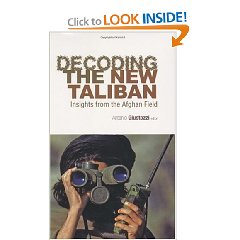
Decoding the New Taliban: Insights from the Afghan Field. Antonio Giustozzi gathers a renowned cast of journalists, experts, and academics to answer the most pressing questions regarding the Taliban today. Each contributor possesses extensive knowledge of the insurgency's latest developments, decoding its structure and organization as it operates within specific regions and provinces. They analyze the new Taliban as it expands, from the mature south, where they hold sway, to the southeast, where they struggle to penetrate, from the west and northeast, now in the initial stages of infiltration, to the provinces surrounding Kabul, which have been unexpectedly and quickly occupied.

Amazon Page
Amazon Page

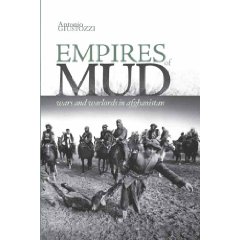
Empires of Mud: The Neo-Taliban Insurgency in Afghanistan 2002-2007. Warlords are charismatic leaders who exploit weak authorities to gain control of subnational areas. Nevertheless, warlords do in fact participate in state formation, and this book considers the dynamics of warlordism within the context of such debates. Antonio Giustozzi begins with aspects of the Afghan environment that are conducive to the fragmentation of central authority and the emergence of warlords. He then accounts for the phenomenon from the 1980s to today, considering Afghanistan's two foremost warlords, Ismail Khan and Abdul Rashid Dostum, along with their political, economic, and military systems of rule.

Journal: The Intelligence War Not Fought

About the Idea, Collaboration Zones, Communities of Practice, Key Players, Policies, Threats

Full Story Online
Full Story Online

Settling An Intelligence Turf War
By Walter Pincus    Washington Post November 17, 2009 Pg. 29

Early last week, several long-festering bureaucratic issues that had arisen between Director of National Intelligence Dennis C. Blair and CIA Director Leon Panetta had to be settled by national security adviser James L. Jones, through some Solomon-like decisions.

Continue reading “Journal: The Intelligence War Not Fought”

Journal: What If We Fail In Afghanistan?

Collaboration Zones, Communities of Practice, Ethics, Key Players, Policies, Reform, Strategy, Threats

What If We Fail in Afghanistan?

Steve Coll The New Yorker November 16, 2009

What would be the consequences of a second Islamic Emirate? My scenarios here are intended analytically, as a first-draft straw-man forecast:

The Nineties Afghan Civil War on Steroids

Momentum for a Taliban Revolution in Pakistan

Increased Islamist Violence Against India, Increasing the Likelihood of Indo-Pakistani War

Increased Al Qaeda Ambitions Against Britain and the United States

Phi Beta Iota: This is a classic status quo “Empire as Usua”l question.  It is not only the wrong question, trying to answer it perpetuates the insanity that begot the problem in the first place.  Steve Coll, author of  Ghost Wars: The Secret History of the CIA, Afghanistan, and Bin Laden, from the Soviet Invasion to September 10, 2001, is a very smart, very well-connected mandarin with The Washington Post as his home base.   The question that We the People should be forcing the White House and Congress to answer is this:

What If We Stop Spending $1.3 Trillion a Year on War, and Instead

Spend At Least a Third of That on Peace?

We never ask a question we cannot answer. The answer is clear-cut: we create a prosperous world at peace. See the two graphics below the fold.

Continue reading “Journal: What If We Fail In Afghanistan?”

Journal: Sarah Palin Loses the Lipstick

05 Civil War, Civil Society, Collective Intelligence, Cultural Intelligence

Full Story Online & Video

A guide to who gets whacked

Andy Barr, Jonathan Martin Tue Nov 17

Sarah Palin may claim to scorn elites, but her new book will ring familiar to its Beltway readership.

Getting even with those who crossed her, praising her allies and generally putting a self-serving sheen on last year’s presidential campaign, “Going Rogue” is typical of the political memoir genre of recent vintage. It’s the sort of book that will send the political class scurrying to bookstores, eager to see how they fared in what’s known as “the Washington read.”

With no index, though, Palin’s book has made that ritual more difficult.

Amazon Page
Amazon Page

So POLITICO, having obtained a copy of the book before its Tuesday release, has created a reader’s guide to “Going Rogue,” grouping the many characters into three categories: Friends, Foes, In Between.

Below the Fold we provide a commentary and links to a number of books about the prospects for honest independent government in 2012 and beyond.

Continue reading “Journal: Sarah Palin Loses the Lipstick”

noble gold