About the Author: Robert Taber traveled to Cuba in the late 1950s as a CBS investigative journalist to cover the country’s burgeoning revolutionary movement. He became an eyewitness to history as he marched from the Sierra Maestra to Havana with the ragtag revolutionaries, led by Fidel Castro and Che Guevara, who forced Batista to flee the country.
The author lists six conditions for a successful revolution:
1. Valid popular grievances
2. Sharp social divisions (or ethnic)
3. Unsound or stagnant economy
4. Oppressive or illegitimate government
5. Moral leadership within the guerilla movement
6. A foundation on the truth rather than lies
The Kenyan Government has been getting quite tech savvy in the recent past, becoming more pronounced as Kenyans join the civil service. This has resulted in subtle, but solid, movements towards a better connected Government as was showcased during the Connected Kenya Summit in Mombasa in April.
The following thoughts were inspired by one of Zeynep Tufekci’s recent posts entitled “Faster is Different” on her Technosociology blog. Zeynep argues “against the misconception that acceleration in the information cycle means would simply mean same things will happen as would have before, but merely at a more rapid pace. So, you can’t just say, hey, people communicated before, it was just slower. That is wrong. Faster is different.”
I think she’s spot on and the reason why goes to the heart of complex systems behavior and network science. “Combined with the reshaping of networks of connectivity from one/few-to-one/few (interpersonal) and one-to-many (broadcast) into many-to-many, we encounter qualitatively different dynamics,” writes Zeynep. In a very neat move, she draws upon “epidemiology and quarantine models to explain why resource-constrained actors, states, can deal with slower diffusion of protests using ‘whack-a-protest’ method whereas they can be overwhelmed by simultaneous and multi-channel uprisings which spread rapidly and ‘virally.’
Phi Beta Iota: Concentrations of power create preconditions for revolution. Precipitants (such as burning monks or fruit vendors) ignite masses. The public is a power no government can repress forever. Howard Zinn (RIP) knew the public is a power government cannot repress; Vaclav Havel spoke to this (power of the powerless); Jonathan Schell documented it most ably (unconquerable world). Bottom line: With a tiny handful of exceptions, all governments have lost legitimacy and capability at the same time that the public is increasingly aware of the shocking injustices by banks and predatory corporations that have been legalized by governments. Patrick Meier's discussion is a significant contribution to our understanding of why a global revolution is inevitable and panarchy will replace “sovereignty” as the primary operating principle for Earth.
This email is from an active duty colonel who travels all over Afghanistan. He actually goes on foot patrols with troops to see things for himself. Here is his latest report. His message is bad Ju Ju, I am afraid.
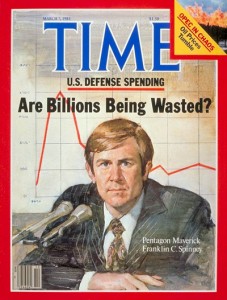
Chuck Spinney
La Ciotat, France
To All,
The mendacity is getting so egregious that I am fast losing the ability to remain quiet; these yarns of “significant progress” are being covered up by the blood and limbs of hundreds – HUNDREDS – of American uniformed service members each and every month, and you know that the rest of this summer is going to see the peak of that bloodshed.
The article by Michael O'Hanlon last week (i.e. Success worth paying for in Afghanistan) and the one in today's WSJ by Kagan and Kagan (i.e., We Have the Momentum in Afghanistan) made me sick to my stomach – especially the latter. Have you seen it yet? It is the most breathless piece of yellow journalism I’ve seen in the entire OIF-OEF generation.
(pieces of the article)
The initial Geiger counters used in the project were from the Reuseum, an Idaho business that recycles old technology to new homes.
Tokyo Hackerspace worked to expand the sensor network with Safecast (formerly RDTN) and Geiger Maps JP, two sites that aggregate and visualize radiation data.
The project began as a way to collect and distribute more-recent radiation information than the government was releasing, in an effort to keep Tokyo residents calm. On March 13, just a day after the explosions at Fukushima, Tokyo Hackerspace was working on getting its own radiation data. The government took almost a week to begin releasing public radiation data, and even then the data was sporadic.
If you haven't already heard about bitcoin, the first popular cypto-currency, you soon will. The idea for the currency is simple. It's a software system that makes it possible to manufacture and trade (P2P), in a public and decentralized way, a limited digital resource. That's it.
So why the interest in bitcoin?
Simple. It appears to be gaining critical mass as a transactional currency that operates outside of the traditional monetary conduits (banks, SWIFT, etc.). That fact alone has attracted lots of people to the system, despite the fact that it's not built to allow completely anonymous transactions (it can't be, given that it requires network broadcasts of every transaction to maintain the integrity of the system and prevent counterfeiting).
As a transactional currency that operates outside of traditional systems, it's actually a pretty good medium of exchange (particularly if those transactions are small and quick). The problems arise when people confuse bitcoin's role as a transactional medium and its role as a store of value (as in: holding it as an asset).