Review: The Web of Knowledge–A Festschrift in Honor of Eugene Garfield

4 Star, Information Society

Amazon Page
Amazon Page

4.0 out of 5 stars About the Methods, Not the Findings,

February 11, 2001
Helen Barsky Atkins

This was not the book I was looking for, but it is still worthy of buying if you have any interest at all in charting knowledge terrain and “knowing who knows”. In honor of Eugene Garfield, arguably the most influential man in the sociology of knowledge in this century or any other, the book provides a wonderful collection of *methodological* articles about the bibliometrics and indicators associated with charting who quotes whom and what does it mean in terms of influence within and among nations, organizations, schools of thought, and individual cabals.

I was intrigued to find that the book, perhaps because it is so original and represents the first book-length collection of its kind, did not include an article on a topic near and dear to my heart, that is, developing algorithms to identify anomalies in citation such that one can weed out those who are citing one another simply to “beat the game.” As citation analysis becomes a more mainstream means of measuring intellectual contributions (it is still not mainstream–too many otherwise talented intelligence community managers of analysts have no clue it exists), some form of citation validation and policing will be needed.

There are three other areas where I would say that this book is a vital and valuable foundation, and desperately in need of three distinct sequel publications:

First, we need to migrate the value of citation analysis to the Internet, not only to electronic journals but to citations of self-published papers on web sites as well as to informed observations in expert forums. Neither the classification schema nor the industry standards for making this possible exist today. I would go so far as to suggest that a new Internet standards committee dedicated to this specific issue should be created, immediately.

Second, an analagous situation exists with those experts who are not permitted to publish in the open literature, but who are very well known by virtue of their title, organizational affiliation, participation in conferences, or classified work revealed to a very few. As the core competency of government becomes the nurturing of national knowledge–not only in science and technology but also in all international as well as domestic matters–some form of citation analysis process must be developed that makes these experts (or if not expert, then influentials by virtue of their position at the international, national, state/provincial, or local levels) and their counterparts in non-governmental organizations (e.g. Red Cross, World Bank, elements of the United Nations) readily identifiable. The Internet, and the public availability of email communication pattern analysis information that does not intrude on the substantive privacy of electronic communications, may possible be helpful here.

Third, and finally, we come to the area of interest that originally led to my purchasing this book, which is that of actually identifying centers of excellence and “portals” into the entire range of published and unpublished knowledge on any given topic. Such a sequel publication must not only document, in an evolutionary or “living” way, who the top 100 people are across every social science and science topic, but also the top 25 institutions with deliberate distinctions between Asian, Americas, European, and African centers of excellence. The Institute of Scientic Information (ISI) has been unwilling to do this as an internal investment, and has not heard from enough governments and corporations to warrant its moving aggressively to create what I would regard as an extraordinarily valuable and relevant guide for all manner of investments and improvements in international, national, and state-based research and education. I would go so far as to say that such a guide, such a service of common concern, would go a very long way toward making possible extraordinary new means of leveraging distributed intellectual resources, lowering the cost of seminal research, and introducing new forms of transnational collaborative work.

Garfield, and citation analysis and all those who have built on Garfield's work, together represent the first mile in a hundred mile journey toward creating the “World Brain” that H.G. Wells, among a select few, has envisioned. There is much yet to be done.

Vote on Review
Vote on Review

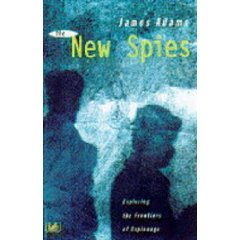
Review: New Spies–Exploring the Frontiers of Espionage

4 Star, Intelligence (Government/Secret)

Amazon Page
Amazon Page

4.0 out of 5 stars Party Line, Neither Investigative nor Innovative,

January 10, 2001
James Adams
By the then (UK) Sunday Times Bureau Chief in Washington, a former defense correspondent, I found this book somewhat disappointing but never-the-less worthy of consideration. Although the author concludes that the end of the Cold War should have produced a massive upheaval and did not, leaving “too many of the old practices intact with little evidence that the intelligence community is ready to face the fast changing, frightening world that lies ahead,” my impression was that the author was completely taken in by the party line and overlooked most of the really trenchant intelligence reform literature, including the open source revolution. It is, however, replete with useful references, especially to what then DCI Bob Gates was thinking and talking about, and for that reason I would tend to include it in any serious intelligence library.
Vote on Review
Vote on Review

Review: Setting National Priorities–The 2000 Election and Beyond

4 Star, Politics, Priorities

Amazon Page
Amazon Page

4.0 out of 5 stars Brilliant and Valuable, Missing the Presidential Trade-Offs,

December 6, 2000
Henry J. Aaron

The public policy overviews by Brookings are always among the best, and they are even more valuable this year when several think tanks appear to have defaulted on their traditional role in offering up reviews for consideration by the transition team. Across the various issue areas, including international, social, domestic, and governance policy domains, they present thoughtful recommendations.

Unfortunately, despite their deep understanding of the dilemmas facing the next President, the book does not provide the two things I would most like to have seen: one or two page “decision-papers” that set out the choices to be made within each issue area, and the specific budget costs and timelines for those choices; and a larger over-all budget choice document in no more than 2 pages that outlines what changes might be made in both the budget construction already underway in CY 2001 that the new President can influence, and the budget to be prepared from scratch in CY 2002 that should reflect the vital trade-offs as well as the vital plus-ups that need to be made in defense, intelligence, public health, and education, to name just my top four. In defense and intelligence, my specific area of interest, I would have liked to see some specific recommendations, and their costs, for restoring the 450 ship Navy, creating the contingency and peacekeeping force as well as the humanitarian assistance and disaster relief forces, and some specifics on considerably reinforcing diplomatic, peace corps, and economic assistance operations including a Digital Marshall Plan. This is not to quarrel with findings and views of the authors, all of whom merit very serious consideration, but rather to note that the book does not go far enough, either in specific programmatic terms, or in politically useful presentation terms.

This is an excellent book, but it is also a classic example of unfettered brilliance-without the concise decision papers and the over-all budget numbers, this book will only be read by staffers, not by principals, and that is a shame, because on balance I think there is a great deal to be learned from each of the authors contributing to this work.

Vote on Review
Vote on Review

Review: Betrayal of Trust–The Collapse of Global Public Health

4 Star, Asymmetric, Cyber, Hacking, Odd War, Atlases & State of the World, Complexity & Catastrophe, Corruption, Culture, Research, Disease & Health

Amazon Page
Amazon Page

4.0 out of 5 stars Way Too Long, But Someone Had To Write This Book,

November 15, 2000
Laurie Garrett

It took me over a month to do justice to this book, and I have taken into account the thoughts of other reviewers. A book of this importance would indeed have benefited from an international advisory board of public health, medical, insurance, and policy experts; it would certainly have benefited from greater structure, firmer editing, and a foreword by someone like a former Surgeon General of the United States. As it is, it appears to have overcome these deficiencies with hyped-up marketing and sweetheart reviews, and this in some ways counterproductive because this book could have, should have, become a mainstream topic in the Presidential campaign. It failed to do so for several reasons, not least of which is the propensity of both candidates and their advisors to avoid serious thinking, but also because the book is not helpful to a popular understanding of the very real global and domestic threats to the health of our children today and in future generations. Having said all this, I commend the book for its content and do not recommend it as avocational reading. There are some very important points that the book brings out, and I will itemize these in order of importance: 1) Public health is about detection and prevention, medicine is about remediation. In the long run, investments in public health are vastly cheaper and more effective than after-the-fact medical intervention; 2) The insurance industry in the developing world has failed to support public health investments, and in a remarkable collusion with the pharmaceutical, hospital and managed health care industries, has created a very expensive and increasingly ineffective system focused on drugs (to which diseases are increasingly resistant) and hospitals; 3) Hospitals are no longer reliable in terms of protecting patients from both error and secondary infection from other patients. People are coming out of hospitals, in many cases, with more diseases than when they went in; 4) The health of our nation depends on the health of all other nations-not only does a collapse of public health in Africa lead to failed states and forced migrations, but it also is but an airline flight away from infecting Kansas; 5) Clean drinking water, uninfected food, and good environmental and occupational health conditions are at risk in many parts of the United States and Europe, not only in Russia and the rest of the world; 6) The United Nations, and the World Health Organization in particular, are in disarray and ineffective-in large part because of a lack of support from member nations-at dealing with the public health commons. There is no question but that the author has hit a “home run” in terms of describing the harsh reality of epidemics in India and Africa, the collapse of public health in Russia, the rapid migration of many diseases from Russia through Germany to the rest of Europe and the U.S., and the severe costs in the U.S. of a retreat from the collective good with respect to public health. Unfortunately, it is a home run hit in isolation, not a game-winning home run, because it fails to drive home, to the only audience that matters-the U.S. voter-exactly what political and economic initiatives are required to achieve three simple objectives: 1) re-establish the public health infrastructure in the U.S.; 2) redirect the entire health care industry toward preventive measures-including water and food quality controls-instead of remedial prescriptions; and 3) provide compelling incentives to the rest of the world for cleaning their own house (this presumes that we are able to clean our own first, a very questionable assumption at this point in time). This is a valuable book, a five in terms of intent, a three in terms of execution, and I am glad that I took the time to read it. It provides a wonderful foundation for enjoying, at an intellectual and policy level, the medical and public health novels by Robin Cook.

Vote on Review
Vote on Review

Review: 10 Minute Guide to Business Research on the Net

4 Star, Intelligence (Commercial)

Amazon Page
Amazon Page

4.0 out of 5 stars Valuable, Dangerous, Incomplete, Buy It,

November 11, 2000
Thomas Pack
The bottom line on this little book is that it merits buying and throwing in your suitcase if you are the kind of person that needs to do your own research from the road. In a nutshell, it is: 1) valuable because it brings together in one place a very easy to read and use guide to a wide range of Internet-based resources; 2) dangerous because it may tempt business managers to do their own research from a hotel room rather than rely on real information professionals; 3) incomplete in many ways–two obvious ones are its neglect of the meta-search engines such as Compernic and its oversights of the Burwell Worldwide Directory of Information Brokers; and 4) worth buying as a light-weight (double entrendre intended) reference. I like it, it is worth the price and still relevant today.
Vote on Review
Vote on Review

Review: Policing the New World Disorder–Peace Operations and Public Security

4 Star, Atrocities & Genocide, Complexity & Resilience, Culture, Research, Force Structure (Military), Humanitarian Assistance, Insurgency & Revolution, Justice (Failure, Reform), Peace, Poverty, & Middle Class, Security (Including Immigration), Stabilization & Reconstruction, Threats (Emerging & Perennial), Truth & Reconciliation, Voices Lost (Indigenous, Gender, Poor, Marginalized)

Amazon Page
Amazon Page

4.0 out of 5 stars From Missile Gap to Cop Gap–Heart of Stability Operations,

October 13, 2000
Robert B. Oakley
EDITED 18 September 2007 to add links to other books. Still Ref A.

In excruciating detail, with substantial commonality between a number of case studies, this book examines the traditional public security (police, internal order) function in relation to failed states and external interventions.

This is not a book about the larger issue of when and how to intervene in the internal affairs of states beset by internal conflict and it is not a book about the actual conditions around the world that require some form of imposed or reinforced public order. Rather, it is the most detailed book one could hope for on the need for an international law enforcement reserve that is capable of rapidly filling the gap in local public police services that occurs when the indigenous capability collapses and traditional military forces arrive unprepared to meet this need.

All of the case studies are world-class, with primary source detail unlike any normally seen in the literature. All agree that this is a “force structure” issue that no government and certainly not the United Nations, has mastered, but most give due credit to UN civilian police operations for being the best available model upon which to build a future capability.

The summary of conclusions by Ambassador Oakley and Colonel Professor Dziedzic are alone worth the price of the book. If the Cold War era might be said to have revolved around early perceptions of a “missile gap”, the 21st Century with its Operations Other Than War (OOTW) could reasonably be said to have two issues-natural conditions such as depleted water resources, which is not the book's focus, and the “globo-cop gap”, which is-the book documents in a very compelling manner the fact that there is a major capabilities (and intelligence) chasm between preventive diplomacy on the one side, and armed military forces on the other, and that closure of this gap is essential if we are to improve our prospects for rescuing and maintaining public order around the world.

The capabilities of U.S. military police and civil affairs specialists are touched on by several pieces, but I for one would have liked to see more emphasis on what changes in their force structure is required-my understanding is that we have not increased their numbers in the aftermath of the Cold War despite the fact that these units are being used up all over the world, without relief.

The conclusion highlights the need for constabulary forces, and helpfully identifies the following specific national capabilities as being relevant (in this reader's interpretation) to a future standing international gendarmerie: U.S. Military Police and Special Forces, French gendarmerie, Spanish Guardia Civil, Chilean carabineros, Argentine gendarmes, Italian carabinieri, Dutch Royal Mariechaussee). I would add the Belgian Gendarme, the first national force to establish an open source intelligence network across all police precincts in the entire country.

It is clear from both the conclusion and the case studies that this constabulary-police capabilities requirement needs agreed-upon international concepts, doctrine, training, earmarked resources including surge capabilities and transport, and so on. We do not appear to have learned any lasting lessons from the various interventions, in that civil affairs and military police continue to be “last in line” for embarkation into areas where military forces are being introduced, and there is no U.S. program within Program 150 where we can demonstrate a real commitment to “law and order” as part of our contribution to peace in the 21st Century.

The book lacks an index, a typical shortcoming of think tank and defense educational institutions, and this is a major flaw that should be corrected in the next printing. This book is “Ref A” for every foreign service, military, and law enforcement officer interested in doing a better job of integrating diplomatic, gendarmerie, and military capabilities in every clime and place.

See also:
Breaking the Real Axis of Evil: How to Oust the World's Last Dictators by 2025
See No Evil: The True Story of a Ground Soldier in the CIA's War on Terrorism
Sleeping with the Devil: How Washington Sold Our Soul for Saudi Crude
Deliver Us from Evil: Peacekeepers, Warlords and a World of Endless Conflict
The Unconquerable World: Power, Nonviolence, and the Will of the People
The Sorrows of Empire: Militarism, Secrecy, and the End of the Republic (The American Empire Project)
War of the Flea: The Classic Study of Guerrilla Warfare
The Road to 9/11: Wealth, Empire, and the Future of America

Vote on Review
Vote on Review

Review: A Half Penny on the Federal Dollar–The Future of Development Aid

4 Star, Budget Process & Politics, Disaster Relief, Humanitarian Assistance, Stabilization & Reconstruction

Amazon Page
Amazon Page

4.0 out of 5 stars Brother, Can You Spare a Half Penny to Save the World?,

October 12, 2000
Michael E. O'Hanlon
This is a hard-hearted practical look at development aid, and so it should be. The “official development assistance” (ODA) element of Program 150, the international affairs budget commonly recognized as the “preventive diplomacy” budget that runs alongside Program 50 (the traditional military budget), is evaluated by the authors in terms of amounts (are we doing enough), allocations (are we giving to the right countries), and directions (are we doing the right things). It is a small amount of money that is being discussed–$9 billion a year in 1997 for ODA alone-said to represent a half penny of each dollar spent by the U.S. government. This works out to about $15 per year for the members of the targeted populations. Larger more populous states receive less aid per capita than smaller states. India, Pakistan, Bangladesh, and China are especially disadvantaged. In contrast to today's $15 per person nvestment, the Marshall Plan provided in excess of $100 to $200 per person in Europe (but for only several years, working out to an equivalent amount when compared to sustained aid flows today).Several thoughtful observations jump out from the book:

1) Foreign aid is not preventing conflicts from emerging (if anything, and this is not implied by O'Hanlon but is explicit in William Shawcross' book DELIVER US FROM EVIL: Peacekeepers, Warlords and a World of Endless Conflict (Simon & Schuster, 2000), foreign aid contributes to instability by giving rise to warlords and black markets);

2) Foreign aid is of limited use in reconstructing societies ravaged by conflict, especially those with limited infrastructures that cannot absorb resources as well as European nations;

3) Foreign aid's best return on investment appears to be the education of women-even a few years of education has a considerable impact on birth control, health, and other areas of interest;

4)Foreign aid shapes both our own philosophy of foreign affairs, and the perceptions others have of our foreign role-it also shapes our domestic constituencies perception of why we should have a foreign policy arm;

5) Foreign aid does not play a significant role in most countries where there is access to open markets and stability does not frighten away investors-indeed the emerging expert consensus appears to lean toward debt forgiveness combined with private capital investment as the best approach to economic reform;

6) Foreign aid is least effective in those countries that are either unstable or have a range of harmful economic policies including trade barriers, large budget deficits, oversized public sectors, and overvalued exchange rates. Roughly half the countries receiving aid today have poor economic policies in place;

7) The U.S. is the least generous of the Office of Economic Cooperation and Development (OECD) members, providing just over one third as much of its Gross Domestic Product (GDP) as the other OECD countries-0.10 percent instead of 0.27 percent.

Having said all this, the author's document their views that our ODA investments need to rise from $9 billion to at least $12 billion a year, with other countries increasing their combined contributions from $51 billion to $68 billion per year. The authors favor increased foreign aid investments in poor countries with good economic policies, for the purpose of building transportation infrastructure, enhancing local health and education programs, and accelerating the expansion of utilities and communications services.

They also recommend a broader distribution of foreign aid for countries in conflict throughout Africa, and suggest that Public Law 480 food aid should be focused only on responding to disaster relief rather than indiscriminate distribution that benefits U.S. farmers but undermines foreign agricultural programs.

They conclude with the somewhat veiled suggestion that all of this could be paid for by a reduction of foreign military assistance to Egypt and Israel. One is left, at the end of the book, with two strong feelings: first, that U.S. foreign aid is on “automatic pilot” and rather mindlessly muddling along; and second, that this is a very small but very important part of the total U.S. national security budget, one that merits its own ombudsman within the National Security Council, and one that is worthy of no less than a penny on the dollar as we plan our future Federal investments.

What is left unsaid by the authors is whether the other $60-80 billion in foreign aid by various actors including the United Nations agencies, is well managed–one is left with the impression that the U.S. really faces two challenges: an internal challenge of improving its performance with respect to foreign aid, and an external challenge in demanding a more rational and coordinated approach to various forms of aid being sponsored by others.

Vote on Review
Vote on Review
noble gold