Review DVD: Michael Clayton (Widescreen Edition)

5 Star, Capitalism (Good & Bad), Reviews (DVD Only)
DVD Clayton
Amazon Page

Superb on Multiple Levels, Closes Beautifully, February 27, 2008

George Clooney

There are some really fine reviews. I will just say I consider this a five star film, not the average of four as shown. It was so very good that I paused it each time I had to get up for anything, and then watched the last four segments again this morning to ensure I had not missed anything.

At three different levels, a small boy and his dad talking about a fictional empire, at the street level, and at the strategic level of big law firms, I found this film extremely engaging and worthy.

For the first time I can remember, I actually read all of the closing credits because the producers had the brilliant idea of having Clooney take a taxi ride while his face did this whole range of reflective expressions that kept me glued to the screen.

Here, in priority order, are ten other DVDs I recommend–the first, Fight Club, is not at all what you would expect from the title, and I only watched it on my teen-ager's recommendation. He was right, it's a DVD for intelligent people. All these I list I own and recommend for purchase, not just rental.
Fight Club (Widescreen Edition)
The Departed (Widescreen Edition)
Live Free or Die Hard (Unrated Edition)
The Lives of Others
Seven (Single Disc Edition)
Firewall (Widescreen Edition)
Primary Colors
Lord of War (Widescreen)
Pulp Fiction
Batman Begins (Widescreen Edition)

Vote on Review

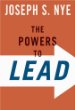
Review: The Powers to Lead

5 Star, Diplomacy, Leadership
Powers to Lead
Amazon Page

Superb Mix of Scholarship & Pragmatism,

February 26, 2008

Joseph S. Nye

Anything by Joe Nye stops my work and receives my undivided attention. This is an absolute gem of a book, a mix of world-class scholarship and world-class pragmatism. It goes to the top of my leadership list on Amazon.

The book opens with the observation that two thirds of US citizens believe their is a leadership crisis. The intellectual center of the book is its focus on “smart power” defined as a balanced mix of soft and hard power that is firmly grounded in “Contextual IQ,” a term credited to Mayo and Nohria of Harvard.

The author defines leaders as those who help a group create and achieve goals. He states that leadership is an art, not a science. I especially liked the early phases, “good contextual intelligence broadens the bandwidth of leaders.” He likens the relation of leaders and the led to surfers and the wave–can ride it but cannot move it this way and that.

Soft power, his signal contribution to the global dialog on international relations, is concisely defined as att5ractive power, yielding the power to ask instead of compell. He cites McGregor Burns in communicating that bullys who humiliate and intimidate are counter-productive, that “power-wielders are not leaders.”

There is a fine review of leadership styles, attributes, and a reference to female leadership rising (I have long said that women make better intelligence analysts because they have smaller egos and a great deal more emphathy and intuition). He provides a matrix for evaluationg inter effectivenesss and ethics in relation to goals, means, and consequences.

I was struck the emphasis on emotional intelligence and the needed ability to rapidly evaluate loyalty networks that might not be immediately obvious. He distinguishes between public politics and private politics.

The book concludes with a really extra-special and lengthy disucssion of leadership ethics and morality. The last two pages prior to top-notch notes and bibliographies are 12 take-aways on leadership (he had the wit to avoid making them the 12 commandments) consisting of a fragment that I list below, and explicative annotation that I do not–the book is worthy of buying for these two pages and the moral-ethical conclusion alone, but certainly this is an important book that should be read any anyone seeking to lead others.

1. Good leadership matters
2. Leadership can be learned.
3. Leaders help create and achieve group goals.
4. Smart leaders need both soft and hard power skills.
5. Leaders depend on and are partly shaped by followers.
6. Appropriate style depends on context.
7. Consultative style costs time, but has three major benefits.
8. Leaders need both managerial and organizational skills.
9. Leadership for crisis conditions requires advanced preparations, emotional maturity, and the ability to distinguish between operational, analytical, and political contexts.
10. Information revolution is shifting context of postmodern organizations from command to co-optive style.
11. Reality testing, constant information seeking, and adjusting to change are essential but (buy the book).
12. Ethical leaders use consciences, common moral rules, and professional standards, but conflicting values can create “dirty hands.”

I have just two nits with this book, neither of which is a buy-stopper:

A. On page 94 there is an annoyingly facile and superficial reference to the 9-11 commission citing cultural dissonance as one reason the FBI and CIA did not share information. As one who has both read and written extensively on this topic, not only have we all identified numerous examples of internal failures (e.g. the FBI rejected two walk-ins, one in Newark and one in Orlando, prior to the event; CIA sent line-crossers in and conclusively established there were no Weapons of Mass Destruction, but George Tenet parked his integrity on the same shelf Colin Powell used, and let the White House lie 935 times to the public and Congress). I have an edited book scheduled on Cultural Intelligence for 2009, this is an important topic, and merits better treatment from the author.

B. This book could usefully be expanded, or followed by another book, to integrate the books I list below, and the world-changing conditions they represent.
The leadership of civilization building: Administrative and civilization theory, symbolic dialogue, and citizen skills for the 21st century
How to Change the World: Social Entrepreneurs and the Power of New Ideas, Updated Edition
Leadership and the New Science: Discovering Order in a Chaotic World
One from Many: VISA and the Rise of Chaordic Organization
The 360 Degree Leader: Developing Your Influence from Anywhere in the Organization
The Knowledge Executive
The Collaborative Leadership Fieldbook
Group Genius: The Creative Power of Collaboration
Five Minds for the Future
Collective Intelligence: Creating a Prosperous World at Peace

Having said that, I consider this to be one of the author's top three immediately current and relevant books, and relatively priceless if we can get “Mr. Perfect” to read it (more than once), along with the author's two recent works, Understanding International Conflicts (6th Edition); and The Paradox of American Power: Why the World's Only Superpower Can't Go It Alone.February 26, 2008

Vote on Review

Review: The Ingenuity Gap–Facing the Economic, Environmental, and Other Challenges of an Increasingly Complex and Unpredictable Future

5 Star, Complexity & Catastrophe, Complexity & Resilience, Decision-Making & Decision-Support, Future, Information Society

Ingenuity GapKey Piece in a Body of Work of Great Import, February 24, 2008

Thomas Homer-Dixon

I have read and reviewed one earlier book by this author, and bought the two more recent works a week ago after realizing I had seriously under-estimated the relevance of this author's work to my holistic integrative “civilization resilience” intent.

This is a five-star book and I expect Upside of Down will be as well.

I was immediately struck by the grace with which the author credits key other minds in the body of the work rather than just as a footnote.

Here are the highlights from my flyleaf notes, and a few other recommended readings:

+ Complexity soaring, need ideas for better institutions and better social arrangements.

+ Delusion of control over complex systems we barely comprehend

+ Citing Paul Rober: ideas co-equivalent to capital and labor

+ Not enough time to reflect (I am reminded of

The Age of Missing Information
Fog Facts: Searching for Truth in the Land of Spin

+ Full credit to H. G. Wells for anticipating the need for a World Brain to manage the complex of complexes

+ Excellent overview of mistakes by the economists. I recommend as well

Bad Samaritans: The Myth of Free Trade and the Secret History of Capitalism
Confessions of an Economic Hit Man
The End of Poverty: Economic Possibilities for Our Time

+Wealth gaps + migrations = poor global management

+ Losing 25% of our biodiversity

+ Delays in policy understanding, decisions, action, and outcomes compound losses over time

+ Mike Whitfield cited on need for holistic view, keystone species, and radical differences in compressed time scales. I am reminded of everything written by Richard Falk, Ervin Laszlo and others in the 1970's and 1980's.

+ Population factor is profound

+ Corruption is the primary obstacle to reform

+ Garbage overtaking coastlines while nitrogen leeches into water and carbon dioxide goes into the atmosphere

+ Citing David Harvey, “hypercapitalism” compresses time and space while over-producing both wasted production and concentrated wealth

+ Our collective ego is blocking our collective intelligence. See the new book, Collective Intelligence: Creating a Prosperous World at Peace

+ Losing our sense of place, not getting enough signals to understand the tipping point circumstances

+ Complexity goes awry (he cited Perrow, whose book Normal Accidents: Living with High-Risk Technologies remains a seminal work (simple systems have single points of failure easy to diagnose and fix; complex systems have multiple points of failure that interact in unpredictable and sometimes undiscoverable ways; we live in a constellation of complex systems well beyond our ken)

+ Complex systems characterized by multiplicity; causal feedback; some tightly coupled; interdependence; openness; synergy; and nonlinear behavior.

+ Chaos theory warns us that nature will magnify the smallest perturbation from humans

+ Four stages of human perception of nature: 1) Balancing; 2) Anarchic; 3) Resilient; 4) Evolving.

+ Citing Wally Broeker: “Climate is an angry beast, and we are poking it with sticks.”

+ Social systems are path dependent, delay at any point can be disastrous

+ Lessons of financial crises: governments and the IMF are out of touch with speed and breadth of financial systemic changes; computer-driven changes can accelerate and deepen mistakes

+ Citing Kofi Annan: “imbalance between economic, social, and political realms can never be sustained for long.”

+ Author: social system out of synch with natural and technological systems

+ Software code doubling every two years, bugs a real problem, still in pre-industrial era

+ Information glut has a critical bottleneck, lack of a sense-making bridge from data to our cognitive absorption

+ Ingenuity is both technical and social

+ Our biggest problem is the failure of our economic institutions and policies

+ Washington DC bureaucrats, including senior CIA analysts, “largely out of their depth”

+ Pace of change, depth of ignorance, and political resistance all assume scary proportions

+ Self-organizing resilience and adapting systems could be key

+ As ingenuity gap widens “need imagination, metaphor, and empathy more than ever.”

+ Afterword: relentless increase in complexity while “world economic system is profoundly dysfunctional.”

+ Most interesting to me, as I have committed to publish a book on “Cultural Intelligence” in 2009, is the author's citing of Robert Boyd and Peter Richerson, saying culture is “information–skills, attitudes, beliefs, values–capable of affecting individuals' behavior.”

There are other notes but Amazon imposes a word limit. This is a great book, and I honor it by listing other great and relevant works below (to my limit of ten):

The Health of Nations: Society and Law beyond the State
The leadership of civilization building: Administrative and civilization theory, symbolic dialogue, and citizen skills for the 21st century
The Wealth of Networks: How Social Production Transforms Markets and Freedom


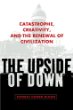
Review: The Upside of Down–Catastrophe, Creativity, and the Renewal of Civilization

5 Star, Complexity & Resilience, Future, Information Society

Upside of DownSpectacular Synthesis, Signals Emergence of Collective Intelligence, February 24, 2008

Thomas Homer-Dixon

I learned a great deal more about this author when two chapters in a book I just published, Collective Intelligence: Creating a Prosperous World at Peace featured his thinking: an interview of him by Hassan Masum; and his interview of the Rt Hon Paul Martin on the important topic of the Internet and democracy.

Consequently, I may place more value on this book than some of the other reviewers, but I choose to give it a solid five stars. In combination with his earlier book The Ingenuity Gap: Facing the Economic, Environmental, and Other Challenges of an Increasingly Complex and Unpredictable Future, and the work of many, many people on emergent collective, peace, commercial, gift, cultural, and earth intelligence, all subsets of the emerging discipline of public intellligence (self-governance founded on full access to all information to produce reality-based balanced budgets), I regard the author as one of a handful of individuals exploring the possibilities of cognitive collective integral consciousness.

I have a note: superb single best overview. I cannot list all the books I would like, being limited to ten links, the ones I do are a token. See my 1100+ other reviews and my many lists for a more comprehensive stroll through the relevant literatures.

Highlights from my notes:

+ Five stresses (population, energy, environmental, climate, economic)

+ I have a note, what about mental, cultural, physical stress (e.g. dramatic increases in mental illness, blind fundamentalism, and obesity).

+ See the image on predicting revolution, the author observes that revolutions come from synchronous failures with negative synergy.

+ Connectivity and speed are multipliers, and I am reminded that virtually all US SCADA (Supervisory Control And Data Acquisition) systems in the US are connected to the Internet and hackable (meanwhile, the Chinese have figured how to hack into systems not connected to the Internet, but drawing electric power from the open grid).

+ Synchronous failures get worse when they jump system boundaries and created frayed less resilient networks.

+ He write of the thermodynamics of empire and the declining return on investment from energy discovery and exploitation.

+ He writes of migration getting much much worse in the future, which confirms my own view that border control is not the answer, stabilization & reconstruction of the source countries is the longer-term sustainable answer.

+ He credits George Soros with having the first intuitive understanding of the asymmetries of wealth in relation to destabilization of the world.

+ He observes that we have transformed and degrades half the Earth's land surface, and is particularly concerned with the washing away of entire nations of topsoil (compounded by agriculture that does not do deep-root farming).

+ As the book winds to a conclusion, the author discusses massive denial and the loss of resilience that gets worse each day.

+ “Non-extremists have a formidable ‘collective action problem.'”

+ Need alternative values (I am reminded that the literature points out just two sustainable approaches to agriculture and community: the Amish and the Cuban). He notes that fundamentalists are especially ill-equipped by their myopia to be adaptive or resilient.

+ He covers the polarization between rich and poor. While other books listed below are more trenchant, the author has done a superb job of integrating historical, economic, social, and cultural works. This is a very fine book.

+ He adds a useful snippet on Cultural Intelligence, distinguishing between utilitarian values (likes and dislikes), moral values (fairness and justice), and existential values (significance and meaning).

+ Violence is discusses as stemming from motivation, opportunity, and framing–all of which can be found in the eight stages of genocide as defined by Dr. Greg Stanton of Genocide Watch.

+ He ends the book with praise of the open source model (search from my Gnomedex 2007 keytone, “Open Everything”) and concludes that the Internet is not living up to its potential as a platform for large-scale problem solving. I agree, and I condemn Google for choosing to become an illicit vacuum cleaner of other people's information, rather than an open source platform for allowing every person to be a collector, processor, analyst, producer, and consumer of public intelligence (search for my book review of “Google 2.o: The Calculating Predator.” IBM ando the Google partners are literally BLIND and refusing to assimilate documented early warnings on how Google is preparing to scorch banking, communications, data storage, entertainment, and publishing, all without respect for privacy or copyright, and without regulatory oversight.

I list below eight books I recommend for reading as an expansion of this elegant synthesis. At Earth Intelligence Network you can find a table of 1000+ books I have reviewed, sortable by threat, policy, or challenger.

A More Secure World: Our Shared Responsibility–Report of the Secretary-General's High-level Panel on Threats, Challenges and Change
The Unconquerable World: Power, Nonviolence, and the Will of the People
A Power Governments Cannot Suppress
The New Craft of Intelligence: Personal, Public, & Political–Citizen's Action Handbook for Fighting Terrorism, Genocide, Disease, Toxic Bombs, & Corruption
Group Genius: The Creative Power of Collaboration
Five Minds for the Future
The Bottom Billion: Why the Poorest Countries are Failing and What Can Be Done About It
The Fortune at the Bottom of the Pyramid: Eradicating Poverty Through Profits (Wharton School Publishing Paperbacks)

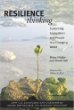
Review: Resilience Thinking–Sustaining Ecosystems and People in a Changing World

5 Star, Complexity & Resilience, Environment (Solutions), Nature, Diet, Memetics, Design
Resilience Thinking
Amazon Page

Gem of Useful Education, February 24, 2008

Brian Walker

This is a gem of an educational book. Mixing case studies with elaborating chapters on key concepts, it's as a good a volume as I have found for teaching undergraduates, graduates, and practitioners (farmers, factory managers, investors) the core ideas needed to restore a sustainable social-ecological system.

Highlights for me:

+ Optemization is a false premise, simplifies complex systems we do not understand, with the result that we end up causing long-term damage.

+ Resilience thinking is systems thinking. I cannot help but think back to all of the excellent work in the 1970's and 1980's–the authors were simply a quarter century ahead of their time.

+ In a nut-shell, resilient system can absorb severe disturbance.

+ System resilience is affected by context, connections across scales of time and space, and current system state in relations to threshholds.

+ Fresh water, fisheries, and topsoil depletion are major failures.

+ Drivers of environmental degradation are poverty, willful excessive consumption, and lack of knowledge (from another book, I recall that changes to the Earth that used to take 10,000 years now take three, one reason we need real-time science).

+ Key concepts are threshholds and adaptive cycles. Adaptive cycles have four phases: Rapid Growth; Conservation; Release; and Reorganization.

+ Redundancy is NOT a dirty word (just as intelligence–decision support–should not be a dirty word within the United Nations)

+ Ecological networks cannot be understood nor nurtured with a tight linking and understanding of the social networks that interact with the ecological networks.

+ Subsidies are a form of social denial, as they subsidize unsustainable practices and prevent adaptation and change.

+ Lovely–absolutely lovely–chart on page 89 about time-scales of climate and natural disasters like major fires.

+ One size does not fit all–solutions for one social-ecological network, e.g. in the USA, will not be the same as for another, e.g. in Norway.

+ Diversity is the key to regeneration.

+ Governances must be able to see and act upon key intervention points.

+ A Resilient world would be characterized by:

1. Diversity
2. Ecological variables
3. Modularity
4. Acknowledgement of slow variables
5. Tight feedbacks
6. Social capital
7. Innovation
8. Overlap in governance
9. Ecosystem services

Within this small and very easy to absorb book one finds a great annotated bibliography of recommended readings, a fine reference section, and a very solid index.

Other books that come to mind as complements to this one (limited to ten links by Amazon):
The leadership of civilization building: Administrative and civilization theory, symbolic dialogue, and citizen skills for the 21st century
Society's Breakthrough!: Releasing Essential Wisdom and Virtue in All the People
Ecological Economics: Principles And Applications
Natural Capitalism: Creating the Next Industrial Revolution
Green to Gold: How Smart Companies Use Environmental Strategy to Innovate, Create Value, and Build Competitive Advantage
Cradle to Cradle: Remaking the Way We Make Things
The HOK Guidebook to Sustainable Design
High Noon 20 Global Problems, 20 Years to Solve Them
Pandora's Poison: Chlorine, Health, and a New Environmental Strategy
The Blue Death: Disease, Disaster, and the Water We Drink

Vote on Review

Great Peacemakers: True Stories from Around the World

6 Star Top 10%, Peace, Poverty, & Middle Class

PeacemakersBeyond 5 Stars–Marks Beginning of Era of Peace

February 23, 2008

Ken Beller

This book was brilliantly conceived and executed. I like it so much I am adding it to my travel series for recurring selective reading.

I am very impressed by the research and the creative analysis that paved the way for this book to be truly in a class of its own. Indeed, I think the authors are on to something that could and should be a multilingual series used in every classroom on the planet.

While the table of contents is impressive, with twenty great souls selected for concise review, what really got my attention was the Introduction, where the authors observe that after much research, they found five distinct groups or “paths to peace:”

choosing nonviolence,

living peace,

honoring diversity,

valuing all life, and

caring for the planet.

There is one other, public intelligence (a topic on which I have written four books, published a fifth, and have just commissioned three new edited works (Collective Intelligence: Creating a Prosperous World at Peace; Peace Intelligence: Assuring a Good Life for All; and Commercial Intelligence: From Moral Green to Golden Peace).

Each of the chapters is short, easy to read, relevant, and concluded by a page of thoughts from the person in their own words, and that is the primary reason this book made the extraordinary leap into permanent travel with me.

Two from Martin Luther King, Jr. represent all that I live to correct:

“The way of acquiescence leads to moral and spiritual suicide.”

“Our scientific power has outrun our spiritual power. We have guided missiles and misguided men.”

See my varied lists and my many non-fiction reviews for additional reading.

Amazon allows me to add ten links to any review. Here are nine more, six books and three DVDs, on the subject of Peace. I praise God every day for Dick Cheney–only the presence of such a nakedly amoral war criminal could have sparked the revolution in human affairs that is about to take place. Peace is the only winnable war, and the Earth Intelligence Networki, co-founded by 24 leading-edge minds, strives to empower every person on the planet with public intelligence in the public interests.

The Unconquerable World: Power, Nonviolence, and the Will of the People
A Power Governments Cannot Suppress
The Bottom Billion: Why the Poorest Countries are Failing and What Can Be Done About It
Peacekeeping Intelligence: Emerging Concepts for the Future
The New Craft of Intelligence: Personal, Public, & Political–Citizen's Action Handbook for Fighting Terrorism, Genocide, Disease, Toxic Bombs, & Corruption
Tibet – Cry of the Snow Lion
The Snow Walker
Peace One Day

I am *very* pleased to have read this book, and I do not plan to put it away. This volume is not just a keeper, it is a travel companion rich with good intentions that are contagious. Well done!

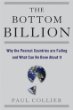
Review: The Bottom Billion–Why the Poorest Countries are Failing and What Can Be Done About It

5 Star, Capitalism (Good & Bad), Humanitarian Assistance, Intelligence (Wealth of Networks), Peace, Poverty, & Middle Class, Stabilization & Reconstruction

Bottom BillionElegantly brilliant, incisive clarity, quite extraordinary, February 22, 2008

Paul Collier

I read a lot, almost entirely in non-fiction, and this book is easily one of the “top ten” on the future and one of the top three on extreme poverty, in my own limited reading.

The other three books that have inspired me in this specific area are:
The Fortune at the Bottom of the Pyramid
Creating a World Without Poverty: Social Business and the Future of Capitalism
The End of Poverty: Economic Possibilities for Our Time

There is an enormous amount of actionable wisdom in this book, which is deceptively easy to read and digest. The author's bottom line is clear early on:

A. The fifty failing states at the bottom, most in Africa, others in Central Asia, are a cesspool of misery that is terribly dangerous to all others, exporting disease, crime, and conflict.

B. The responsibility for peace to enable prosperity cannot be expected from within–it must be provided as a common good from outside. In support of this point, toward the end of the book, the author posits a 15:1 return on investment from $250M a year in investment and aid, mostly technical assistance.

This book is a superb guide for regional authorities and international coalitions with respect to the value of non-military interventions.
The author provides compelling yet concise overviews of the four traps that affect the billion at the bottom:

A. The Conflict Trap
B. The Natural Resource Export Trap
C. Landlocked in a Bad Neighbors Trap
D. Poor and Corrupt Governance

The author describes the need for a “whole of government” approach, both among those seeking to deliver assistance, and those receiving it.
I have a note, a new insight at least to me, that AIDs proliferated so quickly across Africa because of the combination of mass rape followed by mass migration. There are many other gifted turns of phrase throughout.
A study on the cost of a Kalashnikov is most helpful. The author tells us that the legacy of any war is the proliferation of inexpensive small arms into the open market.

Across the book the author points out that the gravest threat to governance and stability within any fragile economy is a standing army.
Each of the traps is discussed in depth.

The middle of the book outlines nine-strategies for the land-locked who suffer from being limited to their neighbors as a marketplace, rather than the world as a whole.

1. Work with neighbors to create cross-border transport infrastructure
2. Work to improve neighbors' economies for mutual benefit
3. Work to improve access to coastal areas (the author points out that the sea is so essential, that landlocked countries should not* be* countries, they should be part of a larger country that borders the sea)
4. Become a haven of peace, providing financial and other services.
5. Don't be air-locked or electronically-locked (the first study of the Marine Corps that I led in 1988-1989 found that half of the countries of concern did not have suitable ports but all had ample C-130 capable airfields).
6. Encourage remittances
7. Create transparent investment-friendly environment for resource prospecting
8. Focus on rural development
9. Attract aid

Toward the end of the book I am struck by the author's pointed (and documented) exclusion of democracy and civil rights as necessary conditions for reform. Instead, large populations, secondary education, and a recent civil war (opening paths to change), are key.
$64 billion is the cost to the region of a civil war, with $7 billion being the minimal expected return on investment for preventing a civil war in the country itself.

Bad policies come with a sixty year hang-over.

Asia is the solid middle and makes trade a marginal and unlikely option for rescuing Africa UNLESS there are a combination of trade barriers against imports from Asia, and unreciprocal trade preferences from richer countries. In the context of globalization, only capital and people offer hope.

In the author's view, capital is not going to the bottom billion because:

A. Bottom of the barrel risk
B. Too small to learn about
C. Genuinely fragile

In terms of human resources, after discussing capital flight, the author concludes that the educated leave as quickly as they can. I am inspired by this discussion to conclude that we need a Manhattan project for Africa, in which a Prosperity Corps of Gray Eagles is incentivized to adopt one of the 50 failed states, and provided with a semblance of normal living and working conditions along with bonuses for staying in-country for ten years or more. As I reflect on how the USA has spent $30 billion for “diplomacy” in 2007, and over $975 billion for waging war, (such that the Comptroller General just resigned from a fifteen year appointment after telling Congress the USA is “insolvent”) this begs public outrage and engagement.

As the book makes its way to the conclusion the author's prose grabs me:

“We should be helping the heroes” attempting reform

We are guilty in the West of “inertia, ignorance, and incompetence.”

The “cesspool of misery….is both terrible….and dangerous.”

Several other noteworthy highlights (no substitute for buying and reading the book in its entirety:

Aid does offer a 1% growth kick

Aid bureaucracy, despite horror stories, adds real value in contrast to funds that vanish into the corrupt local government

Misdirection of unrestricted funds leads to militarization and instability.

The author touches briefly on the enormous value that industry can offer when it is finally incentivized to do so. DeBeers and its certification process are cited with respect, perhaps saving diamonds from going the way of fur.

The author stresses that top-down transparency enables bottom-up public scrutiny and the two together help drive out corruption (something Lawrence Lessig has committed the remainder of his life to).

There is an excellent section on irresponsible NGOs, notably Christian Aid, feared by the government and not understood by the public.
I put the book down with a very strong feeling of hope.

Other books I recommend, in addition to the three above:
A More Secure World: Our Shared Responsibility–Report of the Secretary-General's High-level Panel on Threats, Challenges and Change
Deliver Us from Evil: Peacekeepers, Warlords and a World of Endless Conflict
Confessions of an Economic Hit Man
The Shock Doctrine: The Rise of Disaster Capitalism
The Unconquerable World: Power, Nonviolence, and the Will of the People
The leadership of civilization building: Administrative and civilization theory, symbolic dialogue, and citizen skills for the 21st century
Plan B 3.0: Mobilizing to Save Civilization, Third Edition

noble gold