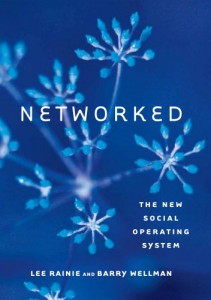
Review (Guest): Networked – The New Social Operating System

5 Star, Information Society, Information Technology
Amazon Page
Amazon Page

Lee Raine and Barry Wellman

5.0 out of 5 stars Networked, June 6, 2012

Jenny Davis

Broad Summary
Rainie and Wellman, using scores of data, argue that we live in a networked operating system characterized by networked individualism. They describe the triple revolution (networked revolution, internet revolution, and mobile revolution) that got us here, and discuss the repercussions of this triple revolution within various arenas of social life (e.g. the family, relationships, work, information spread). They conclude with an empirically informed guess at the future of the new social operating system of networked individualism, indulging augmented fantasies and dystopic potentials. Importantly, much of the book is set up as a larger argument against technologically deterministic claims about the deleterious effects of new information communication technologies (ICTs).

Networked Individualism and the Triple Revolution

Many scholars and commentators fear that a move away from social relational structures characterized by tightly knit groups and dense connections—largely caused by quickly advancing digital and electronic technologies— indicates a move towards an individualist, isolationist, technocratic social system. Such fears have been (in)famously proclaimed by Robert Putnam in Bowling Alone (2000), by Miller McPherson et al. in a 2006 ASR article, and most recently by Sherry Turkle in her new book Alone Together (2011) as well as in her recent NY Times editorial (discussed here by David Banks and here by Nathan Jurgenson).

Continue reading “Review (Guest): Networked – The New Social Operating System”

Review (Guest): To Save Everything, Click Here: The Folly of Technological Solutionism

5 Star, Information Society, Information Technology
Amazon Page
Amazon Page

Evgeny Morozov

5.0 out of 5 stars Finally, a decent critique of Internet as ideology March 8, 2013

By Peter Socolow

Snarky? Check. Contrarian? Check. Demanding? Check. That's enough checks for me: most books don't go that far. So, to be blunt: whatever its flaws, this book deserves to be widely read and argued about. Is it perfect? Hell no. Morozov doesn't know when to stop and he is occasionally too full of himself to be enjoyable; at times, this book reads like “Imagine That: Some People Are Wrong on the Internet About the Internet.” (Morozov, of course, would say that this last sentence is pure nonsense, for “the Internet” doesn't exist. Okay, Professor!) He's lucky his relatives are no Internet theorists – or he would destroy them as well (that's a Pavlik Morozov joke right there!)

The book somehow manages to stay extremely funny (Morozov has a great eye for the ridiculous and the surreal; his epigrams are hilarious – especially the Franny Armstrong quote comparing soccer and the Internet) and also very serious (too serious at times; there's way too much theory in it – it could easily lose some Dewey and Giddens, not to mention of that other enfant terrible, Bruno Latour).

Continue reading “Review (Guest): To Save Everything, Click Here: The Folly of Technological Solutionism”

Review (Guest): The Net Delusion – The Dark Side of Internet Freedom

5 Star, Information Society, Information Technology
Amazon Page
Amazon Page

Evgeny Morozov

5.0 out of 5 stars Intellectual Recycling and Internet-Centrism, a tale of Cyber-Utopia Gone Really Wrong, November 30, 2012

Abhinav Agarwal (Bangalore, India)

Dunks a much needed, well-reasoned, and well-researched bucket of cold-water over “Internet-centrists” and “cyber-utopians” (cyber-utopianism is a “naïve belief in the emancipatory nature of online communication”), and assembles together an excellent though somewhat depressing array of evidence to dismantle this edifice of technology-centrists.The Internet has revolutionized communications. It has certainly disintermediated and caused immense pain to traditional brick-and-mortar retailers as well as traditional media outlets and the newspaper business. But when people make a leap of logic and start assuming that the Internet has, can, should, and will engender socio-political revolutions in totalitarian, closed, dictatorial regimes, you have to start thinking that maybe there has been an ingestion of Kool Aid, gallons of it.

While the basic thrust of the book is to argue, strongly, against making technology, and especially the Internet and social media, the main focus of an argument in favor of sociological and political change in societies, the argument itself is mutli-faceted.

Continue reading “Review (Guest): The Net Delusion – The Dark Side of Internet Freedom”

Review (Guest): The Global Minotaur – America, Europe and the Future of the Global Economy

5 Star, America (Founders, Current Situation), Banks, Fed, Money, & Concentrated Wealth, Capitalism (Good & Bad), Complexity & Catastrophe, Congress (Failure, Reform), Corruption, Economics, Empire, Sorrows, Hubris, Blowback, Executive (Partisan Failure, Reform), Misinformation & Propaganda, Politics, Power (Pathologies & Utilization), Threats (Emerging & Perennial), Voices Lost (Indigenous, Gender, Poor, Marginalized)
Amazon Page
Amazon Page

DESCRIPTION

In this remarkable and provocative book, Yanis Varoufakis explodes the myth that financialisation, ineffectual regulation of banks, greed and globalisation were the root causes of the global economic crisis. Rather, they are symptoms of a much deeper malaise which can be traced all the way back to the Great Crash of 1929, then on through to the 1970s: the time when a ‘Global Minotaur’ was born. Just as the Athenians maintained a steady flow of tributes to the Cretan beast, so the ‘rest of the world’ began sending incredible amounts of capital to America and Wall Street. Thus, the Global Minotaur became the ‘engine’ that pulled the world economy from the early 1980s to 2008.

Today’s crisis in Europe, the heated debates about austerity versus further fiscal stimuli in the US, the clash between China’s authorities and the Obama administration on exchange rates are the inevitable symptoms of the weakening Minotaur; of a global ‘system’ which is now as unsustainable as it is imbalanced. Going beyond this, Varoufakis lays out the options available to us for reintroducing a modicum of reason into a highly irrational global economic order.

An essential account of the socio-economic events and hidden histories that have shaped the world as we now know it.

Review: Ending the Male Leadership Myth – How Women Can Save Us from Destroying Ourselves

5 Star, Best Practices in Management, Consciousness & Social IQ, Culture, Research, Intelligence (Public), Leadership, Truth & Reconciliation, Values, Ethics, Sustainable Evolution, Voices Lost (Indigenous, Gender, Poor, Marginalized)

cover male mythFernando Pargas

5.0 out of 5 stars STUNNINGLY Intelligent, Timely, A Study in Ethics, Business, & Governance, April 20, 2013

I received this book as a gift because I have been telling people for over a decade that the 21st Century is going to be the Century of women, whose compassion, intuition, and smaller egos make them so much superior to men in an age that will be vastly more complex and nuanced than the Industrial Era with its willful ignorance of the true cost of everything including the true cost of colonialism, unilateral militarism, and predatory capitalism.

First, for context, a few of the books that have caused me to appreciate this one and recommend it without reservation, the bottom line being that muscle (and blind heavy metal militaries) are out, brains and heart and “non-zero” are in.

Philosophy and the Social Problem: The Annotated Edition
THE DAWN OF THE AGE OF AQUARIUS
Improper behavior
The Chalice and the Blade: Our History, Our Future
Mapping the Moral Domain: A Contribution of Women's Thinking to Psychological Theory and Education
Nonzero: The Logic of Human Destiny

First off, the author's background is relevant: business professor and corporate time with Time-Warner. This is a serious guy that has done hard time in both the academic and corporate media worlds–he is inteimately familiar with the pretensions and limitations of men, and with the cavalier manner in which we have treated women. I like to point out to people that it used to be legal to abuse women and people of color, and to deprive both groups of voice and vote. This is also an author with a very broad international perspective, who teaches for the United Nations and understands the challenges and the requirements for stabilization & reconstruction.

I am quite taken with the author's discussion of “tribalism” and how modern tribalism combined with media manipulation make us all both stupid and dangerous. As one who has studied the origin of the state (including matriarchs as the first leaders, because lines of inheritance from women were absolutely known) and also the preconditions of revolution (concentration of wealth and huge disparities of income being number one), I see the author's introduction as long overdue common sense. I have been charting what I call “information pathologies,” my reflections on this are easy to find online, they boil down generally to men being able to get away with insanely criminal corruption because of secrecy and the willingness of men to assume that they are entitled to deprive others for their own advantage.

Continue reading “Review: Ending the Male Leadership Myth – How Women Can Save Us from Destroying Ourselves”

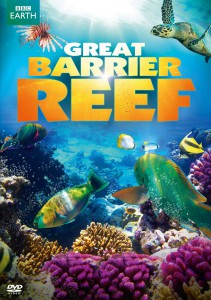
Review (DVD) Great Barrier Reef — BBC Earth

5 Star, Environment (Solutions), Reviews (DVD Only)
Amazon Page
Amazon Page

5.0 out of 5 stars RIVETING! As close as most might get, do not miss the chance

April 20, 2013

I put this up on my second screen, intending to do odds and ends on my primary screen, but very quickly found myself giving the film my undivided attention.

In no way do I agree with any prior criticisms of either the underwater voice, which I found totally appropriate, of the use of high speed photography, which was both essential and in my view, ultra professional. Some of the stuff shown here has never before been captured (e.g. parrot fish building its nightly mucus page) and other stuff just blew my mind, such as the rare coral spawning, the launching of male and female eggs from coral.

I had no idea, plain and simple. This film is educational, entertaining, and enchanting.

This is, as another reviewer has noted, three movies in one, to which I would add: 185 minutes, with each of the three segments roughly 60 minutes in length.

For myself, I could only marvel and the hundreds of hours it must have taken, of patient seemingly endless toil in filming, and ultimately the hundreds of hours doing the editing to get to this quite formidable, RIVETING, offering.

Highly recommended. Not only ideal for children, but a very fine — an extraordinary — view for adults.

Vote and/or Comment on Review

Review: Sidetracked: Why Our Decisions Get Derailed, and How We Can Stick to the Plan

4 Star, Decision-Making & Decision-Support
Amazon Page
Amazon Page

Francesca Gino

4.0 out of 5 stars A Good Book That Could Be Made Better, April 7, 2013

I received this book as a gift and was glad to get it. As a professional intelligence officer I have been fascinated for decades by the mystery of why smart people make stupid decisions — completely apart from outight corruption. This book is most helpful in addressing nine specific contexts within which good decisions gets sidetracked into bad decisions, and I certainly recommend it as a gift for any thinking person, perhaps for a long airplane ride. It does not address my larger focus on “information pathologies”

The book is structured to address three forces impacting on the how of our decisions:

01 Forces from within
02 Forces from our relationships
03 Forces from the outside

The author concludes with a summary of the “nine step program” for not getting sidetracked:

Continue reading “Review: Sidetracked: Why Our Decisions Get Derailed, and How We Can Stick to the Plan”

noble gold