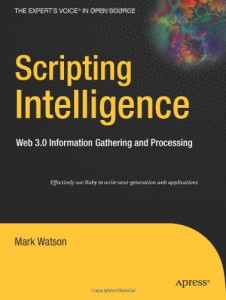
This four-part book is focused on programming techniques and technologies that in the author's opinion can help next generation web applications handle data more “intelligently”. The code samples are implemented in Ruby (and a little bit of Java).
ByMichael Mimo I have always had an interest in AI, machine learning, and data mining but I found the introductory books too mathematical and focused mostly on solving academic problems rather than real-world industrial problems. So, I was curious to see what this book was about.
I have read the book front-to-back (twice!) before I write this report. I started reading the electronic version a couple of months ago and read the paper print again over the weekend. This is the best practical book in machine learning that you can buy today — period. All the examples are written in Java and all algorithms are explained in plain English. The writing style is superb!
01 Steele’s biggest mistake was in not ensuring OSS conference presentations were indexed in Conference Proceedings. Core value of presentation at International Studies Association (Intelligence) is that papers presented there are indexed and visible.
02 International Journal of Intelligence and Counterintelligence, American Intelligence Review, and SIGNAL not indexed. Materials published there are not visible.
Collaborative consumption is growing from a trend for the young and urban to a viable alternative for everyone. From renting a movie online (e.g., Netflix) to renting a stranger’s couch (e.g., Couchsurfing), the economy of sharing changes the way we behave, consume, seek new options, and commit to decisions. The phenomenon is not just about getting access to new cars and the latest movies; it’s also about creating a new type of peer-to-peer commerce, making meaningful connections, and establishing a sense of trust among those involved.
We have gone from a country that took pride in its science and in being a fact-based society to one where a MAJORITY of Americans think science is just another opinion of no particular distinction. It has taken 30 years of Theocratic Rightist disinformation, fake thinktank reports, and agit-prop to achieve this bleak result. Combined with decreasing educational outcomes, and the corporate corruption of the peer! review process by pharmaceutical and agricultural chemical corporations and you have a formula for willful ignorance and an easily manipulated electorate.
In a new HuffPost/YouGov poll, only 36 percent of Americans reported having “a lot” of trust that information they get from scientists is accurate and reliable. Fifty-one percent said they trust that information only a little, and another 6 percent said they don't trust it at all.
Phi Beta Iota: This is huge. The bottom line is that every one of the eight tribes of information has lost their integrity and in so doing, lost the trust of the public.
Because we have breached the firewall the Founders put in place to separate church and state we are now left with this.
It is very difficult to see how the Rightists on the Supreme Court could not understand or foresee that gutting the Voting Rights Act would lead to voter suppression. It is much easier to understand their decision from the perspective that this was their deliberate purpose. In any case, the research is now coming in, as this report recounts, an! d it all confirms what was obvious: all voting restriction bills passed in the Red value states have one purpose: to decrease the number of people of color, seniors, students, and poor people voting. Which is to say its purpose is to rig the elections to give Republicans a better chance of winning. It is just the second phase of the effort that began with gerrymandering.
Below, Seumas Milne well summarizes the calamitous results of our misbegotten GWOT* crusades in Afghanistan, Iraq, Libya, and Syria. The result is not pretty, but that is hardly surprising.
While Milne's call for accountability applies to the British contribution to the GWOT, it bespeaks volumes for the United States — a country that prides itself on its Constitutional system of Checks and Balances. Our self-referencing image begs the question: Given our sorry performance in the GWOT, what kind of checks in balances have been put into play on Capital Hill? Who in America is being held accountable for this debacle?
Certainly not the Pentagon or the Military-Industrial-Congressional Complex (MICC).
That is because the GWOT disaster has a golden lining — at least for some — it ratcheted up the cash flowing into the MICC to record levels, and more importantly, the long duration of GWOT provided time need by the MICC to weave its social safety netmore deeply into our political economy via the time honored expedient of politically engineering the flow of dollars, jobs, and profits to virtually every congressional district in the United States and, let us not forget, Puerto Rico. Traditionally, political engineering has been the province of major weapons procurement, like the F-35; but the massive shift to privatization in the Pentagon's the Operations and Maintenance budget quietly opened a cornucopia of new political engineering opportunities for insinuation into heretofore unexploited fiscal regions, making the GWOT the gift that will keep on giving — at least until Obama's pivot to Asia solidifies a sufficiently solid budgetary foundation for a new Cold War.