A few weeks ago now I gave a talk, via Skype from Hong Kong, at the Humanity+ San Francisco conference…. Here are some notes I wrote before the talk, basically summarizing what I said in the talk (though of course, in the talk I ended up phrasing many things a bit differently…).
. . . . . . . .
My suggestion is simple but radical: In the future, the distinction between linguistic utterances and minds is going to dissolve.
In the not too distant future, a linguistic utterance is simply going to be a MIND with a particular sort of cognitive focus and bias.
I came up with this idea in the course of my work on the OpenCog AI system. OpenCog is an open-source software system that a number of us are building, with the goal of eventually turning it into an artificial general intelligence system with capability at the human level and beyond. We’re using it to control intelligent video game characters, and next year we’ll be working with David Hanson to use it to control humanoid robots.
. . . . . . . .
One way is to create a sort of “standard reference mind” — so that, when mind A wants to communicate with mind B, it first expresses its idiosyncratic concepts in terms of the concepts of the standard reference mind. This is a scheme I invented in the late 1990s — I called it “Psy-nese.” A standard reference mind is sort of like a language, but without so much mess. It doesn’t require thoughts to be linearized into sequences of symbols. It just standardizes the nodes and links in semantic graphs used for communication.
Almost all of the material in this report was covered in SR through the course of the year. However, I thought that publishing a compendium report would be a useful thing to do. It tells us, once again, that much of what we learned in school about humanity's past was wrong.
The controversial extinct human lineage known as “hobbits” gained a face this year, one of many projects that shed light in 2012 on the history of modern humans and their relatives. Other discoveries include the earliest known controlled use of fire and the possibility that Neanderthals or other extinct human lineages once sailed to the Mediterranean.
Here's a look at what we learned about ourselves through our ancestors this year.
We're not alone
A trove of discoveries this year revealed a host of other extinct relatives of modern humans. For instance, researchers unearthed 3.4-million-year-old fossils of a hitherto unknown species that lived about the same time and place as Australopithecus afarensis, a leading candidate for the ancestor of the human lineage. In addition, fossils between 1.78 million and 1.95 million years old discovered in 2007 and 2009 in northern Kenya suggest that at least two extinct human species lived alongside Homo erectus, a direct ancestor of our species. Moreover, fossils only between 11,500 and 14,500 years old hint that a previously unknown type of human called the “Red Deer Cave People” once lived in China.
“Iknew wherever I was that you thought of me and that if I got in a tight place, you would come — if alive.” This statement was contained in a letter dated March 10, 1864, written by Maj. Gen. William Tecumseh Sherman to Maj. Gen. Ulysses S. Grant. It expresses an ageless ethos among warriors, especially those within the U.S. military. The commitment to come to the aid of fellow Americans in times of duress and danger has always been one of the foundations of America’s fighting forces. Yet that appears to have changed on Sept. 11, 2012, in Benghazi, Libya, when no effort was made to respond to the calls for help by U.S. Ambassador J. Christopher Stevens and his CIA team at the U.S. Consulate facility.
Why was there no attempt to save the lives of the ambassador and his colleagues, beyond sending an unarmed drone to observe their demise? The congressional committees investigating the events in Benghazi seem to have focused on the Sunday talk-show statements of Ambassador to the United Nations Susan Rice, who blamed the attack on an obscure anti-Islam video made by a relatively unknown man in California.
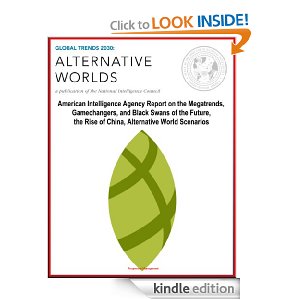
3.0 out of 5 stars Report Lauds Fracking as Energy Solution, Disappoints on Multiple Fronts, December 27, 2012
Certainly worth reading, along with other and generally better reports linked below, but a huge disappointment. There is nothing here actually useful to a national or corporate leader, and generally nothing new. To take one small example upfront, the so-called “disruptive technologies” are pedestrian in the extreme. My disruptive technologies are Open Source Everything (OSE) starting with OpenBTS (Base Transceiver Station) — essentially a free cell phone for every person on the planet from birth — unlimited clean water from the ocean, and free energy. My most significant concern, apart from the fact that this report persists with all of the flaws I pointed out a year ago, is the continued lack of integrity — ethics — a deep commitment to telling the truth about the FACT that government corruption is half the problem, the FACT that half of every US tax dollar is demonstrably spent on fraud, waste, or abuse. Until the National Intelligence Council is capable of telling the truth about our own worst enemy — us — it will be nothing more than an over-paid over-hyped largely useless coffee klatch.
Thoughts in passing as I go through this final report:
Many Kurds have come to believe that the present prolonged turmoil in the Middle East — in Syria and Iraq and, to a lesser extent, in Iran and Turkey — is giving them their best chance of self-determination in modern times. They are determined to seize it. It could be that the map of the region is being redrawn before our eyes.
Phi Beta Iota: This is a no-brainer for anyone with intelligence and integrity. The artificial boundaries imposed by centuries of empire are collapsing, in part because they are unaffordable to maintain, in part because Epoch B has begun and the world is reverting to the pre-empire eras where indigenous peoples in close harmony with nature established natural boundaries over the course of centuries. The US Government, nominally led in foreign affairs by the Department of State, is ignorant and arrogant. It has the temerity to believe that it can a) know better and b) impose its ignorant arrogant will on others. Those days are over. What we should be doing is striving to offer all dictators an exit strategy as Ambassador Mark Palmer (our choice for Undersecretary of Public Diplomacy) has been recommending, getting serious about self-determination, and butting out of the internal affairs of others.
Inclusive global governance is one of the on-going efforts of the developing countries in this fast changing and complicated world. This is a process that started in the 1960s and will continue for many years to come.
I. Current Roles of the Developing Countries in Global Governance. Among all the roles, the following three stand out prominently. (1) They are the promoters of the UN centrality and democratization of international relations. Actually they are evolutionary reformers of the existent mechanisms. (2) They are invigorators of new mechanisms to cope with new challenges of our times, both institutionally and conceptually. A case in point is their role of G-20 by pursuing consultation and cooperation with the developed countries during the ongoing financial crisis and economic difficulties. (3) They are initiators of mechanisms of developing/emerging powers, such as the BRICS. The forming of BRICS reflects the shifting distribution of powers and upgrading of the developing countries.