As the year draws to a close, EFF is looking back at the major trends influencing digital rights in 2011 and discussing where we are in the fight for a free expression, innovation, fair use, and privacy.
The government has been using its secrecy system in absurd ways for decades, but 2011 was particularly egregious. Here are a few examples:
Government report concludes the government classified 77 million documents in 2010, a 40% increase on the year before. The number of people with security clearances exceeded 4.2. million, more people than the city of Los Angeles.
Government tells Air Force families, including their kids, it’s illegal to read WikiLeaks. The month before, the Air Force barred its service members fighting abroad from reading the New York Times—the country’s Paper of Record.
Lawyers for Guantanamo detainees were barred from reading the WikiLeaks Guantanamo files, despite their contents being plastered on the front page of the New York Times.
Comment made that too many small groups all over the place, lacking leadership, need to get everyone focused. Conflict brought up re 21st, too many Congressmen out of town, better to fold in with the 30th when
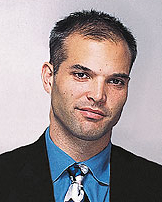
Phi Beta Iota: If there were one book that could be said to have at a minimum lent credence to Occupy when others were scornful, and at best been an inspiration to millions who had ignored many other excellent works in the past dealing with both the corruption of politics and the corruption of finance, that book would be Griftopia–Bubble Machines, Vampire Squids, and the Long Con That Is Breaking America.
As an end of year review, honoring not just Matt Taibbi but all the other works that “connect” to his magnetic “hub” work, here is a RECAP on GRIFTOPIA.
It seems America’s bankers are tired of all the abuse. They’ve decided to speak out.
True, they’re doing it from behind the ropeline, in front of friendly crowds at industry conferences and country clubs, meaning they don’t have to look the rest of America in the eye when they call us all imbeciles and complain that they shouldn’t have to apologize for being so successful.
But while they haven’t yet deigned to talk to protesting America face to face, they are willing to scribble out some complaints on notes and send them downstairs on silver trays. Courtesy of a remarkable story by Max Abelson at Bloomberg, we now get to hear some of those choice comments.
Home Depot co-founder Bernard Marcus, for instance, is not worried about OWS:
“Who gives a crap about some imbecile?” Marcus said. “Are you kidding me?”
Former New York gurbernatorial candidate Tom Golisano, the billionaire owner of the billing firm Paychex, offered his wisdom while his half-his-age tennis champion girlfriend hung on his arm:
“If I hear a politician use the term ‘paying your fair share’ one more time, I’m going to vomit,” said Golisano, who turned 70 last month, celebrating the birthday with girlfriend Monica Seles, the former tennis star who won nine Grand Slam singles titles.
Then there’s Leon Cooperman, the former chief of Goldman Sachs’s money-management unit, who said he was urged to speak out by his fellow golfers. His message was a version of Wall Street’s increasingly popular If-you-people-want-a-job, then-you’ll-shut-the-fuck-up rhetorical line:
Cooperman, 68, said in an interview that he can’t walk through the dining room of St. Andrews Country Club in Boca Raton, Florida, without being thanked for speaking up. At least four people expressed their gratitude on Dec. 5 while he was eating an egg-white omelet, he said.
“You’ll get more out of me,” the billionaire said, “if you treat me with respect.”
Finally, there is this from Blackstone CEO Steven Schwartzman:
Asked if he were willing to pay more taxes in a Nov. 30 interview with Bloomberg Television, Blackstone Group LP CEO Stephen Schwarzman spoke about lower-income U.S. families who pay no income tax.
“You have to have skin in the game,” said Schwarzman, 64. “I’m not saying how much people should do. But we should all be part of the system.”
There are obviously a great many things that one could say about this remarkable collection of quotes. One could even, if one wanted, simply savor them alone, without commentary, like lumps of fresh caviar, or raw oysters.
But out of Abelson’s collection of doleful woe-is-us complaints from the offended rich, the one that deserves the most attention is Schwarzman’s line about lower-income folks lacking “skin in the game.” This incredible statement gets right to the heart of why these people suck.
Buddy Roemer is a candidate for the Republican nomination for president. He served in Congress from 1981-88 as one of the last truly conservative Democrats who crossed the aisle to back the Reagan agenda. He later was governor of Louisiana and switched party affiliation to the GOP. A longtime business executive, Mr. Roemer founded and was CEO of Business First Bank, a small community lender with $650 million is assets.
Memorable Line: “I'm a Methodist boy, and I believe in miracles.”
Memorable Line: “I want Washington DC to stop being the capital for corruption.”
Article below, based on views of three or so retired senior military officers, two of them former Service TJAGs, takes an unfortunate tack on Manning's treachery. Their contention is that command and systemic failures set conditions for Manning to compromise documents. They assert that since he was “juniorest guy in the office,” everybody but him was responsible for what he did. I disagree. Responsibility for security is absolutely an individual one. Individuals sign general nondisclosure agreement SF-312 and other program-specific non-disclosure agreements as a priori conditions of access. Rules are stated up front. Personnel security clearances, training, and indoctrination are approaches used for our side. Gates, guards, guns, and all technical computer stuff are oriented against adversaries. Manning should have been able to work in a totally open storage area with hardcopy and softcopy documents of all classifications immediately at hand without anyone having to worry about him. Further, as we know, decision to commit treason is a profoundly individual one, often facilitated and rationalized by adversaries through considerations of sex, money, ideology, compromise, ego, excitement, etc. Individuals are supposed to individually withstand and deflect such adversary facilitations and inducements. So, in my mind, Manning is party at fault here. If justice system cannot generate a capital conviction for him, then he should go way of Jonathan Pollard, Israeli agent within NIS — life in prison, throw away key, No compassion on my part for either.
After 19 months in military prisons — much of the time in solitary confinement — Pfc. Bradley Manning finally emerged over the past week from the netherworld to which he has been confined since his arrest in the largest breach of classified information in U.S. history.
Seven days of hearings at Fort Meade, Md., produced what the prosecution called “overwhelming” evidence that the low-ranking Army intelligence analyst was the one who sent hundreds of thousands of military reports and diplomatic cables to the transparency website WikiLeaks.
But the hearing also produced equally compelling evidence of the larger issue that is often overlooked in discussions of Manning’s alleged misdeeds: the systematic breakdown in security that enabled a low-ranking enlisted man to abscond with a staggering quantity of classified Pentagonand State Department documents.