Tip of the Hat to Mini-Me, who also points out that this is consistent with the findings on the myth of digital democracy, and the cry from the heart of George Soros on “The Enlightenment Fallacy.” The fact that it also resembles the US Intelligence Community is a mere sidenote.
The White House reiterated its support for open government in a new report issued Friday afternoon. But curiously, the 33-page document on “The Obama Administration's Commitment to Open Government” (pdf) downplays or overlooks many of the Administration's principal achievements in reducing inappropriate secrecy. At the same time, it fails to acknowledge the major defects of the openness program to date. And so it presents a muddled picture of the state of open government, while providing a poor guide to future policy.
“At the President's direction, federal agencies have promoted greater transparency, participation, and collaboration through a number of major initiatives,” the new report says. “The results of those efforts are measurable, and they are substantial. Agencies have disclosed more information in response to FOIA requests; developed and begun to implement comprehensive Open Government plans; made thousands of government data sets publically available; promoted partnerships and leveraged private innovation to improve citizens' lives; increased federal spending transparency; and declassified information and limited the proliferation of classified information.”
Most of that is true, in varying degrees. (However, there is no evidence that the proliferation of classified information has in fact been limited; the opposite is the case.)
A remarkable talk by Wesley Clark–4-Star General in the U.S. military: he reveals his reaction to informaton that the U.S.was going to attack and destroy the governments in 7 countries in 5 years–Iraq, Syria,Lebanon, Libya, Somalia, Sudan, Iran. He goes on to say, “These people [from the Project for a New American Century] took control of the policy of the United States” and recalls a 1991 meeting he had with Paul Wolfowitz who at that time held the number three position at the Pentagon. Pay close attention to what Wolfowitz told him. This talk by Wesley Clark made my jaw drop.
Elaborate, expensive sting operations by the FBI are based on the premise that true terrorists will take the bait. This is not the same thing as preventing an actual attack.
By Petra BartosiewiczLos Angeles Times, September 18, 2011
Shortly after Sept. 11, 2001, FBI Director Robert Mueller issued a memo to his field offices detailing “one set of priorities” for the agency: Stop the next terrorist attack. This directive marked a new “preemptive” style of law enforcement that has since become the hallmark of our domestic front in the war against terrorism.
Under this system, catching an actual terrorist would constitute a failure because the perpetrators would have committed the act. Instead, we are in effect seeking “pre-terrorists” — individuals whose intentions, more than their actions, constitute the primary threat.
Taking stock of the major “terrorist” prosecutions that this approach has yielded, however, it's not at all clear we're safer from another attack.
After weeks of interrogation, Glenn Carle concluded that the man in front of him was not the al-Qaida terrorist the CIA accused him of being. In a candid new book, he asks what happens when a government allows it fears to compromise its values.
Phi Beta Iota: This is not about fears. No one in the US Government actually believes the greatest threat to America is terrorism (which is a traffic accident at best). This is about keeping the corruption going. It is about the complete loss of both intelligence and integrity across the entire US Government, but particularly the national security bureacracy, the Congressional boosters, the White House Goldman Sachs mafia, and the mindless media. All of this is a betrayal of the public trust richly deserving of public scorn and vengeance.
… My Cairo speech may have felt good, but I urge patience. Please remember, I ‘lead from behind,' and so the steering wheel of my ship of state is not connected to its rudder. There is nothing I can or will do to change its course. Hopefully, if the ship of state stays its own course, I might pass through a hole in the line of shoals in front of me (i.e., BiBi, Hillary, Congress, AIPAC, Rick Perry, the House Republicans, etc.), and then I will be able to lead from behind until 2016.
Could we see a great leap forward next week on the Palestinian’s long quest for statehood? Not quite. The Palestinian Authority (PA) says it will ask the United Nations General Assembly to upgrade from being a non-voting “observer entity” to an “observer state.” This bureaucratic-sounding change hardly seems earthshaking. The Vatican is an “observer state.”
But the earth is shaking. A majority of the world’s nations are fed up by the endless suffering of the stateless Palestinians and support creation of a Palestinian state on the West Bank and Gaza.
Turkey’s increasingly influential premier, Recep Tayyip Erdogan, went to Cairo last week and spoke for the world: “Let’s raise the Palestinian flag and let that flag be the symbol of peace and justice in the Middle East.”
The United States is desperately scrambling to head off a favorable vote in the UN. Washington threatens to veto any pro-Palestine vote in the Security Council – that alone can grant statehood status to a new state. The US is exerting huge pressure on allies and dependant states to vote against any resolution in the General Assembly.
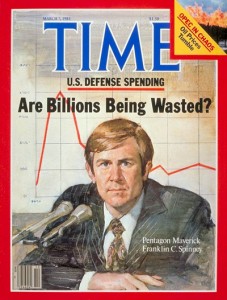
Phi Beta Iota: US “policy” on Israel (can do no wrong) and Palestine (let them eat dirt) is the single most compelling example of corrupt ideological idiocy, treason against the public interest both at home and abroad. We all want Israel to be safe and prosperous–most us, the rabid and the corrupt not-withstanding–also want Palestine to be safe and prosperous, a contiguous state free from Israeli genocide and other atrocities. As Chuck Spinney has noted in the past, the Middle East is a nuanced complex problem that demands intelligence and integrity applied in a holistic manner–the Israelis for example, are single-handedly stealing most of the water from the Arab aquifers for an agricultural “miracle” that produces 4%, at best, of the Israeli GDP. This is nuts. In Washington, “nuts” is policy.
Below is a dynamite op-ed on the cost of the so-called war on terror by Linda Bilmes and Joseph Stiglitz. Without being critical, I think at least two additional aspects to these costs make the picture even worse than they say.
1. Some people in this [let them eat] cake walk became — and are still becoming — filthy rich spending other people's money and spilling other people's blood — the acknowledgement of which takes one into the murky question of what moral values are shaping this political-economic meltdown.
2. While not directly caused by the war on terror, the ramping up of defense expenditures magnified the the rate of distorting spillovers (the Melman* effects) that the MICC's politicization of R&D and manufacturing have on diminishing America's overall commercial manufacturing efficiency and industrial competitiveness. The costs may be incalculable, but that does not make them less real.
Fighting the war on terror compromises the economy now and threatens it in the future.
By Linda J. Bilmes and Joseph E. Stiglitz
Ten years into the war on terror, the U.S. has largely succeeded in its attempts to destabilize Al Qaeda and eliminate its leaders. But the cost has been enormous, and our decisions about how to finance it have profoundly damaged the U.S. economy.
Many of these costs were unnecessary. We chose to fight in Iraq and Afghanistan with a small, all-volunteer force, and we supplemented the military presence with a heavy reliance on civilian contractors. These decisions not only placed enormous strain on the troops but dramatically pushed up costs. Recent congressional investigations have shown that roughly 1 of every 4 dollars spent on wartime contracting was wasted or misspent.
Phi Beta Iota: We judge defense to be 75% fraud, waste, and abuse (3 out of 4 dollars, not 1 out of four). The infantry is 4% of the force, suffers 80% of the casualties, and receives 1% of the budget. Our starting position is that 20% of the Pentagon budget can be justified in conference, everything else is on the table for draconian cuts toward a balanced budget. Agriculture, energy, and health are documented at 50% waste–the Pentagon is much less relevant to the society and the economy than those three, ergo we speculate that defense is half again as wasteful as these other core sectors.