Presented by Steven Wm. Fowkes. The talk will answer questions like:
1. Which nutrients promote optimal brain function?
2. What nutrients are commonly deficient enough to impair mental performance?
3. How can you get a better nights sleep without Ambien?
4. What nutrients counteract aspects of aging?
5. Is there an alternative to serotonin reuptake inhibitor (SRI) antidepressants?
6. What modern nutrition myths lead us to consume products that sabotage healthy brain function?
7. What tests can you get from your doctor?
8. What nutrients affect appetite, alertness, and tension?
9. What nutrient combo will prevent hangovers 90% of the time?
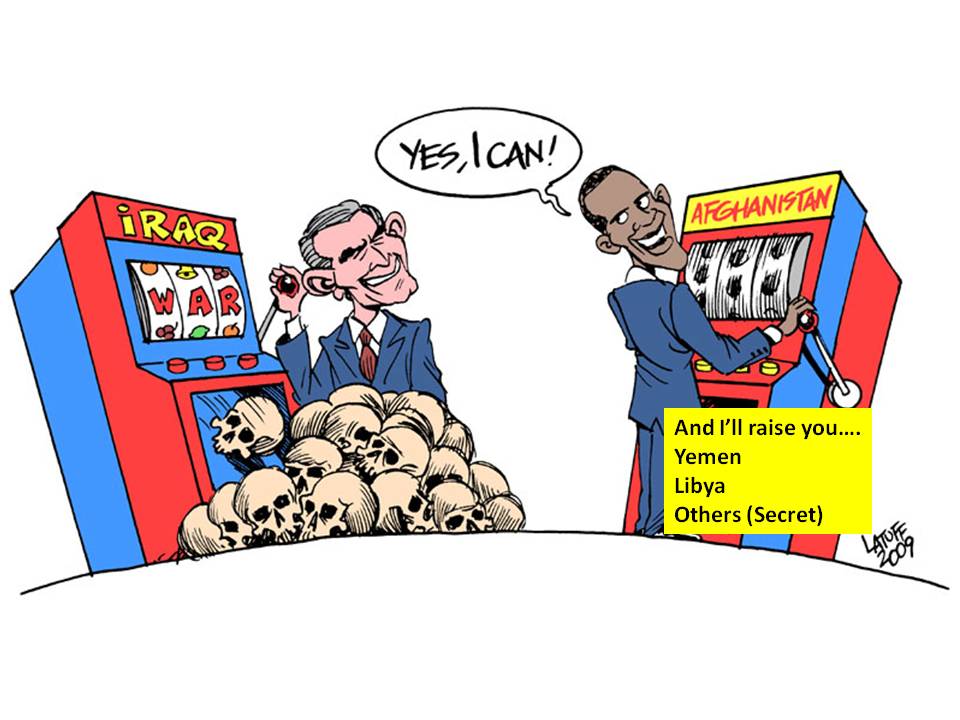
Bahrain-Arab League, Arab League, Yemen, Yemen-Saudi Arabia, Libya, US, France, Coalition Update, Rumania, The Netherlands, Germany (withdraws).
Phi Beta Iota: Don't miss the observation on pan-Arab desire for the nuclear bomb and Arab dictator harmony against the Persian/Iranian/Shi'ites. The observation on untrainable mobs also merits note–dictators (and faux democratic tyrannies) favor stupid uneducated publics–transitioning from dysfunctional top-down leadership to resilient bottom-up democracy requires education and takes time.
Spent some time talking with some smart folks working on alternative currencies in SFO. Here's the conclusions from this conversation. Alternative currencies can do three things:
1. Serve as a store of value. Presumably, this currency holds value better than existing currencies. In this way, it acts like an asset (land, etc) but is more fluid/granular to allow its use in transactions. Think gold and commodity backed currencies. A way to apply this approach to a resilient community is to combine it with a food reserve (a currency backed by food you can eat if things break down — see the Mendo Credit Slip as an example of this).
2. Enable a loyalty program. In short, these currencies entice people to do business with a favored group of individuals/companies. Think local/regional currencies or commodity currencies backed by locally produced products. This can be a powerful way to accelerate consumption of local goods (keep the supply limited, focus on superiority via quality/freshness, etc.)
3. Jumpstart a local/virtual economy. Full cycles of transactions from producer to buyer and back again. This is very difficult to do. A good example of success is Austria's depression era Worgl. Why did it succeed? It made the Worgl important to both producers/retail and consumers. As in: the town that issued the Worgl accepted it as payment for taxes. It then launched infrastructure projects that paid the employees partly in Worgls.