Dr. Norman Johnson recently became Chief Scientist at Referentia Systems, after 25 years at Los Alamos National Laboratory as a scientist and manager. Because the message is more important than the messenger, see http://CollectiveScience.com.
Forgery is old news–focus on the loss of morality, August 7, 2008
Ron Suskind
EDIT of 3 Sep 08 to add CIA published denial and attack, and comment from Association of Former Intelligence Officers, as a comment.
I have reviewed all the books linked to below, and my reviews of those books will add depth to this review.
Ron Suskind's first book on the current Administration, The One Percent Doctrine: Deep Inside America's Pursuit of Its Enemies Since 9/11 was extraordinary for its deep look at Dick Cheney and how since his Ford days, he has always favored unfettered Executive power and has never, in every Continuity of Government exercise, NEVER, given any thought to Congress. He ALWAYS went for an Executive dictatorship that used “war powers” to overturn the Constitution and every single civil liberty. However, the better books on Cheney (25 documented high crimes) and Bush (a tragedy within a farce) are these:
The media and the other reviewers are placing excessive emphasis on the forgery. This is old news. Vaclav Havel, former President of Czechoslovakia, personally said that the White House claims that Iraqi intelligence met Al Qaeda in his country were false. The son in law of Sadaam Hussein who defected asserted, very credibly (and without torture) that the regime kept the cookbooks, destroyed the stocks (Army intelligence tells me they poured so much stuff into the river the future of those downstream is very scary), and were bluffing for regional influence's sake). The fact is that in addition to Cheney's 25 high crimes, there were 935 documented lies told by the White House, and their lack of ethics, integrity, and respect for the Constitution is now beyond repudiation. See for example:
I continue to be astonished that citizens of the US are not burning tires in the streets and surrounding the White House demanding the immediate exile of Dick Cheney and the appointment of a care taker Vice President, at a time when open source intelligence (OSINT) is telling all of us, and the Director of National Intelligence (DNI) that Dick Cheney has promised Israel the US will nuke the Iranians between November 2008 and January 2009.
The core value of this book is NOT in the forgery, which is old news, but in the broad picture it paints of a Republic that has become a Third World dictatorship in which Cheney calls the shots, Congress is complaint (both parties be damned, the Republicans for being collaborators, the Democrats for being doormats), the war loots the individual taxpayer for Halliburton's financial benefit, and brave Americans die for an illegal, immoral war justified by a cadre of liars: Cheney, Rice, Wolfowitz, Rumsfeld, and Feith.
I read a a great deal–an almost fruitless attempt to remain sane in a time of mass insanity–and what I admire most about this author and this book is his broad focus on morality, civil liberties, and the values that differentiate true conservatives who read and value philosophy–and liberals who parrot phrases they do not understand. This is SERIOUS stuff!
In support of this author's “brief” to We the People, who should all be absorbing and then acting upon his message of paradise lost, I can only point to four more books within my Amazon limit, but urge all to look at my lists of books on evaluating Dick Cheney, on the case for impeachment, and on strategy, emerging threats, and anti-Americanism for good reason.
Will and Ariel DurantThe Lessons of History, a capstone volume on their 10-volume History of Civilization, tell us that MORALITY is a strategic asset that is priceless. Ron Suskind is right on target when he points out that it is this aspect–the loss of our national morality–that distinguishes the Bush-Cheney regime. Other Presidents have lied, cheated, and stolen, but this is the first in modern history to combine BOTH global imperialism AND domestic subversion on a scale that makes Richard Nixon look like a novice.
Max Manwaring, contributing editor of The Search for Security: A U.S. Grand Strategy for the Twenty-First Century, and his distingusihed authors, make the point that LEGITIMACY is the single most priceless asset for any government, for it empowers citizens and enables commerce, innovation, and civil society.
Ambassador Mark Palmer, author of Breaking the Real Axis of Evil: How to Oust the World's Last Dictators by 2025 points out that the US is not respected nor trusted in part because the Bush-Cheney Administration has chosen to be best pals with all but two of the 44 dictators in the world. Rendition, torture, warrantless wiretaping at home (including Guantanamo); deep secret and financial relations–at our expense–with 42 dictators busy looting and terrorizing their publics. Go figure….
Much of what the author has brought together is not new for those of us that continually monitor and agonize over crimes against the Republic, but I have to give him credit for crafting an elegant presentation that makes his book a moving and hence essential wake up call for the Republic. The people are NOT sovereign today, the people are sheep whose civil liberties, freedom of expression, right to bear arms, even their right to assemble, are all under attack.
With my final link, choosing from over 1,000 candidates, I conclude with a strong recommendation for the book Fixing Failed States: A Framework for Rebuilding a Fractured World. America is a failed state, and it is not just Noam Chomsky and Chalmers Johnson that are saying this, but also true conservatives steeped in thinking and integrity who are aghast at both the crimes of this Administration “in our name,” and the two clowns we have running for President, neither of whom can produce a strategy to restore America in the face of the ten high-level threats to humanity, a coherent policy matrix (twelve policies from Agriculture to Water), or a draft balanced budget and notional Cabinet proving they have a clue. They do not.
The USA has become a Third World nation. We let it happen by abdicating our moral and civic responsibilities as citizens of a Republic. Right now, regardless of who “wins” in November, we all lose. THAT is the point of this great book. The Republic is adrift and sinking fast.
Learn how to do public intelligence in the public interest at Earth Intelligence Network. It's time we take back the power.
Mister Jalopy is a fearlessly experimental welder, woodworker, bicycle mechanic, writer, photographer, embroiderer, artist, electronics troubleshooter, teacher, furniture rebuilder, garage saler, activist, wheeler dealer, street racer, blogger, editor, auto mechanic, speaker, fabricator, builder, large appliance repairman, columnist, designer and entrepreneur.
Empowering consumers to be able to repair, rebuild, reuse and reinvent the products they invest in is at the core of Mr. J’s philosophy. As part of the Maker’s Bill of Rights article in Make: Magazine, Jalopy declared, “if you can’t open it, you don’t own it” Asserting that an individual should be able to open, repair and modify the products that they buy, the Maker’s Bill of Rights gave a clear voice to the Maker Movement’s frustration with increasingly disposable products that lock out consumers.
This volume is as good as it gets for depicting poverty in America, but it could have been significantly better.
1) The colors chosen to depict degrees of severity of poverty are in the blue-purple range and do not “compute.” I do not know if this was a foolish decision by the publisher to save on more expensive yellow, orange, red, but the bottom line is that the colors stink and do not communicate as well as they should.
2) There is a lack of attention to the connection between health and poverty, education and poverty, labor category and poverty. I would also have liked to see a specific focus on poverty in each of the Nine Nations of North America (see Joel Garreau's still relevant The Nine Nations of North America.
Poverty has been declared the Number ONE High-Level Threat to Humanity by a distinguished group including as the US representative LtGen Dr. Brent Scowcroft, USAF (Ret), available both free online in PDF form, and at Amazon in very nice hard-copy, A More Secure World: Our Shared Responsibility–Report of the Secretary-General's High-level Panel on Threats, Challenges and Change That makes this book–and an exztention of this book to the rest of the world–absolutely essential. Also needed is a web site that shows interactive time-space series, and some means of seeing “impacts” of differing policies and spending (it's not policy until it is in the budget and the budget obligated). There are twelve core policies that impact on poverty:
Agriculture
Diplomacy
Economy
Education
Energy
Family
Health
Immigration
Justice
Security
Society
Water
Learn more at Earth Intelligence Network (public intelligence in the public interest). I am increasingly of the view that we need to gather up all the brilliant authors and contributors of the varied atlases (I have reviewed only a fraction of those in my collection) and ask them to create slices for the EarthGame(TM) that has been designed by Medard Gabel, who created the World Game (analog) with Buckminster Fuller.
Here is the table of contents that is not otherwise available to the Amazon viewer:
List of Tables, Maps, and Photographs
History of the Atlas Project
How to Read This Atlas
Basics of Poverty
Introduction: The Paradox of Poverty in America
Lived Experiences
= Children: Poverty in America Starts with Children
= Women: Often Poor, Vulnerable, and Lacking Access to Basic Needs
= Black Families at Risk
= Black Male Incarceration: Impacts on the Family
= Hard Work and Low Pay Define the Lives of Hispanic Americans
= Elderly: Social Programs Keep Many Out of Poverty
= Working but Poor
= The Lived Experience of the Wealthy in America
History of Poverty
= Poverty in the 1960's
= Poverty in 1970
= Poverty in 1980
= Poverty in 1990
= Poverty in 2000
Distressed Regions
= Appalachia: A Land Apart in a Wealthy Nation
= The Mississippi Delta: Plantation Legacy of Slow Growth, Racism, and Severe Inequality
= First Nation Poverty: Lost Lands, Lost Prosperity
= The Border Region: Where the Global and the Local Meet
= Rural Poverty in America
= Segregation: A Nation Spatially Divided
History of Poverty Policy (Text)
= American Poverty Policy from the 1930's to 2004
= Sources
= Graphical Sources
= Index
All told, a fine effort gone awry with a poor choice of colors. Still, the best available and strongly recommended for that reason.
Superb, Crystal-Clear, Speaks Truth to Power, April 3, 2008
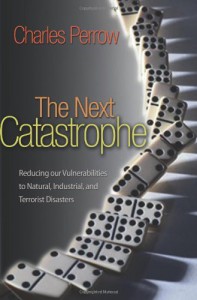
Charles Perrow
Amazon destroyed this review in error and I failed to keep a file copy. This is a reconstructed review–not nearly as good as the original–nothing I can do about it.
———-reconstructed review————-
This book is a learned essay, and I immediately discerned (I tend to read the index and bibliographies first, to understand the provenance of the author's knowledge) that the author has excelled at both casting a very wide net for sources, and at distilling and presenting those sources in a useful new manner with added insights.
Key points:
Natural disasters impact on 6 times more people than all the conflict on the planet.
Industrial irresponsibility, especially in the nuclear, chemical, and biological industries, is legion, and much more potentially catastrophic than any terrorist attack. Of special concern is the storage of large amounts of toxic, flammable, volatile, or reactive materials outside the security perimeters–this includes spent nuclear fuel rods, railcars with 90,000 tons of chlorine that if combined with fire would put millions at risk.
The entire book is an indictment of the Department of Homeland Security (DHS) which the author says was designed for permanent failure (at the same time that it took over and then gutted the Federal Emergency Management Agency (FEMA)).
The author focuses on how concentrations of people, energy, and high-value economic targets make us more vulnerable than we need to be. Dispersal, and moving small amounts of toxic materials (just enough just in time, rather than a year's supply on site), can help.
The author outlines five remediation strategies:
REDUCTIONS of amounts
TRANSFERS from outside the wire to inside the wire
SUBSTITUTION (e.g. of bleach for chlorine)
MIND-SET SHIFT to emphasize public safety and regulation over profit
REFORM of the political system, where federal laws now set CEILINGS for safety rather than floors (one of many reasons we have 27 secessionist movements in the USA–the federal government is insolvent and abjectly corrupt and incapable).
We learn that post-9/11 we have spent tens of billions on counter-terrorism to ill-effect, while completely neglecting rudimentary precautions and protections against natural and industrial disasters that will inevitably turn into catastrophes for lack of competent organizations.
The author emphasizes that complex systems will fail no matter what, but it is much more dangerous to the public if the government and the industrial executives refuse to do their jobs. The author coins the term “executive failure” to describe top leaders who deliberately decide to ignore federal regulations on safety, and describes a number of situations where near-nuclear meltdown and other disasters came too close to reality.
The power grid, PRIOR TO deregulation, is treated as a model of a system that developed with six positive traits:
1. Bottom-up
2. Voluntary alliances
3. Shared facilities at cost
4. Members support independent research & development
5. Oversight stresses commonality interdependence
6. Deregulation is harmful to public safety
The author sums up the enduring sources of failure as:
ORGANIZATIONAL — flawed by design (pyramidal organizations cannot scale nor digest massive amounts of new fast information)
EXECUTIVE — deliberate high crimes and misdemeanors, seeking short-term profit without regard to long-term costs to the public safety. “We almost lost Toledo.” Buy the book for that story alone.
REGULATORY — the corruption of Congress, now known to be legendary.
The author tells us that globalization has eliminated the “water-tight bulkheads” within industries and economies, meaning that single points of failure (like the Japanese factory making silicon chips) can impact around the world and immediately. The author prefers to nurture networks of small firms, and this is consistent with other books I have read: economies of scale are no longer, they externalize more costs to the public than they save in efficiencies.
The book ends with an overview of the Internet, which is not the author's forte. He notes that our critical infrastructure is connected to the Internet, but I like to add emphasis here: all of our SCADA (supervisory control and data administration) are on the Internet and hackable.
I like very much the author's view that Microsoft and others should be held liable for security blunders that cost time and money to the end users. I recall that Bill Gates once said that if cars were built like computers they would cost very little and run forever….to which the auto industry executive replied: yes, and they would crash every four blocks and kill every fourth person (or something along those lines). We still do not have a desktop analytic suite of tool because of proprietary protections for legacy garbage.
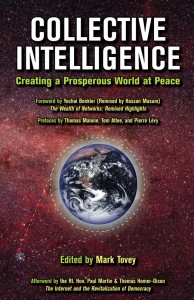
I am certain that We the People can live up to the promise contained in Collective Intelligence: Creating a Prosperous World at Peace which, as with all books I publish, is free online as well as being offered by Amazon for those who love to hold and read and annotate hard copy.
Outstanding! Trouible-Shooting Pages a Superb Value, April 2, 2008
Bob Livingston
My wife inherited a 1988 Winnebago (31 foot, no slide-outs) and we've decided to bring it up to speed for beach trips. This is one of two books I have bought to get started, and it is the better of the two, but I like them both.
This book is absolutely one the best car maintenance books I have ever had the pleasure of using (I also have a 1964 MGB and related maintenance books). This book is brilliantly organized, crystal-clear, and I especially appreciate the full-page trouble-shooting guide with symptoms and fixes in two columns.
I also recommend RV Owner's Handbook, Revised (Rv Owner's Handbook) but I use that for overview reading. If you want only one book, buy the Trailer Life book, it is vastly more detailed and useful with respect to each individual system in any given RV.
Outstanding Overview for CEOs and MBAs going into HR, August 1, 2008
Robert L. Cross
Ben Gilad, one of the top five business intelligence gurus that I know, teaches us that CEO information is invariably filtered, late, incomplete, and/or subjective, lacking in analytic rigor (and in my own experience, based on the easy 2% of the information the subordinates can access easily). CEOs have to not only create their own internal “organizational intelligence” unit, they have to read for themselves–reading and thinking cannot be delegated.
This is a great book, an essential reference for CEOs who are willing to open their minds and consider the possibility that the Weberian model of bureaucracy as knowledge-hoarding and information pigeon-holing is pathologically out of touch with the the diversity and pace of the modern world.
I do not agree with those that dismiss this book as being for consultants. It is an easy to read, well-organized, and ably-ducumented offering (including appendices with specific questions for exploration, and before and after charts).
I am loading a chart above of the four quadrants of knowledge, information, and intelligence that I have been exploring since the 1990's.
1. Most organizations are barely familiar with Quadrant I (Knowledge Management or data mining or making the most of what we already know.
2. A few are in Phase I of Quadrant II, on levering social networks both internally and externally–the Business Week cover story of 20 June 2005 on “The Power of Us” is a superb starting point for that one.
3. A handful of us have been focusing on Quadrant III since the 1990's, and Peter Drucker, writing in Forbes ASAP on 28 August 1998 said it best: “We have spent 50 years focusing on the T in IT, we should spend the next 50 years focusing on the I in IT.”
I like this book. It is not a cookie-cutter book, it is a serious stepping stone for anyone wanting to think about the move away from pyramidal organizations and toward ever-expanding circular organizations.
I also recommend the six books I have published, espeically the ones on public intelligence and collective intelligence and on information operations, and books on the general topic of group gtenius, wisdom of the crowds, smart mobs, and so on.