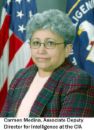
Carmen Median retired–her brilliance and innovative spirit surfaced at the top too late in the game. She is, however, like General Peter Schoomaker, USA (Ret), one of those bright lights that in our view should be brought back in to manage a global multinational information sharing and sense-making grid. She is not forgotten, and we hold her in the very highest esteem.
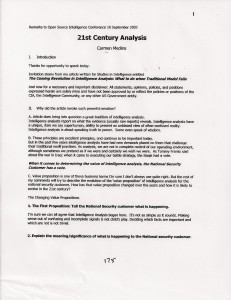
Below is the presentation she made to OSS '03, and a link to the article in Studies in Intelligence that remains, along with everything written by Jack Davis, seminal.
Carmen MedinaCarmen Medina What to Do When Traditional Models Fail
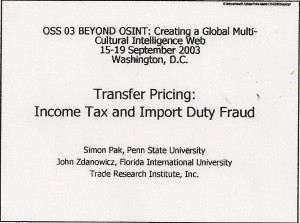
These two guys are worth over $50billion a year to the Internal Revenue Service (IRS), but the U.S. Government does not seem to care about intelligence-driven revenue-collection.
These guys ROCK and represent all that academics should be in the service of their country and theircommunity.
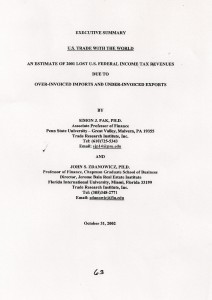
Dr. Simon J. Pak and Dr. John S. Zdanowicz, Penn State University and Florida International UniversityOSS '03: For their extraordinary demonstration, with a tangible value to the public of $50 billion a year in tax fraud savings, of new methods of academic investigation into public trade records, and the consequent discovery of specific instances of import-export money laundering and financial fraud, as well as weight variances associated with the smuggling of contraband and the mis-representation of cargo.
Below are their paper and slides as presented at OSS '03. These guys should have their own investigative cell fully-funded by the IRS and ultimately in ther service of all governments (a multinational global service).
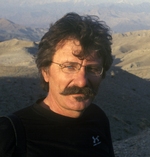
Mr. Robert Young Pelton is perhaps the greatest journalist-adverturer on the planet. This is a man that gets kidnapped by accident, is recognized by the leader of the kidnappers, and is promptly released with apologies and an honor guard. His book World’s Most Dangerous Places and his TV series Come Back Alive are among the most extraordinary “ground truth” offerings available to the public and admired by the spies. In his every waking moment, in his every action, in his every report, he embodies the true spirit of Open Source Intelligence (OSINT).
This extraordinary person may well be the prototype for engaged citizen investigative journalism. Below is the summary of his presence at OSS '03, and links to his two most important websites. The photo above links to his Wikipedia page.
Pelton at OSS '03Come Back Alive Web Site including DangerpediaAmazon Page
Below are the headlines alone from the original document. Click above to see the original online, and on the Frog below for a printable paginated document.
A. Our Common Vision of the Information Society
B. An Information Society for All: Key Principles
B1. The role of governments and all stakeholders in the promotion of ICTs for development
B2. Information and communication infrastructure: an essential foundation for an inclusive information society
B3. Access to information and knowledge
B4. Capacity building
B5. Building confidence and security in the use of ICTs
B6. Enabling environment
B7. ICT applications: benefits in all aspects of life
B8. Cultural diversity and identity, linguistic diversity and local content
B9. Media
B10. Ethical dimensions of the Information Society
B11. International and regional cooperation
C. Towards an Information Society for All Based on Shared Knowledge
Too long to reproduce here, an original and almost priceless reference. Click on logo for full text. This is the original. Since then Geneva has taken place, and plans are on for the next step. Click on Frog at thebottom for a paginated easy-print clean document with all of the information.
PLAN OF ACTION
A. Introduction
B. Objectives, goals, and targets
C. Action Lines
C1. The role of governments and all stakeholders in the promotion of ICTs for development
C2.Information and communication infrastructure: an essential foundation for the Information Society
C3. Access to information and knowledge
C4. Capacity building
C5. Building confidence and security in the use of ICTs
C6. Enabling environment
C7. ICT applications: benefits in all aspects of life
C8. Cultural diversity and identity, linguistic diversity and local content
C9. Media
C10. Ethical dimensions of the Information Society