Review: State of the World 2008–Toward a Sustainable Global Economy

4 Star, Complexity & Catastrophe, Empire, Sorrows, Hubris, Blowback, Environment (Problems), Intelligence (Public), Nature, Diet, Memetics, Design, Security (Including Immigration), Threats (Emerging & Perennial), Values, Ethics, Sustainable Evolution, Water, Energy, Oil, Scarcity
State World 2008
Amazon Page

Superb Primer for Any Level, Needs Two Missing Pieces, April 25, 2008

Worldwatch Institute

This a superb edited work that melds chapters (with notes at the end) from world-class authors on a broad range of topics.

I kept this at five stars until the end and then I could not stand it anymore. There are at least five reasons to reduce it to four. Here are the first two.

1. As someone who grew up with Banks & Textor and have created four analytic models in my lifetime, I am growing increasing impatient with the continued fragmentation of research and writing. There is a model available: ten threats (from the UN High Level Threat Panel), twelve policies, eight challengers. We need to start fusing, analyzing, visualizing and discussing all ten threats in relation to all ten policies. I am no longer content to read about water in one chapter, meat in another, and so on. Stop putzing around and create the EarthGame with all information, all languages, all the time–geospatially grounded of course–and let's get on with the task of identifying with precision the global range of gifts table down to the household level, from $1 to $100 million.

2. I am increasingly irritated by the little cabals that strive to cite only themselves, and furthermore, have their own language to distinguish them. “Get the price right” instead of “true cost”? Get over it. Enough already. I am also increasingly of the view that the Notes must be indexed. The notes are good, but when the lead chapter talks about “Adjust Economic Scale” and fails to cite Small Is Beautiful, 25th Anniversary Edition: Economics As If People Mattered: 25 Years Later . . . With Commentaries or Human Scale I growl.

Together with Plan 3.0 and Vital Signs, both linked by another reviewer, this book represents a fine stand-alone study set if you want to limit yourself to the WorldWatch oracles and dismiss all others.

Here is what grabbed me about this book:

+ Opens with utterly sensational four pages of “timeline” for 2007 with little blocks that are priceless. I really like this.

+ Chapter 1 does a fine job of listing:

– Four flawed economic assumptions:

– 1. Independence of economic activity from “infinite” nature

– 2. Growth should be the primary economic objective

– 3. Markets are always superior to governments at allocating resources

– 4. Humans are economic maximizers and place no value on community

This may sound simple but I admire it.

– The seven big ideas for economic reform:

– 1. Adjust economic scale

– 2. Shift from growth to development

– 3. Make prices tell the ecological truth [note: for World Index of Social and Environmental Responsibility–WISER–to not be in index irritates me so much I almost take the fifth star again).

– 4. Account for nature's contributions [I am infuriated by a second hand citation. I am not familiar with more than a couple of books, but to not mention Ecological Economics: Principles And Applications or The Future of Life moves this book, as very good as it is–toward Classic Comics book shallowness.

– 5. Apply the precautionary principle. [Cites a San Francisco Chronicle opinion piece, what happened to the real books on this subject, such as Protecting Public Health and the Environment: Implementing The Precautionary Principle

– 6. Revitalize commons management

– 7. Value women [here I am irritated by the isolation of these authors and their citations from a broader understanding of why we should value women: because it is a proven fact that there is no better investment, dollar for development dollar, than a dollar spend educating women. That ripples through society and impacts on the men big time.]

The second chapter has a prices Figure showing that computer diffusion is growing arithmetically while cell phone diffusion is growing logrithmically plus. My comment: Nokia is slowing beginning to grasp what I told their Chairman a year ago: give the cell phones to the poor free, sell the call, not the phone (and my other idea, educate the poor one cell call at a time, starting with call centers in India and China, and then monetize the transactions. Having six farmers call in asking about the same animal disease is PRICELESS! How governments cannot understand this simple logic is beyond my comprehension.

Across the book the tables and figures are powerful but they are not integrated into a total model (e.g. you should not grow grain with water you cannot afford to create fuel instead of feeding a family when you could run 35 million cars a year on Cuban sugar cane sap).

I was pleasantly surprised to see meat and seafood in its own chapter, but as an avid admirer of everything by Francis Moore Lappe
, see for example Diet for a Small Planet and her most recentDemocracy's Edge: Choosing to Save Our Country by Bringing Democracy to Life.

Toward the end are two very important chapters, one on the financial implications of sustainability (i.e. what alternative vehicles can be used to push back on predatory lending, absentee ownership, and wasteful food practices) and on harnessing human energy (e.g. to plant trees).

I put the book down with irritation–Open Money, Collective Intelligence, even the word Citizen are not in this book–and I again harken to the need for an EarthGame in which all knowledge, all budgets, all citizens, can come together to game, understand, dialog, and decide.

I've come to the conclusion that the fragmentation of the “academy” is now just as dangerous as the desperate failure of our political system in America (see Running On Empty: How The Democratic and Republican Parties Are Bankrupting Our Future and What Americans Can Do About It for the simple reason that if the academy would get its act together and “make sense” to the public, the public will take care of the political fix.

We knew most of this stuff in the 1970's, 1980's, and 1990's–at the academic level–but the politicians were able to ignore us because a) the people were unwitting and b) low gas prices and high Exxon bribes were great for the smokey room crowd. That's over. It's time for the academy to start producing explicit recommendations and budgets, at the zip code level, that we can use to beat politicians into submission or out of office.

Please have it online by 4 July 2008, and thank you for all the wonderful work up to this point. Time to bring this program home.

Two more links that are action oriented:
How to Change the World: Social Entrepreneurs and the Power of New Ideas, Updated Edition
Collective Intelligence: Creating a Prosperous World at Peace

Vote on Review

Review: Acts of God–The Unnatural History of Natural Disaster in America

5 Star, Complexity & Catastrophe, Congress (Failure, Reform), Disaster Relief, Environment (Problems), Executive (Partisan Failure, Reform), Nature, Diet, Memetics, Design
Amazon Page

Nature is the What, Culture is the Who–Lovely Analytic Account, April 21, 2008

Ted Steinberg

I am starting to think about a 2009 book on CULTURAL INTELLIGENCE: Faith, Ideology, and the Five Minds (the later from Five Minds for the Future and I am constantly enchanted when I run across a vital reference to how culture is the disaster, not nature.

This book is a magnificent epistle on the folly of mankind and the duplicity of government, business and the media. The author of totally brilliant as he gently sets forth the myth that we are not responsible for acts of God when in fact we are the perpetrators of complex human, social, economic, and political fabrications and decisions that invariably:

1. Screw over the poor and those of color

2. Amortize high risks taken by the rich across the entire taxpayer base

3. Conceal, lie, deceive as to the actual premediated decisions that occasioned the disaster turning into a catastrophe.

I am reminded of that excellent work, Catastrophe & Culture: The Anthropology of Disaster (School of American Research Advanced Seminar Series).

Here is “the” quote from the author, on page xxii:

“The official response to natural disaster is profoundly dysfunctional in the sense that it has both contributed to a continuing cycle of death and destruction and also normalized the injustices of class and race.”

The middle of the book is a detailed but not at all tedious account of California, Florida, and the Mississippi flood plain. In all three cases calamity was treated as a cultural script to execute:

1. A political agenda on the poor

2. Conceal and deceive outsiders to keep investment coming in

3. Further land speculation, with insurance company as well as state government complicity

I am reminded of the two books, Fog Facts: Searching for Truth in the Land of Spin and The Cheating Culture: Why More Americans Are Doing Wrong to Get Ahead. Our country has lost its moral compass across all of its institutions. This is not new, the price is simply higher now.

The account of how a railroad magnate built a railway from Jacksonville to Miami (which was 200 feet of sand at first) and then on to Key West, with the taxpayer footing the bill, the state government giving away the land, and the speculation leading inevitably to enormous disaster and death, is riveting. Or at least captivating.

He lambasts the federal government for venturing into the political economy of risk, for trying to control weather from the 1950's, and for “writing off” the poor in their mobile homes. Land in hazardous terrain subject to flooding is cheaper, mobile homes are cheaper, the poor cannot afford to evacuate, this strikes me as something only a genocidal maniac would love: “natural eugenics,” only a little connivance needed.

The author tells us that through the 1970's the federal government stunk at both forecasting and warning, in part because of poor budgeting for the National Weather Service, in part because of privatization, in part because of ineptness (e.g. not repairing critical buoys).

He states, and this did not begin with Katrina, but goes back 40 years, that the Federal response to disasters has been consistently pathetic. One explanation is that the Federal Emergency Management Agency has consistently been a dumping ground for political hacks, with nine times more losers than in other agencies.

He explicitly blasts Bush-Cheney for lies in relation to Katrina, which was accurately forecast. Every POLITICAL level of government, from the chicken mayor to the complacent governor to the dumb-s..t FEMA director to the village idiot President failed us.

The books ends by skewering both Clinton and Bush for 16 years of deregulation of all industries having anything to do with public safety, allowing them to increase their profits by increasing the risks and costs to the unsuspecting buyers upon whom they were enabled to prey.

Not a pretty story, but I for one am starting to see the pattern of government and corporate deception, and that is why I have committed the last twenty years of my working life to creating public intelligence in the public interest.

I cannot remember all my past weather and climate books, but here are a few more links:
The Atlas of Climate Change: Mapping the World's Greatest Challenge (Atlas Of… (University of California Press))
The Weather Makers : How Man Is Changing the Climate and What It Means for Life on Earth
Catastrophe: An Investigation into the Origins of Modern Civilization

See also:
Group Genius: The Creative Power of Collaboration
The New Craft of Intelligence: Personal, Public, & Political–Citizen's Action Handbook for Fighting Terrorism, Genocide, Disease, Toxic Bombs, & Corruption
The Next Catastrophe: Reducing Our Vulnerabilities to Natural, Industrial, and Terrorist Disasters

Vote on Review

Review DVD: The 11th Hour

5 Star, Environment (Problems), Nature, Diet, Memetics, Design, Reviews (DVD Only)
11th Hour
Amazon Page

Very Best Combination of Brains, Images, and Words, April 20, 2008

Leonardo DiCaprio

Unlike National Geographic: Six Degrees Could Change the World and National Geographic: Human Footprint, both of which I recommend, this DVD is a very elegant narrative that blends top ecological activists including Stephen Hawking and Paul Hawkins, speaking for a minute or two each, with historical audio-visuals that have been selected with enormous intelligence and integrity.

If you buy only one film, this is the one, but the issue is so very important I would recommend that each of three families buy one of these, and then start passing them around the neighborhood.

The movie opens with a theme of the planet being sick–two complex systems, one human, one all else, are interacting in pathological ways. Man, in being able to think about the future, while also ignoring the limits to growth and maintaining the fiction of being separate from nature, is committing species suicide.

Mankind used to live on current sunlight, which can only sustain up to one billion people. It was the industrial and agricultural era that began to draw down on “stored sunlight” in the form of petroleum and natural gas that set off a race to grow that led to climate change and especially global warming. 20% of the polar ice is gone; catastrophic weather is 50% more often or 50% more powerful. The amplification effect of human misbehavior is creating more and more loss. See The Manufacture of Evil: Ethics, Evolution and the Industrial System; To Govern Evolution: Further Adventures of the Political Animal; and Voltaire's Bastards: The Dictatorship of Reason in the West

I have a note to myself, this is stark elegant poetry.

The oceans are discussed in terms of our taking out too much (e.g. over-fishing) and putting in too much (toxins and non-biodegradable matter), and at the same time, toxins get concentrated in the food chain and come right back to us. See Blue Frontier : Saving America's Living Seas

Water that is poisoned ultimately poisons the human species. See
The Blue Death: Disease, Disaster, and the Water We Drink

Toward the end we get to the cruz of the matter, that corporate greed and control has gone global, and the legal systems, the political systems, are hostage to that greed. The Earth–nature–has been commoditized, as have humans (never mind the corruption that allows corporations to loot foreign commonwealths at the same time that Exxon externalizes $12 in “true costs” to future generations for each gallon of gas it sells).

One speaker is very capable in pointing out that this is neither a technology crisis nor even an ecological crisis, but rather a crisis of political policy and a process that has broken down completely. The government “bridge” between the commonwealth and the people, and the economy, has falled down. In the next sentence the problem is defined as our CULTURE, with everything else being a symptom. This was for me a defining moment within this DVD. It's not about evil–Exxon does what we let them–it's about what we choose to do or not do as a culture.

Probably citing E. O. Wilson, but without reference to him (he should have appeared in this movie, see his book The Future of Life, one speaker notes that the value of what nature does for us (e.g. bee pollination of crops) has been estimated at 35 trillion dollars a year–vastly more than the 18 trillion that comprises the global economy.

The DVD concludes with an excellent combination of individual statements on how this IS the ecological era, we can reimagine our lives, if we just retrofit all buildings to make them energy efficient it would create 3 million jobs in the US and free us from dependence on foreign oil. We can live with one tenth of the resources we consume now.

[Coincidentally, this was the week that TIME Magazine went green, and while I was watching the movie I was also finishing up Jesse Ventur's book Don't Start the Revolution Without Me! in which he recounts his realization that simply unplugging all the TVs in America when not in use would end US energy shortages.]

Di Caprio closes, and I write in my notes: eloquent, inspriing, statesmanlike, learned. He–and all those associated with this project–have it it out of the park. This is a deeply impressive contribution to the public dialog on our future as a species and as a planet.

See also my varied lists. There are a number of books in the cradle to cradle, sustainable design, green to gold, natural capitalism genre, the one that captures the spirit of this DVD and complements it is, in my view, Paul Hawkin's Blessed Unrest: How the Largest Social Movement in History Is Restoring Grace, Justice, and Beau, which he describes as the Earth's immune system kicking in.

Vote on Review

Review DVD: National Geographic: Six Degrees Could Change the World

5 Star, Complexity & Catastrophe, Environment (Problems), Nature, Diet, Memetics, Design, Reviews (DVD Only), Survival & Sustainment, Water, Energy, Oil, Scarcity

Six DegreesSpectacular. Professional. Visually Powerful. Life Changing., April 12, 2008

Alec Baldwin

This is a spectacular piece of professional work and so compelling as to be inspirational.

I watched this with my wife with no lights, and decided to take no notes. Here are the highlights from my memory.

1) Brilliant, utterly brilliant, history, photography, personalities (such as the Indian guru that has photographed the source of the Ganges for 50 years) and sequencing. I don't want to overdo it, but this may well be the single most important DVD of the century, and so worthy of both buying, showing to groups, and giving as a gift to others.

2) We are well on our way to 2-3 degrees rise, and if we do not begin to act sensibly now, toward six degrees. I absolutely loved the way this film developed, showing the changes one degree at a time. My wife had to point out the computer simulations, the producers and editors of this film are world class–they should share the Nobel with Herman Daly, Lester Brown, Paul Hawkin, and Anthony Lovin, Gore's Nobel was an ill-advised politicized award, he is in the fourth grade compared to this film and the serious people it focused upon.

3) Oceans as the critical carbon absorbing element, and coral as the “canary in the coal mine” really grabbed me The overall screenplay, photography, voice overs, everything about this is spectacularly professional and rivieting.

4) Amazon as the next most critical element, with riveting views of the Amazon river drying up in 2005, and the potential scenarios of drought, fires, more drought.

5) Increasing destructiveness of weather. Katrina as the first of what could become every month storms, instead of 100 year storms. In passing, the film shows the world-class levies built by the Europeans, and they do not show the downright retarded cement levees of the US Army Corps of Engineers, levees that are the laughing stock of the rest of the (sophisticated) world.

A highlight of the film was its focus on the one man that has figured out the total carbon footprint of the cheeseburger, to include the methane farts of the cows. I am not making this up. This film is AMAZING, it is spectacular, it is professional, it is precisely the kind of well-crafted material that We the People need to begin self-governing rather than entrusting war criminals and and cronies (both parties) who sell us out.

Here are ten links that augment the deep insight and value that this DVD provides to anyone able to see it.

High Noon 20 Global Problems, 20 Years to Solve Them
The Future of Life
Plan B 3.0: Mobilizing to Save Civilization, Third Edition
The leadership of civilization building: Administrative and civilization theory, symbolic dialogue, and citizen skills for the 21st century
How to Change the World: Social Entrepreneurs and the Power of New Ideas, Updated Edition
Green to Gold: How Smart Companies Use Environmental Strategy to Innovate, Create Value, and Build Competitive Advantage
Natural Capitalism: Creating the Next Industrial Revolution
The Philosophy of Sustainable Design
Running On Empty: How The Democratic and Republican Parties Are Bankrupting Our Future and What Americans Can Do About It
Collective Intelligence: Creating a Prosperous World at Peace
Apart from these, allowed by Amazon, I recommend the many books on climate, catastrophe, etcetera. See my many lists.

Review DVD: Into the Wild

5 Star, Nature, Diet, Memetics, Design, Reviews (DVD Only), Survival & Sustainment, Values, Ethics, Sustainable Evolution

DVD Into WildEngrossing, Poetic, Meaingful, and Reminiscent,March 31, 2008

Emile Hirsch

wanted a break from reading and found this at Blockbuster. Initially I was amused because it seemed to embody every cliche from the top ten feel good movies I have watched over the last 30 years, but I ended up taking notes and two in particular stand out:

WOW when he cuts into the wild

I truly respect and even *love* this movie.

It never occurred to me that it was Sean Penn doing the acting until I read some of the other reviews–so a complement: Sean Penn the actor was completely obscured by the actual protagonist.

There are lines of poetry throughout the movie that I imagine must be credited to the original creative spirit that crafted the story, although Sean Penn himself did the screenplay, so one cannot be certain where the original work ended and Sean Penn's own brand of magic began.

Here are a few lines that I noted down:

When he encounters an older hippie couple:

“This hippie thing is not working–some people feel they don't deserve love.”

“When you kill (a wild animal) get to it fast, once the flies and creepy crawlers are on it….”

“A murder of truth….”

Now, *without disdain* but rather with appreciation, here are the movies from the past that I found lightly inter-mingled in spirit within this one:

Love Story
Dances with Wolves (Full Screen Theatrical Edition)
Cast Away (Full-Screen Edition)
The Graduate (40th Anniversary Collector's Edition)
Summer of '42
Batman Begins (Full Screen Edition)
The Man From Snowy River
Dead Poets Society
A Man Called Horse
American Beauty (Widescreen Edition)

My last word on this movie: Poetry!

Review: The Nine Nations of North America

5 Star, Atlases & State of the World, Complexity & Catastrophe, Country/Regional, Democracy, Future, Geography & Mapping, Nature, Diet, Memetics, Design, Secession & Nullification

Nine NationsMerits Reprinting and Slight Updating, March 20, 2008

Joel Garreau

I thought I had reviewed this long ago, but evidently not. It is still very relevant to understanding and nurturing America today, and I would be very glad to see the publisher commission a slight update and then reprint this superb work.

As America strives to migrate from a disasterous and nearly fatal two-party spoils system and an Executive that is both corrupt and delusional, those who seek to lead America into a brighter future need to understand America in a new and more nuanced way. It is not about left or right. This book has been on continuing value to me as a point of reference, and I recommend it very highly in its existing state, more so if renewed.

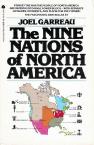
The nine nations, each unique, are:

1. The empty quarter (which global warming will open up)
2. Quebec
3. Ecotopia (a model for the rest of us)
4. The breadbasket (which wastes water on excess foot and grows corn for fuel and cattle that is inedible and wastes more water)
5. New England
6. The Foundry (mid-Atlantic coast)
7. Dixie
8. MexAmerica
9. The Islands (of the Caribbean, where Cuban sugar cane sap could power 30-35 million cars, while Cuban health care would inform our own).

This book is one of my top eleven essential references for understanding America and the Americas. Here are the other ten:
The American Mind: An Interpretation of American Thought and Character Since the 1880's
What Kind of Nation: Thomas Jefferson, John Marshall, and the Epic Struggle to Create a United States
The Clustering of America
Losing America: Confronting a Reckless and Arrogant Presidency
The Cultural Creatives: How 50 Million People Are Changing the World
The Tao of Democracy: Using Co-Intelligence to Create a World That Works for All
Imagine: What America Could Be in the 21st Century
The Wealth of Networks: How Social Production Transforms Markets and Freedom
Revolutionary Wealth: How it will be created and how it will change our lives
Collective Intelligence: Creating a Prosperous World at Peace

Vote on Review

Review: Biocapital–The Constitution of Postgenomic Life

5 Star, Capitalism (Good & Bad), Change & Innovation, Country/Regional, Economics, Environment (Solutions), Nature, Diet, Memetics, Design, Survival & Sustainment, Values, Ethics, Sustainable Evolution

Amazon Page

Kaushik Sunder Rajan

5 of 5 stars.Ā  Treasure Trove that Ends with USA-India Axis of Good

March 9, 2008

I've been struggling with this book, published in 2006, for months. Today I realized I could combine my notes with a handful of key index entries to create a more useful synthesis. I end with ten other books I have reviewed that augment this one.

My first impression of the book was soured by the absence of any mention of green chemistry, ecological economics, or ecology of commerce. I've known about citation analysis clusters since 1970, but I grow increasingly frustrated by the fragmentation of knowledge and the constantly growing barriers between schools of thought within political-legal, socio-economic, ideo-cultural, techno-demographic, and natural-geographic.

An important early distinction is between industrial-cost for profit capitalism and commercial speculative capitalism. Toward the end of the book I finally encountered the author's emphasis on national priorities, and I for one condemn all seeds that do not reproduce naturally. In agriculture, economy, energy, health, my bottom line is that anything that retards the eradication of hunger, poverty, sustainment, or individual and social health gains, is inherent against the laws of God and man.

Early notes include:

+ Information science plays huge role in genomics. I am reminded of the convergence in the 1990's among cognitive and information science, nano-technology, bio-technology, and earth science. I have a later note, “life sciences becoming information sciences.”

+ Although E. O. Wilson is not cited, the author is on a clear convergence in taking about how valuation is a vital aspect of getting it right. I think of India as IT rich and farm poor–they are allowing the aquifers to drop a meter a year because farmers can sell a tanker-full of water for $4, which is insane, and 2,000 farmers a year commit suicide in the face of drought and debt. Valuation is a critical national function.

+ This work falls within a new category of reading that I have been increasingly impressed by, “ethnographic,” or the study of localities and particularities to map global system that is not generic, homogenized, or blurred..

+ As the author does not cite Paul Hawken or Herman Daly, I draw the distinction between the author's focus on “natural capitalism” as of the privatization of biocapital and the patenting of gnomes, and the purer definition, of natural capitalism as one that understands the true costs over the lifetime of the materials being used including water (4000 liters of water Bangladesh cannot afford to export in a designer cotton shirt), and that makes the case for going green to create gold.

+ The author views biocapital as a combination of circuits of land, labor, and value; and biopolitics.

+ Life sciences are being “overdetermined” by speculative capitalism. I agree, and apart from India's symbiotic relationship with the US, I would like to see India develop a special relationship with Cuba and with the global academic community to take patents away from speculators and carpet bagging profiteers with no morality.

+ Technoscience changing laws (I am reminded that Google is now a suprnational entity that no government understands or regulates, something similar is happening in technoscience where Recombinant DNA technology is undermining the future of life.

+ Political economy is an epistemology.

+ Life, labor, & language–biology, political economy, philology central to the knowledge of and management of humanity.

+ VERY IMPORTANT: Game requires playing in FUTURE in order to stimulate and guide present. Visit Earth Intelligence Network to read about Medard Gabel's EarthGame that for $2M a year can offer this up across the ten threats, twelve policies, and eight challengers, with embedded budgets of all organizations (governments, corporations, international and non-governmental, and charitable foundations).

+ Market valuation buries ethics, defines “allowable” ethics. Author touches, and I really respect this, on the moral value of information. Later on in the book the author cites Michael Fischer on “ethical plateaus.”

+ The author addresses the “social lives” of biological materials and biological information (note: I violently oppose Google's biomedical information initiative–we may as well become their zombies). In this vein, “ownership” of any of the bio-information constrains seamless sharing, enhancement, and I would add privacy. [Easy answer: CISCO AON on individual recyclable server-routers so individuals control all the information–medical, financial, etc. at their point of creation.] If CISCO will not do this, then India needs to.

+ Useful detailed discussion of conflicts & costs of privatized information versus information as a public good. The author makes case for blurring of lines and avoidance of either/or binary approach. I've already solved this: information in the aggregate should be public, while individual instances are private. Simple example: average spare parts costs can be derived from the aggregate while protecting the individual prices paid by any one of the contributors. AON, not Google, is the key.

+ The author emphasizes that the genome data demands robust detailed medical history to be valued. He contrasts India bio-ethics versus US. Sidenote: computational ethics are just as crucial.

+ I like, very much, the India public sector laboratories. I firmly believe that all health and education should be free, a public good similar to public safety.

+ Biocapital is complicated by context, distance, culture, financial, and technical variances among the competing parties.

+ I credit the author with this but I may have drawn it out: if we now see the value of collective intelligence, why are we having so much trouble seeing the value of collective intellectual property (the Creative Commons not-with-standing)?

+ Biopolitics centers of life (citing Foucault), accounting for and taking care of the population at large are central.

+ Political ecologies at all levels, gifting versus indebtedness, unions as a factor. UNIONS as a major factor. Vision fundamental. Direct links among ideology, capital, and locality.

+ Excluded populations (e.g. HIV not eligible…) can cause them to be consumed populations.

This is a deep complicated book hard for the lay reader (which I am), so to do it justice, I am resorting for the first time to a short list of key terms from the index that more represent the content:

belief systems
bioethical issues
biopolitics
biotechnology industry
capitalism, biocapital as new phase
diseases and illnesses
drug development marketplace
economic issues, multiple forms of currency
ethnographic research
genomics bioethics and industry
global market terrains
hype, capitalism
information ownership
intellectual property
life sciences
market value and non-market value
patient-in-waiting
populations, classification of
production issues
promissory biocapitalist futures
public domain issues
research issues
social issues
speed issues
temporality issues
therapeutic development
value access to
vision, commercial value

This is a pretty spectacular book, and someone did a great job across the board in presenting it.

Other books I would recommend:
Ecological Economics: Principles And Applications
The Ecology of Commerce
The Future of Life
Plan B 3.0: Mobilizing to Save Civilization, Third Edition
The leadership of civilization building: Administrative and civilization theory, symbolic dialogue, and citizen skills for the 21st century
How to Change the World: Social Entrepreneurs and the Power of New Ideas, Updated Edition
The Wealth of Networks: How Social Production Transforms Markets and Freedom
Society's Breakthrough!: Releasing Essential Wisdom and Virtue in All the People
Collective Intelligence: Creating a Prosperous World at Peace

Vote and/or Comment on Review