Global Network (sic) Analyst incorporating information systems engineering (1991-2002);
principal engineer for a small firm (now part of Lockheed Martin) responsible for developing information systems capable of handling massive amount of information carried over international public telecommunications services.
Retired to consulting and moved to Europe. Returned to U.S. and in 2009 moved to New Mexico and full retirement.
Phi Beta Iota: Chuck Spinney's flagging of the below piece supports the point we were making with the post on dynamic planning. For fifty years the USA has been throwing its weight around on the basis of partisan, ideological, and often illegimiate purposes, and it has been able to get a way with it because in an Industrial Era, might does make right. We are no longer in an Industrial Era. We've entered an era in which information asymmetries are being extinguished, while power asymmetries are emergent–demographic power trumps everything else when you get right down to it. This entire web site makes that point in the aggregate. On a sidenote, Kashmir is about water but no one seems to acknowledge that. Water is one of the things we are going to have to figure out how to do in a non-zero fashion. Hence, for the USA to dig itself a grave in Central Asia without giving any thought to the ten high-level threats to humanity as a whole, and the twelve policies, and the eigth demographic challengers, and to calculate a non-zero course through this maze, is nothing more than idiocy on steriods.
Full Story Online
The Afghan Triangle: Kashmir, India, Pakistan
Graham Usher
Graham Usher is a writer and journalist based in Pakistan and a contributing editor of Middle East Report.
For the last 61 years the fight has been fought, mostly, in and for Indian-occupied Kashmir (IoK): the territory Delhi and Islamabad have contested since the 1947 partition cleaved them into two states—and Kashmir into “Pakistani” and “Indian” parts. Sometimes (1947, 1965, 1971, 1999) the war has been hot. More often it has been waged via Pakistani proxies against a standing Indian military. Since 1989, it has been channeled through a low-intensity, Pakistan-backed separatist-Islamist insurgency that has killed 50,000 people and incurred an Indian military occupation three times the size of America’s in Iraq and three times as lethal.
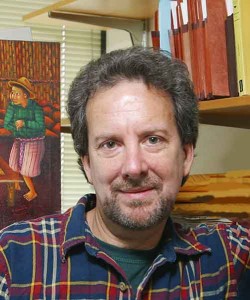
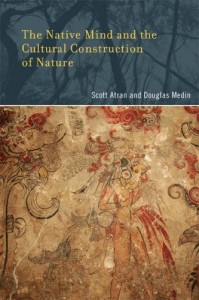
Research and teaching interests are centered in the following areas: Cognitive and linguistic anthropology, ethnobiology, environmental decision making, categorization and reasoning, evolutionary psychology, anthropology of science (history and philosophy of natural history and natural philosophy); Middle East ethnography and political economy; natural history of Lowland Maya, cognitive and commitment theories of religion, terrorism and foreign affairs.
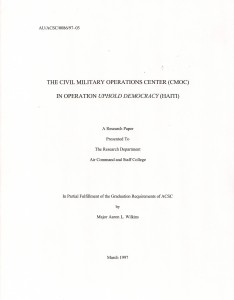
The full title is “The Civil Military Operations Center (CMOC) in Operation Uphold Democracy (Haiti). Although dated March 1997, this is a very fine contribution that maintains its relevance, not least because of its descriptions of both the functions and the effect of the functions in dealing with NGOs (like herding turkeys).
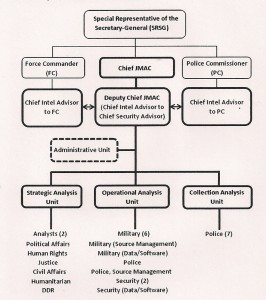
This is a very simplified version for public consumption from Dorn 2009. In the Congo MajGen Cammaert was obliged to spend a great deal of time on geospatial information that was not “on the shelf” (utlimately The Netherlands spent USD 3 million to meet his prioritized needs as shown at Graphic: CD (Congo) 1:50,000 Combat Chart Shortfalls. There are also considerable technical collection and processing capabilities that can be deployed when air breather imagery as well as tactical signals assets can be included in the mandate and force structure.
Will Iraqi democracy be 2010's big success story? Visiting Anbar province several weeks ago and listening to the governor of Ramadi talk about his big development plans, I found myself wondering if maybe the cruel Iraq story might have a happy ending after all. This was the province where al-Qaeda declared its first emirate, just a few years ago, and now the governor is handing out a special Financial Times report on business opportunities there.
When I meet Iraqis these days, they all want to talk politics: Which party is ahead in the March parliamentary elections? Can Interior Minister Jawad al-Bolani or Vice President Adel Abdul Mahdi unseat the incumbent prime minister, Nouri al-Maliki? It's the kind of freewheeling political debate you can't find anywhere else in the Arab world. I want to believe it's real, even as the terrorist bombs continue to explode in Baghdad and other cities.
Phi Beta Iota: Although pedestrian and myopic in the extreme, courtier Ignatius provides one nugget on Iraq that is repeated above. Despite huge mistakes at home (elective war based on 935 lies to the public, Congress believing Wolfowitz instead of Shinseki) and major opposition in theater (Syria, Iran), Iraq is on the verge of being a success story. Here are the three things NOT happening in Iraq that need to be ramped up from January 2010:
1) Information Operations (IO) getting every success story into the news. Right now all we see in a thin stream of US Army press releases and US military base newspapers. This is not just pathetic, it is a self-inflicted wound.
2) US Whole of Government Operations that are finely calibrated to deliver the maximum amount of peace goods in the shortest possible time. March-July should see us FLOOD Iraq with all the stuff that should have been done during the Golden Hour. Ideally 80% of the money should be spent LOCALLY, not on fat-cat beltway bandit perks.
3) Multinational Engagement with a special focus on Malaysia, Indonesia, Turkey providing “neutral” Muslim engineers, while Saudi Arabia pays the bill but is not allowed to send any of its demonizers into the country. Using the Strategic Analytic Model and approaching all of Iraq as a test-bed for a new form of multinational effort guided by a Global Range of Needs Table down to the household level, with every gift (cause and effect) visible online, could create a new Gold Standard for multinational harmonized peaceful preventive and stabilziation measures.