A sample of a documentary that shows the creative heart that sustains a community regardless of what happens. Grass roots democracy in action. Updated version.
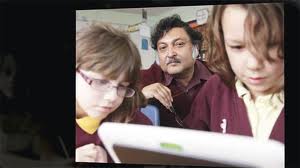
Education scientist Sugata Mitra tackles one of the greatest problems of education — the best teachers and schools don't exist where they're needed most. In a series of real-life experiments from New Delhi to South Africa to Italy, he gave kids self-supervised access to the web and saw results that could revolutionize how we think about teaching.
About Sugata Mitra
Sugata Mitra's “Hole in the Wall” experiments have shown that, in the absence of supervision or formal teaching, children can teach themselves and each other, if they're motivated by curiosity… Full bio and more links
Phi Beta Iota: Harrison Owen recommended this. He has spent his life nurturing self-organizing systems. This is one of the most moving, impactful ideas and presentations we have seen in our lifetime. This is one of the keys.
Collaboration for the common good — what open source is all about
It seems everywhere I look, I see another example of government adopting open source.
Earlier this month, a consortium of public and non-profit organizations launched Civic Commons, a public-private partnership that will help governments share software they have developed. It's a terrific idea that will foster innovation, eliminate duplicate effort, and save money. And it's another great example of the growing adoption of open source software in governments.
Examples of open source in the U.S. government abound. The Smithsonian and Search.USA.gov use Solr/Lucene open source enterprise search. The White House re-launched whitehouse.gov using Drupal. The DoD and the Intelligence Community have proposed an Open Technology Development roadmap “to increase technical efficiency and reduce software lifecycle costs within DoD,” and the DoD has developed forge.mil to “enable continuous collaboration among all stakeholders including project managers, developers, testers, certifiers, operators, and users.” In fact, my own company, Lucid Imagination, is funded in part by In-Q-Tel, the investment arm of the CIA, further evidence that open source and government are going hand in hand.
Phi Beta Iota: While good news, the above is over-stated. Free/Open Source Softwaare (F/OSS) needs a champion with weight, such as Microsoft or IBM or one of the telecommunications giants who sees that the value chain has moved from connectivity to content. There are eight tribes of intelligence, the government is the least important.
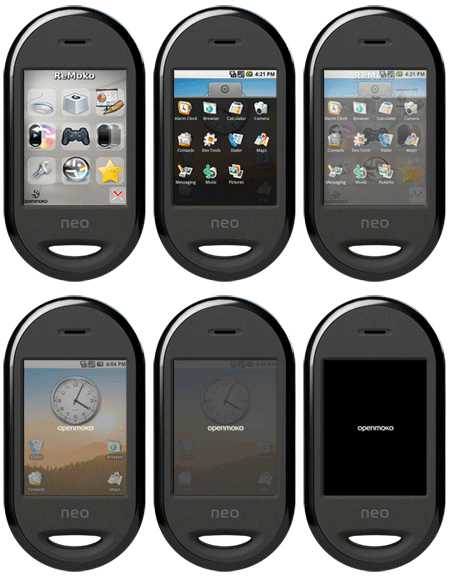
Openmoko™ is a project dedicated to delivering mobile phones with an open source software stack. Openmoko is currently selling the Neo FreeRunner phone to advanced users and will start selling it to the general public as soon as the software is more developed.
Phi Beta Iota: We've had our say on “Open Everything” GNOMEDEX and again at “Open Everything” UNICEF, and it just keeps getting better and better. The cell phone is the principle device for Hacking Humanity, in part because it enables micro-everything including directed micro-giving and micro-trading with Open Money.
Below are two related items:
Updated Chart on Mobile Phone Applications (by sunset eastern)
EXCERPT: Today I bring you a story that has it all: a solar-powered, low-cost, open source cellular network that's revolutionizing coverage in underprivileged and off-grid spots. It uses VoIP yet works with existing cell phones. It has pedigreed founders. Best of all, it is part of the sex, drugs and art collectively known as Burning Man. Where do you want me to begin?
“We make GSM look like a wireless access point. We make it that simple,” describes one of the project's three founders, Glenn Edens. The technology starts with the “they-said-it-couldn't-be-done” open source software, OpenBTS.
The Internet Archive, one of the fastest-growing digital libraries in the world, has migrated its massive amount of content into a new Sun Microsystems-built portable data center loaded with 60 Sun X4500 Thumper arrays that each have 48TB of storage capacity. Sun staged a launch event at its Santa Clara, Calif., headquarters on March 25.
“It's amazing to think that the whole Web collection, which is about 2PB compressed and from 4PB to 5PB uncompressed, can live in a 20-foot-by-8-foot-by-8-foot shipping container, which, from our standpoint, is a computer,” Brewster Kahle, digital librarian and founder of the Internet Archive, told eWEEK.
The archive, which employs the equivalent of only three system administrators, goes back to 1996 and stores more than 150 billion Web pages, Kahle said. It is accessed 500 times per second. Archive.org also houses the Wayback Machine, 1 million books, 100,000 movies and about 200,000 audio recordings, Kahle said. “It is a full-on library. This technology we see as another step toward a manageable system for dealing with enormous amounts of information safely.”
Phi Beta Iota: Don't miss the eight-shot slide show above. Brewster spoke at OSS '92–we have wasted the past twenty years, he has not. Now imagine this combined with the C Drives of participating members of the Global Game, and all the insurance data, and true cost information overlain on all credit purchases…..
Multilingual Web should be a priority for India: W3C chief
Six months into his new job, Jeffrey Jaffe, Chief Executive Officer of the World Wide Web Consortium has his work cut out
The World Wide Web Consortium or W3C, as it is better known, is where the industry meets to set standards for the Web. And Jeffery Jaffe – an IT industry veteran who held prominent positions at Bell Labs (Lucent Technologies), IBM, and more recently at Novell – as its CEO not only oversees the W3C's largest project in progress ( HTML5 standards group) but is also trying to ensure that the Consortium sharpens its focus on multilingual web standards for countries like India.