This is both exciting and wonderful, it could be of enormous significance in medicine, and in near death experience research to cite just two areas. It could also be deeply alarming, because the shadow of this research is the thought police. You wouldn't be safe even inside your own head. Once again science and technology outstrip ethics and law. It is our curse.
This is a conservative, but brilliant analysis of several of the trends I have covered in SR. I agree with all of this except for the energy sector section, which I think is quite wrong. They do not properly take into account the quickening transition to noncarbon energy; and they make no mention at all of climate change, and its effects.
The net-net here though is an emerging trend of massive importance: How do we structure a society where human labor is rendered irrelevant by robotics? If profit remains our only essential priority, disaster will follow. Wellness must become our first priority if we are to survive and prosper.
China Robots Signal US Challenge
JOSHUA JACOBS and EFTYCHIS MOURGINAKIS, Founding Members – The Conservative Future Project – Asia Times (Hong Kong)
China-India: Chinese media reported that India and China have agreed to start a dialogue on Afghanistan. An “in-principle” agreement on official-level dialogue has been reached and dates for the first meeting are being worked out.
Earlier this week, Indian National Security Advisor Shivshankar Menon travelled to Moscow for the first three-way dialogue between India, Russia and China on Afghanistan in an effort to build on common security concerns. At present, India has an institutionalized dialogue on Afghanistan only with the US.
Comment: The news commentary noted that China first offered India a wider dialogue on South Asia in general. India declined to hold talks about what it considers its sphere of influence with its primary competitor.
Afghanistan is different because India and China share an interest in preventing the return of the Taliban or another extremist Islamist regime. India was a primary backer of the Northern Alliance tribes that fought the Pashtun Taliban before the US intervention in late 2001.
As for China, Mullah Omar's Taliban regime allowed terrorism training for Uighur Islamic separatists from Xinjiang, China, and rejected Chinese inducements to terminate it. China is Pakistan's most important ally, but Pakistan also did nothing to stop the Uighur training by the very Taliban regime that Pakistan supported.
CARACAS, Venezuela — President Hugo Chávez of Venezuela died Tuesday afternoon after a long battle with cancer, the government announced, leaving behind a bitterly divided nation in the grip of a political crisis that grew more acute as he languished for weeks, silent and out of sight in hospitals in Havana and Caracas.
His departure from a country he dominated for 14 years casts into doubt the future of his socialist revolution. It alters the political balance in Venezuela, the fourth-largest foreign oil supplier to the United States, and in Latin America, where Mr. Chávez led a group of nations intent on reducing American influence in the region.
Mr. Chávez changed Venezuela in fundamental ways, empowering and energizing millions of poor people who had felt marginalized and excluded.
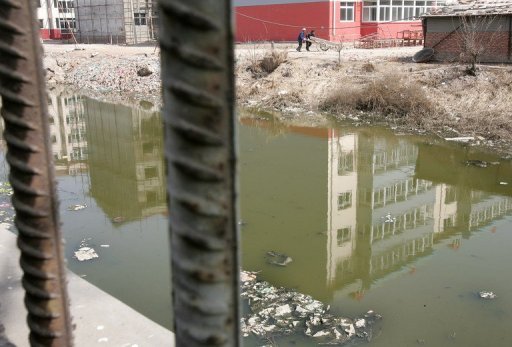
China's environment ministry has acknowledged the existence of “cancer villages”, several years after widespread speculation first began that polluted areas were seeing a higher incidence of the disease.
The use of the term in an official report, thought to be unprecedented, comes as authorities face growing discontent over industrial waste, hazardous smog and other environmental and health consequences after years of rapid development.
“Poisonous and harmful chemical materials have brought about many water and atmosphere emergencies… certain places are even seeing ‘cancer villages',” said a five-year plan that was highlighted this week.
Warfare seems endemic to mankind. Nations around the world are driven by conflict. But is the impetus to war decreasing? Håvard Hegre finds statistical grounds for hope.
In my view, perhaps the most evident shortcoming is that our predictions ignore the importance of political systems – the institutions that regulate how leaders are recruited and how they make decisions. We leave this out since we have no credible forecasts for changes to political systems over the next 40 years, but it is evident that many internal armed conflicts are fought over the nature of the political system, in particular in non-democratic middle-income countries.
Howard Fineman describes R.J. Cutler's documentary as “disturbing.” He says it was a hit at the Sundance Film Festival earlier this year, and it will be shown on CBS's Showtime, March 15 at 9:00 p.m. I checked amazon and they don't have a listing for it, so it may not have come out on DVD yet.
The portrait is riveting because we know what Cheney's ascent led to: our seemingly irrevocable, full-blown security state, with all the attendant risks of constitutional and civil liberties abuses; wholesale destruction and civilian deaths in swaths of Afghanistan and Iraq; more than 6,500 dead and more than 50,000 wounded U.S. soldiers; the rise of remote-control warfare, now embodied by drones; and a relationship with the Arab and Muslim worlds arguably more antagonistic than ever before. The film has the dreadful fascination of a road trip you know ends in a car wreck.
Perception versus reality is truly frightening. Reality is much, much worse than perception. Average worker has to work for one month to earn what the average CEO earns in one hour.
Published on Nov 20, 2012
Infographics on the distribution of wealth in America, highlighting both the inequality and the difference between our perception of inequality and the actual numbers. The reality is often not what we think it is.