Berto Jongman: Article on Local Peace Committees

Articles & Chapters, Peace Intelligence
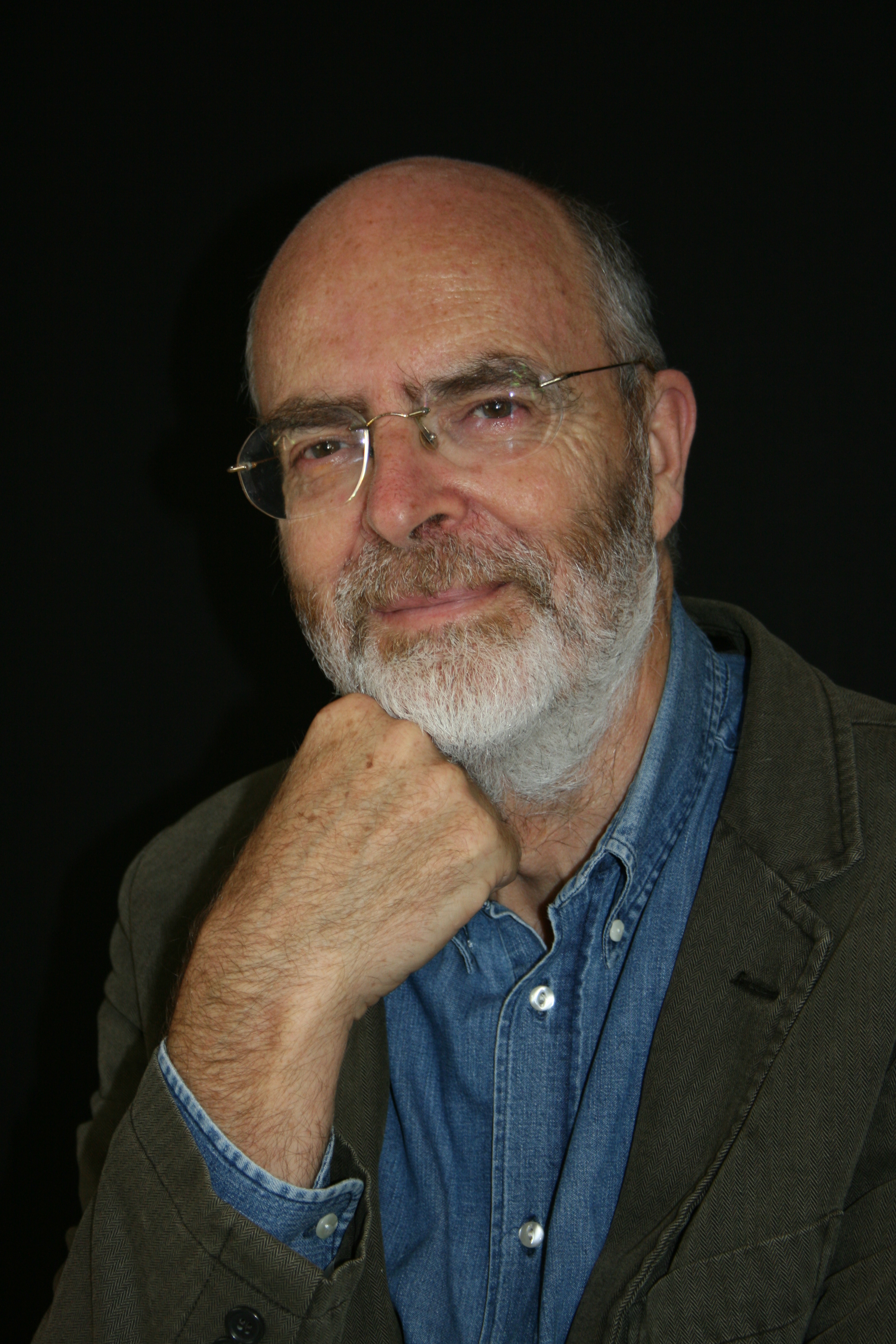
Berto Jongman
Berto Jongman

Paul van Tongeren (2013): Potential cornerstone of infrastructures for peace? How local peace committees can make a difference, Peacebuilding, 1:1, 39-60

Potential cornerstone of infrastructures for peace? How local peace committees can make a difference

Paul van Tongeren

Co-founder, International Civil Society Network on Infrastructures for Peace, Amsterdam, The Netherlands

(Received 9 October 2012; final version received 28 November 2012)

In many conflict-affected countries local peace committees (LPCs) have an impact on local communities by keeping the violence down, solving community problems and empowering local actors to become peacebuilders. Of course, committees like these are confronted with many challenges; the biggest challenge is that they are very dependent on the broader, political or conflict environment. If that environment becomes very polarised or violent, they will be gravely affected. LPCs are committees or structures formed at the level of a town or village with the aim to encourage and facilitate joint, inclusive peacemaking and peacebuilding processes within their own context. The article describes 10 examples of LPCs in countries such as the Democratic Republic of Congo, Colombia and Afghanistan. It is remarkable to see that in those countries hundreds of LPCs exist, with in most cases limited impact. The article describes as well a broader framework of infrastructures for peace, as it is implemented in several countries, such as Ghana and Kenya. This is a promising approach. The article concludes with some conclusions and proposals to enhance LPCs and infrastructures for peace nationally and internationally.

Keywords: local peace committees; local peace communities; infrastructures for peace; local peace building

Read full article.

Yoda: Physicists Tie Fluid Into a Knot — Dolphins Key to Breaking Code

Earth Intelligence
Got Crowd? BE the Force!

Impossible, possible.

Physicists Tie Fluid Into a Knot

| 4 March 2013 4:29 pm
image

The vortex knot was first theorized a century ago, but only created in a lab this year.

Physicists at the University of Chicago have created a vortex knot in a lab environment, a feat which has been theorized for a century but had never been successfully attempted. Creating a vortex knot is, according to a University of Chicago press release, “akin to tying a smoke ring into a knot.” Physicists have been puzzled as to why a vortex knot isn't a stable phenomenon, in theory it should be, but in practice they stretch themselves out and break up. The stretching culminates in a reconnection event, where loops elongate, circulate in opposite directions, and then collide. As they collide, parts of the vortices annihilate other parts – unlinking and unknotting the vortex. All of this is sounds very complex, but in reality is a matter of forces smashing into each other and cancelling each other out. The researchers' findings in creating a knot are relevant to many fields, and could lead to advances in turbulence, plasma physics, ordinary fluids, and exotic superfluids – where knots likely appear, but are difficult or impossible to observe.

Continue reading “Yoda: Physicists Tie Fluid Into a Knot — Dolphins Key to Breaking Code”

John Taylor Gatto: The Ultimate History Lessons (1 Hour)

Collective Intelligence, Cultural Intelligence

Uploaded on Jan 1, 2012

http://www.TheUltimateHistoryLesson.com (notes, transcript, links, and more)
http://www.JohnTaylorGatto.com (all of John's books, and current projects)
http://www.PeaceRevolution.org (episodes 041-045 cover The Ultimate History Lesson + Analysis)
http://www.TragedyandHope.com (an online community which provides educational media by independent producers)

OUTLINE FOR HOUR 1:

Continue reading “John Taylor Gatto: The Ultimate History Lessons (1 Hour)”

Anthony Judge: Wholth as Sustaining Dynamic of Health and Wealth

Collective Intelligence, Cultural Intelligence, Earth Intelligence, P2P / Panarchy, Resilience
Anthony Judge
Anthony Judge

Wholth as Sustaining Dynamic of Health and Wealth

Cognitive dynamics sustaining the meta-pattern that connects

Introduction
Varieties of integrative thinking
Elusive nature of the pattern that connects
Experiential implications of wholth
Wholth: Theology vs. Mathematics?
Wholth through mathematical echoes of religious preoccupations
Wholth through religious echoes of mathematical preoccupations
Eliciting wholth through associating mathematics and theology
Engaging with mathaphors, isophors, analogies and correspondences
Wholth as essential to health
Contextualizing wealth as engendered by wholth
Whole and hole in the light of the stealth of wholth
References

Koko: Fukushima Radiation Update for US West Coast

07 Health, 07 Other Atrocities, 08 Proliferation, 11 Society, Corruption, Earth Intelligence, Government
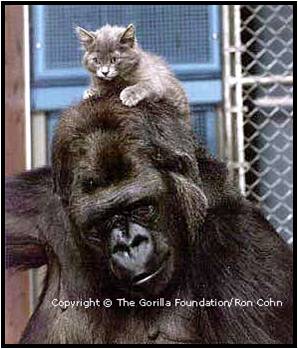
Koko
Koko

2013-02-20  U.S. bluefin tuna still contaminated with Fukushima radiation — Study: Cesium found in 100% of small, recently migrated tuna tested

Forbes, Feb. 20, 2013: […] Last week one of the authors of the study from last year, Daniel J. Madigan from Stanford University’s Hopkins Marine Station—along with five other scientists— published a new follow-up study. The main question that this new study wanted to answer: Would the migratory Bluefin tuna show up again a year later off the coast of California carrying radiation from Fukushima? The answer was yes. That means, ultimately, that there is still a high level of radiation in the waters near the Fukushima plant most likely because, as marine chemist, Ken Buessler, asserts, the plant is still leaking radiation into the ocean nearly two years later. […]

2013-01-22  The Radiation Warnings You Won’t Get from the Mainstream Propaganda Machine

After the North American governments refused to fund testing, oceanographer Ken Buesseler, a senior scientist at the non-profit Woods Hole Oceanographic Institution in Woods Hole, Mass, along with Nicholas Fisher, a marine sciences professor at the State University of New York at Stony Brook, and other concerned scientists, managed to secure private funding for a Pacific research voyage.  The results?

Cesium levels in the Pacific had initially gone up an astonishing 45 million times above pre-accident levels. The levels then declined rapidly for a while, but after that, they unexpectedly levelled off.

In July, cesium levels stopped declining and remained stuck at 10,000 times above pre-accident levels.

This means the ocean isn’t diluting the radiation as expected. If it had been, cesium levels would have kept falling.

The finding suggests that radiation is still being released into the ocean long after the accident in March, 2011.

Continue reading “Koko: Fukushima Radiation Update for US West Coast”

SchwartzReport: The Cycle of Evil — Monsanto, Banks, Bees, & Myths of Martyrdom

Civil Society, Commerce, Commercial Intelligence, Corruption, Cultural Intelligence, Earth Intelligence, Government, Law Enforcement

schwartz reportThe idea of patenting life forms, I think, is morally repugnant and, as this case illustrates, naturally leads to grotesque outcomes like trying to control the world's food supply. Think about it: this is a kind of mythic evil.

GMO and the Corporate Patenting of Living Organisms: Monsanto’s Patents on Life
KATHERINE PAUL and RONNIE CUMMINS – Organic Consumers Association

Because we have not had proper accountability for the financial crisis, the same ethical standards continue to obtain. One can see the result in the behavior of large banks in payday loans, as well as student loans. Both demonstrate that these banks have become essentially above-the-law criminal operations.

Major Banks Aid in Payday Loans Banned by States
JESSICA SILVER-GREENBERG – The New York Times

The cycles and processes of nature are always interconnected and interdependent, and this is an excellent example of what I mean. Poisons are killing honey bees, affecting wild bees, and climate change is breaking down the stasis of our food ecology. Unless this is reversed the results will be devastating.

Wild Bees Are Good For Crops, But Crops Are Bad For Bees
DAN CHARLES – npr

The sense of persecution that is part of the DNA of Christianity begins here. I have to admit this story stunned me. Perhaps like you I had seen the early Christian period as a time of persecution and martyrdom. But I spent some time looking into this, and I think Professor Candida Moss! 9; work is solid, and is destined to be the accepted view. We need to reconsider this period through a very different prism.

Were Early Christians Really Persecuted? Historian Reveals the Surprising Truth
LAURA MILLER, Senior Writer – Salon/AlterNet (U.S.)

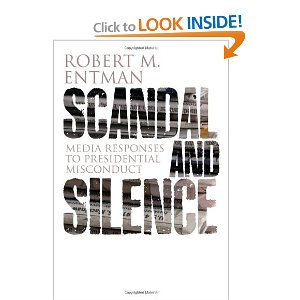
Event: 5 Mar 2013 GWU DC Scandal & Silence: When the Watchdog Doesn’t Bark

Commerce, Corruption, Cultural Intelligence, Government, Ineptitude, Media
Amazon Page
Amazon Page

 GW's School of Media and Public Affairs in association with the Center for the Study of the Presidency and Congress (CSPC) presents…

Scandal and Silence:
When the Watchdog Doesn't Bark

Tuesday, March 5, 2013
7 p.m.
Jack Morton Auditorium
The George Washington University
801 21st Street NW
Washington, DC 20052

Register for this event

A Debate and Discussion with Robert Entman, J.B. and M.C. Shapiro Professor of Media and Public Affairs.

Continue reading “Event: 5 Mar 2013 GWU DC Scandal & Silence: When the Watchdog Doesn't Bark”

noble gold