
Mini-Me: Debunking Civil War Myths – About Control and Money, Not Freedom – Time for Secession Again, But From All Four Corners?

05 Civil War, 07 Other Atrocities, 11 Society, Civil Society, Cultural Intelligence, Government, History, IO Impotency, Military, Officers Call
Who? Mini-Me?

Huh?

Debunking Civil War Myths – Long Proven Wrong

The Victors Write the War History, but Should Their Lies be Immortal?

[Veterans Today Editors Note: I was 46 before I learned that Lincoln's Emancipation Proclamation did not free a single slave  anywhere ….Jim W. Dean]

… by  Steve Scroggins

The most persistent and pernicious Big Lie regarding the so-called “Civil War”— more properly called the “War to Prevent Southern Independence”— is this:

Noble and saintly yankees fought the war to abolish slavery; evil Confederates fought to preserve it. 

The historical record incontrovertibly refutes this Big Lie and yet it lives on, repeated incessantly by many who know better, and by many, many more who accept without challenge what they were taught in government schools.
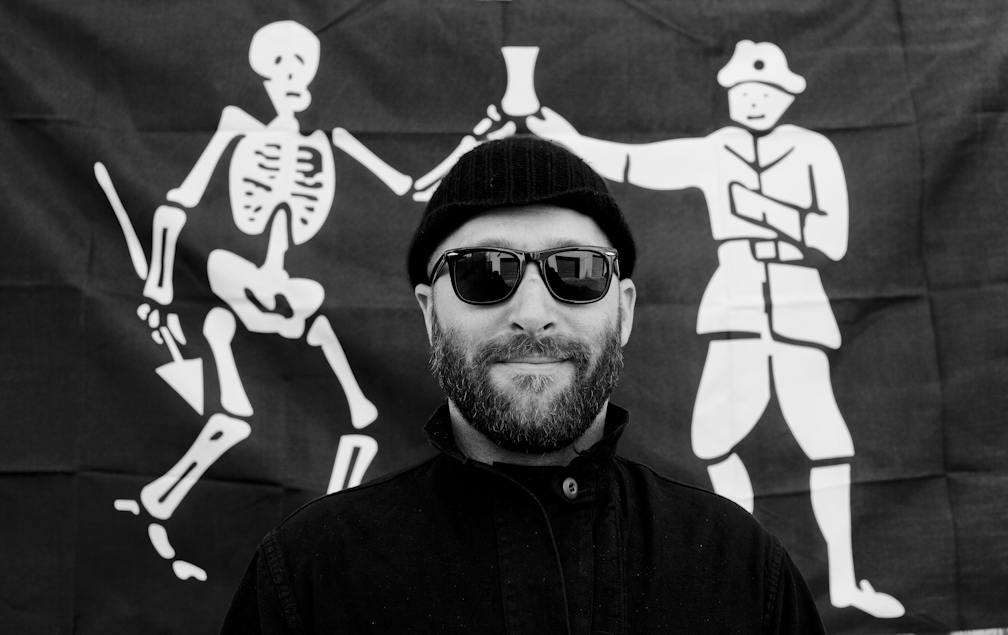

Continue reading “Mini-Me: Debunking Civil War Myths – About Control and Money, Not Freedom – Time for Secession Again, But From All Four Corners?”

Josh Kilbourn: Global Systemic Risk Is Rising Rapidly Again

03 Economy, 08 Wild Cards, Commerce, Commercial Intelligence, Corruption
Josh Kilbourn

Global Systemic Risk Is Rising Rapidly Again

Submitted by Tyler Durden on

ZeroHedge, 04/11/2012 15:26 -0400

The risk of the 30 most systemically important financial institutions (SIFI) in the world has risen over 30% in the last three weeks as the effects of LTRO fade and encumbrance becomes the new reality.

This less-manipulated, government-bank-reacharound-driven bond-market sense of reality has retraced almost 40% of its improvement from its peak last November at 311bps to its best level mid-March at 171bps.

The current 226bps level is extremely elevated and as one would expect is dominated by European and US banks (with US banks on average trading wider than Europeans – which may surprise many but Europeans dominate the worst names – most specifically the Spanish banks).

Graphics Below the Line.

Continue reading “Josh Kilbourn: Global Systemic Risk Is Rising Rapidly Again”

Amitai Etzioni: USG Suffering Multiple Realism Deficiency Disorder (MRDD)

Civil Society, Corruption, Cultural Intelligence, Government
Amitai Etzioni

The World America Didn't Make

Amitai Etzioni

The National Interest, March 21, 2012

Robert Kagan’s book, The World America Made, is refocusing the debate on whether the United States is declining as a global power—and speculation about whether other powers will step in to assume the responsibility for sustaining a liberal, rule-based international order. Kagan is known as a brilliant conservative observer, and even President Obama is reported to be reading this tour de force of U.S. foreign policy.Most of the debate about the book is centered on the question of whether the United States is indeed declining and if China is ready to buy into the liberal order. But more attention should be dedicated to the question of whether there is such an order in the first place. Continue reading “Amitai Etzioni: USG Suffering Multiple Realism Deficiency Disorder (MRDD)”

Berto Jongman: From the Daily Star, Perspective on the Arab Spring and USA

Cultural Intelligence
Berto Jongman

Being read in Europe.

By Rami G. Khouri
The Daily Star Lebanon, 11 April 2012

It is common for analysts in the Middle East and abroad to view most of the conflicts and tensions in our region through the lens of (take your pick) the Iranian-Saudi Arabian regional cold war, the Shiite-Sunni confrontation, conservative Arab monarchies versus Arab populist revolutionary and democratic movements, or pro-American hegemony or anti-American resistance movements. There is some truth in all four conflict frameworks above, but I suspect we are dealing with something much more profound and historical than one basic conflict that hosts many smaller battlefields.

The diversity, intensity and longevity of armed conflicts and political upheaval across the entire Middle East these days are extraordinary and unprecedented. Libya, Yemen, Iraq, Bahrain, Syria, Palestine, Egypt, Lebanon and Sudan are all in the midst of either chronic political tension or active warfare and violence.

Continue reading “Berto Jongman: From the Daily Star, Perspective on the Arab Spring and USA”

Robert Steele: Earthquakes From Oil and Gas Drilling

03 Economy, 03 Environmental Degradation, 05 Energy, Commerce, Corruption, Earth Intelligence, Government, IO Impotency
Robert David STEELE Vivas

One can only look on in anguish as the US Government continues to betray the public trust for lack of intelligence and integrity.

The headlines about earthquakes being related to oil and gas drilling have been common for some time now.  Despite the fact that the federal government has noticed the connection at very low bureaucratic levels, the fact is that the politicized government persists in ignoring the precautionary principle and continues to betray the public trust by not stopping all activities associated with increasing earthquakes.

Earthquakes are now coming to the East Coast just as they are about to become much more frequent, intense, and consequential on the East Coast.

One can only pray that at some point the public will demand an honest government capable of making informed decisions with integrity.

Shale Shocked: “Remarkable Increase” In U.S. Earthquakes “Almost Certainly Manmade”

Federal Study Ties Oil and Gas Industry to Earthquakes

Survey says increase in quakes may have man-made cause

See Also:

Worth a Look: Book Review Lists (Negative)

2012 PREPRINT FOR COMMENT: The Craft of Intelligence

THE OPEN SOURCE EVERYTHING MANIFESTO: Transparency, Truth & Trust

Event: 28-29 Apr Washington DC International Drone Summit: Killing and Spying by Remote Control

07 Other Atrocities, 10 Security, 11 Society, DoD, Military, Peace Intelligence

Join us in Washington, DC on April 28 and 29 for an “International Drone Summit: Killing and Spying by Remote Control” hosted by CODEPINK, Reprieve, and the Center for Constitutional Rights.

US drone strikes have killed an estimated 3,000 people around the world, including hundreds of civilians, without any judicial process or meaningful oversight, and without any transparency or accountability. The summit's dual objectives are to better inform the public about the reality and significance of the US government's expanding use of both killer and surveillance drones, and to facilitate networks and strategies to resist this expansion.

The Saturday, April 28 program is open to the public and brings together human rights advocates, robotics technology experts, activists, lawyers, scholars and journalists, and shares the stories of people whose families and lives have been directly impacted by remote-controlled drone strikes. This is an all day event with multiple panels beginning at 9am at Mount Vernon Place United Methodist Church, 900 Massachusetts Ave. NW, Washington, DC. See this site for updates on the program, and register here today!

The Sunday, April 29 program is a strategy session for organizations and individuals to network and plan advocacy efforts focused on various aspects of drones, targeted killings and expanding US covert wars. If you are interested in attending this session, please email Ramah Kudaimi at rkudaimi(@ symbol)gmail.com.

Learn more.

Patrick Meier: Does the Humanitarian Industry Have a Future in The Digital Age?

Blog Wisdom, Civil Society, Collective Intelligence, Commerce, Commercial Intelligence, Cultural Intelligence, Earth Intelligence, Geospatial, Gift Intelligence, Government, info-graphics/data-visualization, InfoOps (IO), International Aid, IO Impotency, Methods & Process, microfinancing, Mobile, Non-Governmental, Peace Intelligence, Threats
Patrick Meier

Does the Humanitarian Industry Have a Future in The Digital Age?

I recently had the distinct honor of being on the opening plenary of the 2012 Skoll World Forum in Oxford. The panel, “Innovation in Times of Flux: Opportunities on the Heels of Crisis” was moderated by Judith Rodin, CEO of the Rockefeller Foundation. I've spent the past six years creating linkages between the humanitarian space and technology community, so the conversations we began during the panel prompted me to think more deeply about innovation in the humanitarian space. Clearly, humanitarian crises have catalyzed a number of important innovations in recent years. At the same time, however, these crises extend the cracks that ultimately reveal the inadequacies of existing humanita-rian organizations, particularly those resistant to change; and “any organization that is not changing is a battle-field monument” (While 1992).

These cracks, or gaps, are increasingly filled by disaster-affected communities themselves thanks in part to the rapid commercialization of communication technology. Question is: will the multi-billion dollar humanitarian industry change rapidly enough to avoid being left in the dustbin of history?

Crises often reveal that “existing routines are inadequate or even counter-productive [since] response will necessarily operate beyond the boundary of planned and resourced capabilities” (Leonard and Howitt 2007). More formally, “the ‘symmetry-breaking' effects of disasters undermine linearly designed and centralized administrative activities” (Corbacioglu 2006). This may explain why “increasing attention is now paid to the capacity of disaster-affected communities to ‘bounce back' or to recover with little or no external assistance following a disaster” (Manyena 2006).

Continue reading “Patrick Meier: Does the Humanitarian Industry Have a Future in The Digital Age?”

noble gold