Berto Jongman: US Child Labor Common in Tobacco Industry – Growing Marijuana Instead Would Be Good for Children

01 Agriculture, 01 Poverty, 06 Family, 07 Other Atrocities, Civil Society, Commerce
Berto Jongman
Berto Jongman

US tobacco child labour criticised in report

Children have been farming US tobacco fields for generations. But a new report from Human Rights Watch says the practice is dangerous and in need of reform.

It may be later than usual because of the harsh winter, but just as they have done for generations, people are planting tobacco across the vast coastal plains of North Carolina.

The crop put this state on the economic map, but methods used to farm tobacco here have now drawn the gaze of an international human rights group.

“Usually we would wake up around four or five in the morning and get to the farm around six,” says Fernando Rodriguez.

“I would spend the whole day going up and down the rows of tobacco, topping the plants, cutting the flowers, collecting the leaf and all.”

Fernando is 13 years old.

Read full article.

Phi Beta Iota:  When — not if — marijuana replaces tobacco as the priimary cash crop of the South, this will bode well for children as well as human health.

See Also:

Marijuana @ Phi Beta Iota

Video (26min) of tobacco leaf child labor in Malawi – towards the end is mention of fair trade farms working to replace the tobacco crop with tea leaves.

Jean Lievens: Interview with Ricardo Semler Pioneer of Organizations of Free People

03 Economy, 04 Education, Civil Society, Commerce, Commercial Intelligence, Cultural Intelligence
Jean Lievens
Jean Lievens

A full interview with Ricardo Semler by the Dutch TV-show Backlight. In our episode ‘The capital power of hapiness' we made a portrait of this Brasilian business man. Here you can watch the full interview of one hour and a half. Mostly unedited, but divided in chapters.

This man is Semco's business guru, and known for his development of leadership by omission.

Offers major insights into education as well as business — structures that focus on “managing” large groups of people, especially children, are not focusing on their core mission — creating value or teaching. A society's “constraints” and blinders begin embedding at the age of two — that is the starting point for creating a Smart Nation of free spirits instead of sheep.

Chuck Spinney: William Grieder on US Merchants of Death Profiteering on the Ukraine

04 Inter-State Conflict, 05 Civil War, 10 Transnational Crime, Commerce, Corruption, Government, Military, Peace Intelligence
Chuck Spinney
Chuck Spinney

Merchants of Death’ Could Make a Lot of Money Off a War in Ukraine

William Greider, thenation.com, May 13, 2014 – 3:57 PM ET

If you’re wondering why some US politicians are so hot for war in the Ukraine, think “merchants of death.” At the height of the antiwar movement, that was nasty label some of us applied to Lockheed Martin, Boeing and other major manufacturers of high-tech war-fighting equipment—planes, tanks, missiles, whatever does the job. When the drums of war are sounding in some distant land, these the weapons makers naturally smell sales opportunities.

Trouble in Ukraine has aroused the same ambitions and hawkish politicians have picked up the ball and are running with it. They are demanding that the US government send military stuff to Kiev to hold off threatening Russians (our favorite bad guys). The hawks are portraying President Obama as a wimp who’s insufficiently bellicose. But the president is so far playing a cool hand. He has been getting us out of two wars. He’s pretty sure the people don’t want another one.

In fact, neutral historians may someday conclude that it was the United States who stirred up the trouble in the Ukraine, inadvertently if not intentionally, and that US arms makers played an important supporting role. When the Cold War ended in 1991, these companies saw a promising new market opening for their stuff—the newly liberated Soviet satellites in Eastern Europe. Let’s expand NATO! The manufacturers lobbied policy makers in Washington and courted governments of post-Soviet nations as potential customers.

Bill Clinton decided to do it, cheered on by the arms merchants. Why is nobody talking about that? Because It might sound unpatriotic. And the media love bang-bang, even if the cause is stupid.

Continue reading “Chuck Spinney: William Grieder on US Merchants of Death Profiteering on the Ukraine”

Jean Lievens: Consumers – We Don’t Need Our Stuff

Civil Society, Commerce, Ethics
Jean Lievens
Jean Lievens

Consumers: ‘We don't need our stuff'

By Bruce Horovitz

USA Today, May 12, 2014

Consumers across the globe say they want less stuff.

Half of them say they’d happily live without most of the items they own in a global survey of 10,574 adults ages 16 and up in 29 nations. The survey, titled “The New Consumer and the Sharing Economy,” was done by the communication giant Havas Worldwide and will be released Tuesday.

Seventy percent of those surveyed said that overconsumption  puts the planet at risk.

“Every step of the way, they are practicing less is more — and savoring the less,” says Andrew Benett, global CEO of Havas Worldwide.

Sixty-five percent of those surveyed said society would be better off if people shared more and owned less.

Read full article.

Stephen A. Arnold: 72% Do Not Trust Google Glass

Commerce, Corruption, IO Impotency
Stephen E. Arnold
Stephen E. Arnold

Predictably No One Trusts Google Glass

A portion of Back To The Future II where Michael J. Fox as Marty McFly invades the far-flung future of 2015. Among flying cars, self-drying clothes, and hover boards a few of the citizens where these weird glasses that they use to watch TV and do other activities. The people wearing these devices look weird and are committing a horrendous fashion faux pas. This is how many people view Google Glass, but fashion statement aside they also don’t trust the digital accessory because of privacy concerns. TechEye.net explains in “Americans Distrust Google Glass” that a recent market survey from Toluna explained that more than 72 percent of Americans do not want to spend the money on the device, because they’re worried their private data could become public and being recorded without consent.

Continue reading “Stephen A. Arnold: 72% Do Not Trust Google Glass”

Berto Jongman: US Intelligence Community Needs a New Workforce Model

Commerce, Corruption, Director of National Intelligence et al (IC), Government, Idiocy, Ineptitude, Offbeat Fun
Berto Jongman
Berto Jongman

The Intelligence Community Needs a New Workforce Model

It’s a new world for the 17 agencies within the intelligence community. Their budgets are shrinking in the face of an undiminished threat landscape and a growing list of cyber-adversaries.

The IC can do a lot of things, but it can’t make money grow on trees. It faces a grand workforce challenge: Smaller budgets. Reduced hiring. Increased uncertainty. The problems are magnified significantly during national security events that require a surge of talent.

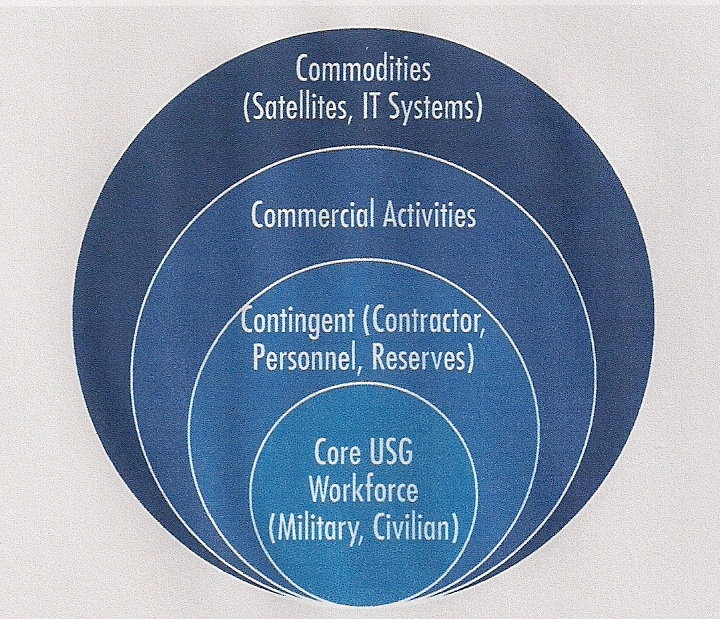
Click on Image to Enlarge

With all that in mind, the Intelligence and National Security Alliance developed a task force of former senior intelligence officials and stakeholders from industry and academia to explore potential solutions. The resulting white paper released May 7,  titled “Smart Change II: Preparing the Intelligence Community Workforce for an Evolving Threat and Fiscal Environment,” is a sequel to an initial INSA-led effort in 2011.

The white paper outlines several ways the IC could ensure a continuous assessment of strategic risk related to workforce reductions and proposes an overarching framework for civilian, military and contractor components of the IC that would guide strategic planning and management decisions.

“Budget constraints are the reality now,” said Deborah Kircher, Chief Human Capital Officer for the Office of the National Director of Intelligence, speaking at a Strategic Manpower Planning event hosted by Nextgov.

Read rest of article.


Tom Atlee: “Dark Google,” privacy and power

Civil Society, Collective Intelligence, Commerce, Commercial Intelligence, Cultural Intelligence, Ethics, IO Impotency
Tom Atlee
Tom Atlee

As the information age and big data colonize everything in life – expanding now into reality itself – we face an erosion not only of privacy but of choice. Even as we think we have greater choice and power, really important choices and power are being subtly stolen from us by folks who don't want us to know or do anything about it. We need to take back our lives while we still can.

“Dark Google”, privacy and power

Dear friends,

Sir Francis Bacon and Thomas Hobbes told us that “Knowledge is power.” We need to integrate their insight with Sir John Acton's observation that “Power tends to corrupt, and absolute power corrupts absolutely.”

In this runaway Information Age we need to realize that one-way concentrations of knowledge power are dangerous when they are not answerable, not responsive to oversight and feedback. The article below, “Dark Google”, makes this point powerfully regarding Google and the NSA. The author, Harvard's Shoshana Zuboff, is eminently qualified to issue this warning.

Continue reading “Tom Atlee: “Dark Google,” privacy and power”

noble gold