Something very interesting is happening with social media. It is becoming a sharing venue where people otherwise unconnected can share common experiences of police violence. If this trend takes off, as I think it will, hundreds if not thousands of these confrontation episodes, that normally go largely unremarked except locally, will get posted online where they can be picked up and passed around. This will make it impossible f! or media to ignore them.
I was very happy to see a more civilized approach to policing in Ferguson, Missouri, but it got me to thinking how many black teenagers are killed by white police officers every year. I was not alone in this thinking apparently, as this report explains.
WASHINGTON — Nearly two times a week in the United States, a white police officer killed a black person during a seven-year period ending in 2012, according to the most recent accounts of justifiable homicide reported to the FBI.
On average, there were 96 such incidents among at least 400 police killings each year that were reported to the FBI by local police. The numbers appear to show that the shooting of a black teenager in Ferguson, Mo., last Saturday was not an isolated event in American policing.
The wars begun in 2001 have been tremendously painful for millions of people in Afghanistan, Iraq, and Pakistan, and the United States, and economically costly as well. Each additional month and year of war adds to that toll. Moreover, the human costs of these conflicts will reverberate for years to come in each of those four countries. There is no turning the page on the wars with the end of hostilities, and there is even more need as a result to understand what those wars’ consequences are and will be.
The goal of the Costs of War Project has been to outline a broad understanding of the domestic and international costs and consequences of those wars. A team of 30 economists, anthropologists, political scientists, legal experts, and physicians were assembled to do this analysis. Their research papers are posted and summarized on this website.
We asked:
What have been the wars’ costs in human and economic terms?
How have these wars changed the social and political landscape of the United States and the countries where the wars have been waged?
What have been the public health consequences of the wars?
What will be the long term legacy of these conflicts for veterans?
What is the long term economic effect of these wars likely to be?
Were and are there alternative less costly and more effective ways to prevent further terror attacks?
The militarization of the police in the United States is a major sociological change in the way our country operates, as this report spells out very clearly. What concerns me as much as the war toys, is that the use of such equipment and the context in which it is used attracts exactly the wrong type of personality for law enforcement. It exerts a siren call to the bully, the thug, the s! hoot first and ask questions later type of individual. And, as Ferguson makes clear, that is exactly who signs up, and how they behave.
The apparent murder by a white police officer in Ferguson, Missouri, of Mike Brown, an unarmed 18-year-old black youth who was shot a number of times while he was allegedly on his knees with his hands up in the air, pleading “Don’t shoot, I’m not armed,” is exposing everything that is wrong with policing in the US today.
The Ferguson Police Department, reportedly nearly all white, patrols a St. Louis suburban community that is largely African-American, which is already a recipe for disaster in a country that is drenched in racism. The Ferguson PD is also reportedly using the kind of aggressive policing — arresting people over minor infractions — that can quickly escalate into violent confrontations. In this case, it appears Brown’s offense was jay-walking and perhaps talking back to the police officer — the first being a citation offense, and the second not even illegal.
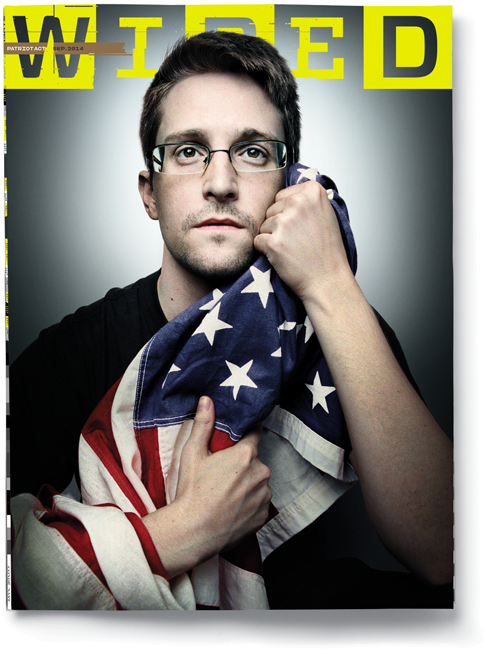
“It’s like the boiling frog,” Snowden tells me. “You get exposed to a little bit of evil, a little bit of rule-breaking, a little bit of dishonesty, a little bit of deceptiveness, a little bit of disservice to the public interest, and you can brush it off, you can come to justify it. But if you do that, it creates a slippery slope that just increases over time, and by the time you’ve been in 15 years, 20 years, 25 years, you’ve seen it all and it doesn’t shock you. And so you see it as normal. And that’s the problem, that’s what the Clapper event was all about. He saw deceiving the American people as what he does, as his job, as something completely ordinary. And he was right that he wouldn’t be punished for it, because he was revealed as having lied under oath and he didn’t even get a slap on the wrist for it. It says a lot about the system and a lot about our leaders.”
Here is more on agricultural toxins. It never fails to amaze me that what seems so obvious: plants mutate and so do the bugs that attack them is not, in fact obvious. The siren call of more profit seems to trump all other considerations. Only citizen pushback is going to stop this trend.
Despite its own admission that it will cause an up to seven-fold increase in chemical pesticide use, the U.S. Department of Agriculture (USDA) is poised to approve a new type of genetically engineered seed built to resist one of the most toxic weedkillers on the market.