Berto Jongman: Utility of Informal NGOs (e.g. BRICS)

Cultural Intelligence, Non-Governmental, Peace Intelligence
Berto Jongman
Berto Jongman

The BRICS and the Future of ‘Informal' IGOs

Are informal intergovernmental organizations such as the BRICS the answer to our future security problems? Felicity Vabulas believes that states are beginning to see their virtues, which include diplomatic flexibility, rapid crisis response, and an unquestioning respect for national interests.

By Felicity Vabulas for ISN

Around the world, the efficacy, equity, and legitimacy of intergovernmental organizations (IGOs) are increasingly being questioned. As Stewart Patrick of the Council on Foreign Relations notes, “there has been no movement to reform the composition of the UN Security Council to reflect new geopolitical realities. Meanwhile, the World Trade Organization (WTO) is comatose, NATO struggles to find its strategic purpose, and the International Energy Agency courts obsolescence by omitting China and India as members.”

IGOs have never been a “magic bullet” solution for the world’s security challenges. Because they embody path dependence, they always reflect distributions of power that are quickly outpaced by reality. Today, states are increasingly making use of forms of governance outside of traditional institutions such as the European Union or the United Nations. In particular, informal intergovernmental organizations (a term I coined in an article co-authored with Duncan Snidal) are emerging as both substitutes and complements to existing formal IGOs—in areas as diverse as finance and security. The interplay between informal and formal institutions is what is generating the “messy multilateralism” that has characterized the opening decades of the 21st century.

Why informal intergovernmental organizations?

Informal IGOs are defined as an explicit group of associated states having explicitly shared expectations (rather than formalized treaties) that participate in regular meetings but have no independent secretariat, headquarters, or permanent staff. In its initial years, the Basel Committee on Banking Supervision (BCBS) was a good example of an informal IGO: states shared a common goal to cooperate on banking supervision, but they did not codify their agreement under international law. Other examples include the G8, the Concert of Europe, the Nuclear Suppliers Group, and the Paris Club.

Typically, states have preferred informal IGOs for five reasons:

Continue reading “Berto Jongman: Utility of Informal NGOs (e.g. BRICS)”
Marcus Aurelius: 10+ Combat Events = Mental Breakdown – Either Avoid Elective Wars, Or Maintain a Larger Army (for Toxic Leaders, Triple Again)

04 Inter-State Conflict, 07 Health, 07 Other Atrocities, 10 Security, 11 Society, Corruption, Cultural Intelligence, Idiocy, Ineptitude, Military, Peace Intelligence
Marcus Aurelius
Marcus Aurelius

Here’s What’s Troubling American Troops in One Chart

It's about ‘combat experiences,' not length of deployment

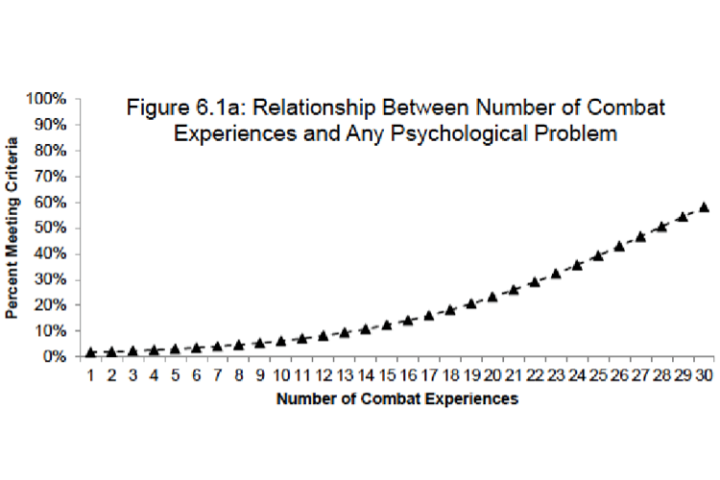
This Army graph makes crystal clear what many U.S. troops, and their loved ones, have long suspected: the more combat events they experience, the more mental-health problems they will suffer. In fact, according to this illustration from a new Army report, there is a direct linear relationship between combat exposure and resulting mental maladies.

Click on Image to Enlarge

While that notion is hardly surprising, this chart confirms what troops have long believed.

“As would be expected, there is a dose-dependent relationship between levels of combat experiences and well-being indices,” the Army’s just-released ninth Mental Health Advisory Team report says. “This relationship is clearly demonstrated for the percentage of Soldiers meeting screening criteria for any psychological problem.”

After years of debating to what degree repeated deployments and other factors play a role in post-traumatic stress and traumatic brain injuries—and the anxiety, depression and suicidal tendencies they can trigger—this chart indicates that it is the number of combat events, more than the time deployed, that drives up mental-health problems (of course, the two tend to travel together, but not always).

The U.S. military has been plagued by epidemics of mental-health problems since the wars in Afghanistan and Iraq began. The graphic shows that while troops can withstand several of what the Army calls “combat experiences,” their mental armor begins breaking down once they experience 10 or more such events.

To produce the chart, the Army tallied:

Continue reading “Marcus Aurelius: 10+ Combat Events = Mental Breakdown – Either Avoid Elective Wars, Or Maintain a Larger Army (for Toxic Leaders, Triple Again)”

NIGHTWATCH: Foolish US Statements on Syria

04 Inter-State Conflict, 07 Other Atrocities, 08 Proliferation, 08 Wild Cards, Ethics, Government, IO Deeds of War, Military, Peace Intelligence

Syria: Special comment. The Ba'athist government in Damascus appears to be holding its own. The best indication of increased stability is that the focus of most combat reports is the city of Aleppo, most of which has been under opposition control. This means the government and its allies are taking the fight to the anti-government fighting groups.

The security situation generated [foolish] comments by two senior US officials.

Continue reading “NIGHTWATCH: Foolish US Statements on Syria”

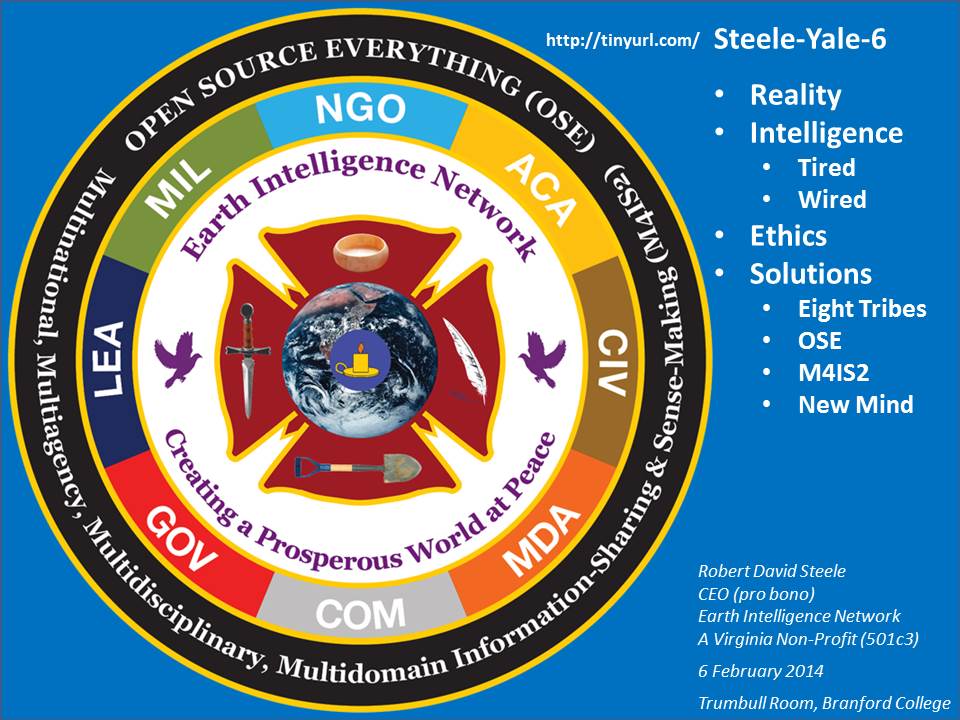
Steele on Reality, Intelligence, Ethics, & Solutions [Yale, 6 February 2014]

#Events, Advanced Cyber/IO, Communities of Practice, Ethics
Click on Image to Enlarge

SHORT URL: http://tinyurl.com/Steele-Yale-6

On Thursday 6 February 2014 from 1800-1930, Robert Steele will address a group of undergraduates convened by Yale Politic. The event is free, open to the public without RSVP required, and the media has been invited.

Yale University, Branford College
Trumbull Room
74 High Street
New Haven, CT 06511

Downloadable PPT (30 Pages): Steele @ Yale

YouTube as Presented (Verbatim, Slides Not Really Visible)

Briefing as Planned Below the Line in Full Text

See Also:

YALE The Politic Interviews Robert Steele

2014 Intelligence Reform (Robert Steele)

Continue reading “Steele on Reality, Intelligence, Ethics, & Solutions [Yale, 6 February 2014]”

Berto Jongman: Radioactive Mass Murder — Fukushima Impact Classified by Japanese Government, Nuclear Industry in Cover-Up Mode

03 Economy, 03 Environmental Degradation, 05 Energy, 07 Health, 07 Other Atrocities, 08 Proliferation, 08 Wild Cards, 10 Transnational Crime, 11 Society, Commerce, Corruption, Earth Intelligence, Government
Berto Jongman
Berto Jongman

Radioactive ‘mass murder': nuclear industry keeps Fukushima impact in secret, worst to come

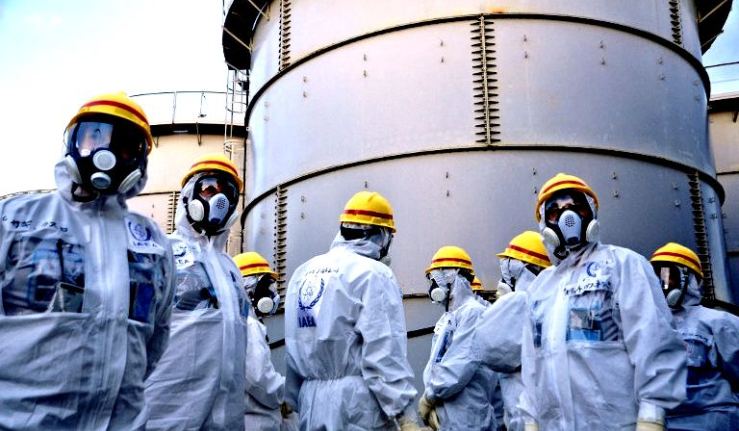
Radiation is a rather tricky enemy. You cannot see it, you cannot smell it yet it’s harmful for our ecosystem, our markets and our bodies. The Fukushima nuclear power plant disaster is still making headlines but no one knows the full truth about the ultimate impact of this accident. We should prepare for the worst case scenario, writes American democracy activist Harvey Wasserman in his article “50 Reasons We Should Fear the Worst from Fukushima”.

Click on Image to Enlarge

Impact of Fukushima a serious problem and deserves serious discussion and action however it is being kept out of the public eye thanks to Japan’s censorship and a global corporate media blackout, writes Mr. Wasserman in the first of his two part series at EcoWatch. The “see no evil, pay no damages” mindset dates back from the Bombing of Hiroshima.

Nuclear industry is a big business which doesn't want anyone to know what is happening at Fukushima in specific and whole “nuclear” cycle as a whole, underlines the activist.

The impacts of radiation emissions on human and ecological health are unknown primarily because the nuclear industry has resolutely refused to study them.

Continue reading “Berto Jongman: Radioactive Mass Murder — Fukushima Impact Classified by Japanese Government, Nuclear Industry in Cover-Up Mode”

SchwartzReport: US Media Blacks Out Snowden Video

Corruption, Cultural Intelligence, Government, Media, Military
Stephan A. Schwartz
Stephan A. Schwartz

The self-censorship in American corporate media, as well as the deliberate obfuscation that arises from focusing attention on the meaningless and ephemeral, in my mind, is a trend that is becoming a major issue. It is almost impossible to get the level of news required for an informed electorate from mainstream sources.

Media Blacks Out New Snowden Interview the Government Doesn't Want you to See
JAY SYRMOPOULOS – B Swann

Phi Beta Iota: Below is the video in question, available here since it was first offered.

Berto Jongman: German TV Interview of Edward Snowden in Russia – 30-Minute Blockbuster BLACKED OUT by US Media

See Especially:

Berto Jongman: How Edward Snowden Went From Loyal Right Wing NSA Contractor to Whistleblower Extraordinare — Advance Extract from “The” Book

See Also:

Snowden @ Phi Beta Iota


noble gold