If the Pentagon’s not careful, it’s going to find its new network of spies rolled up by Congress.
The Defense Clandestine Service was supposed to be the Defense Department’s new squad for conducting “human intelligence” — classic, informant-based spying. The idea was to place up to 1,600 undercover operatives and military attachés around the world, collecting tips on emergent battlefields. The problem was that the U.S. already had a human intelligence crew: the CIA. Almost immediately after the Defense Clandestine Service was introduced, an array of outside observers began to loudly question its value.
Add the House Armed Services Committee’s intelligence panel to that list of skeptics. In its revision of next year’s Pentagon budget (.pdf), released Tuesday, the representatives said they would withhold half of the DCS’ funding until the Pentagon proves that the service “provide[s] unique capabilities to the intelligence community.”
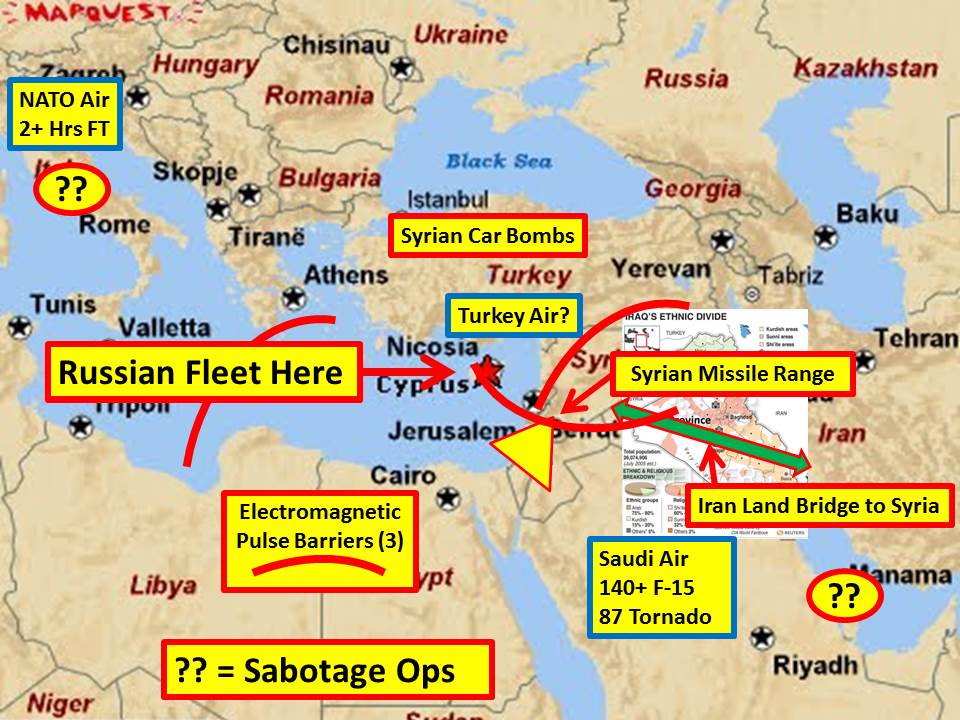
Syria- Russia-European Union: The military-technical cooperation contracts between Russia and Syria have not undergone changes, said Syrian Ambassador to Russia Riyad Haddad. “All agreements signed between Syria and Russia are being implemented without any changes made,” he told the press on Monday.
Haddad was commenting on reports claiming that Russia has frozen S-300 missile systems' shipments to Syria at Israel's request.
Russian Deputy Foreign Minister Sergei Ryabkov said on Tuesday, “We consider these supplies a stabilizing factor and believe such steps will deter some hotheads from considering scenarios that would turn the conflict international with the involvement of outside forces.”
Comment: The timing of the latest Syrian and Russian statements corresponds to the European Union decision to discontinue the ban on weapons aid for the Syrian opposition.
The Russian public statements are not aimed at deterring Israeli attacks, though the Russians said those attacks should halt. According to Israeli press, Israeli experts judge it will take at least a year for the system to be installed; personnel trained and for it to become operational. The new air defense installations will be added to the target lists for the Israeli Air Force.
The Russian statements are aimed at the US and NATO. Various Russian leaders have declared Russia will not allow Syria to go the path of Libya, in which NATO intervention began with a no-fly zone. The announcement is a public statement of commitment of support for Syria that will make it difficult for NATO members to generate the domestic political backing to establish a no-fly zone over Syria. The long war in Afghanistan has made the NATO electorates weary of fighting.
This Russian announcement also reduces the prospects for substantive progress at a US-Russian brokered negotiation sometime in June. No basis for trust or compromise exists among the parties. Russia and Syria can present a united position, but the Syrian opposition entities cannot. US and European goals are not congruent with each other and not with Saudi and Qatari interests.
The US intention apparently is to start a negotiating process, in the expectation that process will lead to substance. After the European Union vote, which in essence permits European states to provide weapons to the Syrian opposition entities, the backdrop of any discussion will be the EU action whose intended effect would be to escalate the fighting. That would seem to remove from the agenda any serious discussion of ways to stop the killing.
A l’évocation du mot “intelligence collective”, certains comprennent “perdre le contrôle”, anarchie, désordre,… ; d’autres comprennent innovation, résolution de problème, performance collective, valorisation des intelligences et des expertises pour mieux produire et mieux vendre.
Dans les entreprises, l’intelligence collective n’existe pas. Il faut la créer par la volonté des dirigeants (c’est une décision, une vision, un paradigme et non le constat résigné qu’on fait que cela existe ou que cela n’existe pas). Dire que l’intelligence collective n’existe pas est une vision du monde. Vouloir créer l’intelligence collective et la gérer est une autre vision du monde. Si vous lisez ce blog… vous connaissez la mienne
Cliquez sur l'image pour agrandir
Mais, peut-on vouloir créer et gérer l’intelligence collective si on a peur de produire du désordre, de l’anarchie ? Depuis 10 ans que je travaille sur le sujet, j’ai toujours considéré que le simple fait de poser cette question était une forme de résistance au changement et que répondre à cette question était une perte de temps. Je pense aujourd’hui que je me suis trompé et, par ce billet, je vais donc réparer mon erreur.
Pour répondre à la question, je vous propose le concept de management paradoxal qui induit l’idée d’une organisation paradoxale. Le terme de “management paradoxal” m’a été inspiré par Dee Hock, fondateur et ancien CEO de VISA via son livre Birth of the Chaordic Age. “Chaordic” est la contraction de chaos et d’ordre : http://en.wikipedia.org/wiki/Chaordic.
Voici une carte de l’organisation paradoxale montrant les 8 parties indispensables à la construction d’une entreprise performante :
[This interview openly discusses criminal activities from the perspective of an admitted criminal. You may find this content distressing, even offensive, but what is described in this interview is real. We know from personal experience is that these activities are happening on websites everywhere, everyday, and perhaps even on your websites. WhiteHat Security brings this information to light for the sole purpose of assisting those who want to protect themselves on their online business.]
A blimp is a floating airship that does not have any internal supporting framework or keel. The airship is typically filled with helium and is navigated using steerable fans. Google is apparently planning to launch a fleet of Blimps to extend Internet/wifi access across Africa and Asia. Some believe that “these high-flying networks would spend their days floating over areas outside of major cities where Internet access is either scarce or simply nonexistent.” Small-scale prototypes are reportedly being piloted in South Africa “where a base station is broadcasting signals to wireless access boxes in high schools over several kilometres.” The US military has been using similar technology for years.
Google Blimp
Google notes that the technology is “well-suited to provide low cost connectivity to rural communities with poor telecommunications infrastructure, and for expanding coverage of wireless broadband in densely populated urban areas.” Might Google Blimps also be used by Google’s Crisis Response Team in the future? Indeed, Google Blimps could be used to provide Internet access to disaster-affected communities. The blimps could also be used to capture very high-resolution aerial imagery for damage assessment purposes. Simply adding a digital camera to said blimps would do the trick. In fact, they could simply take the fourth-generation cameras used for Google Street View and mount them on the blimps to create Google Sky View. As always, however, these innovations are fraught with privacy and data protection issues. Also, the use of UAVs and balloons for disaster response has been discussed for years already.
Dave McGowan has written the best thing I've seen on the actors at the Boston bombing. I challenge anyone who can claim an IQ above 80 to read this and still believe that this was a genuine attack with real victims, real blood, real terrorists. McGowan's not only a great researcher and writer, he manages to be laugh-out-loud funny at the same time. Of course, given the obvious absurdity of the stories we've been told, humor comes pretty naturally in this situation. There are 6 parts, with lots of photos, all linked on his home page. This is not to be missed!
. . . . . . . .
I need to add that Dave clearly changes his views as he progresses through the six part series. In the first part, he writes:
I need to be very clear here in stating that I am not arguing that no one was injured in the attack and that there was no real suffering. That undoubtedly was not the case.
but by the 6th part, having spent many days wading through photos and news reports, he no longer believes that there are any real victims. He writes:
…these are people who have sold their souls and sold out their country. They are beneath contempt and nothing I have to say about them should really offend anyone.
(Part 1) Debunks major reported injuries with photos of alleged victims, shows how shrapnel allegedly shredded clothes without drawing blood.
How sophisticated traders exploit an obscure USDA rule change to get rich, fleece farmers, and drive up food prices
EXTRACT:
Michael Greenberger, a law professor at the University of Maryland and former director of the division of Trading and Markets at the Commodities Futures Trading Commission, says the change further empowers traders to treat grain markets like “casinos,” and in the long-run the public pays. “It creates biases in markets that drive prices up,” he said. “The average consumer is completely undermined in this entire process.”