Intelligence Chief Describes Complex Challenges. America and the world are facing the most complex set of challenges in at least 50 years, the director of national intelligence told the Senate Select Committee on Intelligence here today.
James R. Clapper Jr. said capabilities, technologies, know-how, communications and environmental forces “aren't confined by borders and can trigger transnational disruptions with astonishing speed.”
“Never before has the intelligence community been called upon to master such complexity on so many issues in such a resource- constrained environment,” he added.
CIA Director David H. Petraeus, FBI Director Robert S. Mueller III, Defense Intelligence Agency Director Army Lt. Gen. Ronald L. Burgess Jr. and others accompanied Clapper during his testimony on Capitol Hill. Clapper spoke for all agencies in his opening statement.
Click on Image to Enlarge
All U.S. agencies are combating the complex environment and making sense of the threats by continuing to integrate the community and “by taking advantage of new technologies, implementing new efficiencies and, as always, simply working hard,” Clapper said.
Still, he said, all agencies are confronting the difficult fiscal environment.
“Maintaining the world's premier intelligence enterprise in the face of shrinking budgets will be difficult,” the director said. “We'll be accepting and managing risk more so than we've had to do in the last decade.”
Terrorism and proliferation remain the first threats the intelligence agencies must face, he said, and the next three years will be crucial. [Read more: Garamone/AFPS/31January2012]
Our new research intern Lovisa Lönegren joined the staff in January and is already busy answering questions from around the world regarding proposals for the 2012 Right Livelihood Awards.
Anybody can propose a person or an organization (to whom they are not closely related), so if you know someone who is worthy the Award, please let her know.
We are exited to receive many interesting proposals before the deadline on March 1, 2012.
Please follow our guidelines and feel free to ask Lovisa if something seems unclear.
The War of Independence, the Six-Day War, the Yom Kippur War, the Iran War. That's the sequence Defense Minister Ehud Barak laid out at the Herzliya Conference on Thursday in a speech on Israel's fateful decision.
All for the better, it has been suggested, that behind the wheel as successor to David Ben-Gurion in 1948, Levi Eshkol in 1967 and Golda Meir and Moshe Dayan in 1973 is military leader Barak and his assistant on prime ministerial matters, Benjamin Netanyahu. Barak has been quoted as saying, ignoring the law and the cabinet, that “at the end of the day, when the military command looks up, it sees us – the minister of defense and the prime minister. When we look up, we see nothing but the sky above us.”
The immunity zone that Iran is constantly moving closer towards is meant to limit the possibility of a strike against its fortified and dispersed nuclear infrastructure. The Israeli argument is a global innovation in the theoretical justification for preemptive wars. The intended victim usually strikes preemptively when hostile preparations to act are discovered.
The precedents of Iraq in 1981 and Syria in 2007 teach us that the desire for wider security margins made Israel attack while a nuclear capability was still being acquired. Barak's comments suggest an argument for acting even earlier, at the phase of developing a capability to acquire a capability.
Open Access (OA) to scientific publications could provide more effective dissemination of research and thus increase its impact.
The costs and benefits of different models of providing OA to publications need to be considered if a comprehensive shift to OA is to be financially sustainable.
OA to research data could enable others to validate findings and re-use data to advance knowledge and promote innovation.
Sharing data openly requires effective data management and archiving. It also presents challenges relating to protecting intellectual property and privacy.
Expanding access to scientific information requires researchers, librarians, higher education institutions, funding agencies and publishers, to continue to work together.
NOTE: This is a book review, extraction from the work above, not personal reflections inspired by the book, and is offered as such–a gleaning from Lyotard's 1979 work.
. How do we define ‘knowledge’ in a postindustrial society equipped with new media, instantaneous communication technologies and universal access to information? Who controls its transmission? How can scientific knowledge be legitimated?These are the questions Lyotard asks in The Postmodern Condition. He believes that the method of legitimation traditionally used by science, a philosophical discourse that references a metanarrative, becomes obsolete in a postmodern society. Instead, he explores whether paralogy may be the new path to legitimation.
Click on Image to Enlarge
I. The Field: Knowledge in Computerized Societies
.
The nature of knowledge itself is shifting from being an end in itself to a commodity meant to be repackaged and redistributed. In order to be valuable, learning must be able to be reformatted into these packets of information in computer language, so that they can be sent through that channel of communication. Today, we increasingly hear the words “knowledge economy” and “information society” to describe the era we are entering. As was always the case, knowledge is power. Now, in an increasingly complex world, those with the ability to sort through the vast amounts of information and repackage it to give it meaning will be the winners. Technologies continue to solve problems that were formerly the source of power struggles between nations (i.e. the need for cheap labor is diminished by the mechanization of industry, the need for raw materials is reduced by advances in alternative energy solutions), and so control of information is most likely to become the 21st century’s definition of power.
.
2. The Problem: Legitimation
.
The definition of knowledge is determined by intertwining forces of power, authority, and government. Leotard draws a parallel between the process of legitimation in politics and of those in science: both require an authority figure or “legislator” to determine whether a statement is acceptable to enter the round of discourse for consideration. In an increasingly transparent society, this leads to new questions:
Who is authorizing the authority figure? Who is watching the watchers?
15 Things More Important Than Newt's Sex Life on the Moon
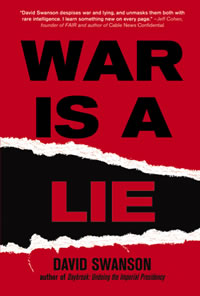
1. A war on Iran could kill us all. President Obama said in the State of the Union: “America is determined to prevent Iran from getting a nuclear weapon, and I will take no options off the table to achieve that goal. But a peaceful resolution of this issue is s till possible . . . if Iran changes course.” So, unless Iran, which the Secretary of Defense says is not developing a nuclear weapon, ceases developing a nuclear weapon, we're going to war. Sound familiar? Ever seen this movie before? Actually, we've seen it in every single war ever fought by any nation. The best defense against the lies of the Department of Defense is good preparation. Read this book: http://WarIsALie.org
2. Occupation of DC under threat. The Park Service plans to try to remove all tents from both DC occupations (Freedom Plaza and McPherson Square) at noon on Monday, January 30th. Be there. Be nonviolent. Be determined. Be relentless.
Rise like Lions after slumber: In unvanquishable number,
Shake your chains to earth like dew: Which in sleep had fallen on you Ye are many — they are few
3. California could solve healthcare. California has until Tuesday and is two senators away from enacting single-payer healthcare. This is far more significant that anything that has been done at the national level for healthcare. This solves the problem in one state and creates a model for the other 49. You can help: http://warisacrime.org/node/60764
Click on Image to Enlarge
4. Corporate personhood is on the defensive. The Montana Supreme Court has refused to comply with Citizens United. Citie s and states are taking action. Stronger bills are being introduced in Congress all the time. The latest is HJRes 100. Rallies were just held in over 100 towns and cities. Join this movement: http://act.rootsaction.org/p/dia/action/public/?action_KEY=5236
5. They're raising military spending and calling it “cuts.” The supposed cuts in all the headlines are cuts to dream budgets, leaving actual increases. Small but real cuts would result from following the law after the Super Committee's failure (remember them?). But bills in both houses would block all actual cuts to the military, and President Obama agrees with that agenda. This will mean severe cuts to education, transportation, and — as Obama indicated in his State of the Union speech — to Medicare, Medicaid, and Social Security. http://warisacrime.org/node/60747
Click on Image to Enlarge
6. New classic book on peace just out. An amazing new book that you will treasure has just been published. It is first-person stories of war and peace and activism from all over the world, from victims, refugees, journalists, lawyers, and participants in numerous wars. Every story is personal and moving. There is not a drop of corporate media disinterestedness in the book. You may know some of the authors and now you'll know them better. It's 600 pages but you'll be sorry when you reach the end. http://www.amazon.com/Why-Peace-Marc-Guttman/dp/0984980202
7. Guess who says the anthrax attacks were pinned on the wrong guy (again)? The Department of Justice. Anybody else, and Obama would have charged them with “espionage”. http://warisacrime.org/node/60765
8. We're re-occupying the Philippines, by jingo! On the plus side, we have not yet been told that this will benefit “our little brown brothers” (whether they like it or not). http://warisacrime.org/node/60746
9. Prevent Fukushima in Vermont. A Fukushima-style nuclear power plant in Vermont legally must shut down, but in reality is up and running. We can close it. http://warisacrime.org/node/60745
11. Torture lawyer John Yoo badly loses debate. Professor Yoo agreed to debate a sane person, with predictable but still satisfying result: http://warisacrime.org/node/60738
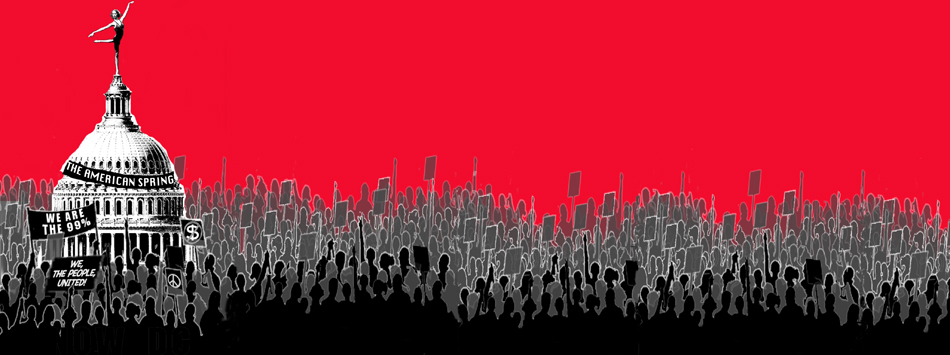
14. Occupy Spring! The National Occupation of Washington DC starts on March 30, 2012. http://nowdc.org
Click on Image to Enlarge
15. No Immunity for Mortgage Fraudsters! The Obama Administration has been working on a mortgage fraud settlement that itself amounts to fraud, but attorneys general in several states are pushing back. Obama's speeches stress fairness and equality, but a settlement granting immunity to big banks is not fair. Robosigning and other fraudulent practices are ongoing. The White House is offering the banks a plea bargain in the middle of a crime spree. Attorneys general in Delaware, New York, Massachusetts, California, and other states are pushing in the right direction. Tell leading state attorneys general not to settle for less than an adequate settlement. http://act.rootsaction.org/p/dia/action/public/?action_KEY=5322
Canadian researchers find a simple cure for cancer, but major pharmaceutical companies are not interested.
Researchers at the University of Alberta, in Edmonton, Canada have cured cancer last week, yet there is a little ripple in the news or in TV. It is a simple technique using very basic drug. The method employs dichloroacetate, which is currently used to treat metabolic disorders. So, there is no concern of side effects or about their long term effects.
This drug doesn’t require a patent, so anyone can employ it widely and cheaply compared to the costly cancer drugs produced by major pharmaceutical companies.