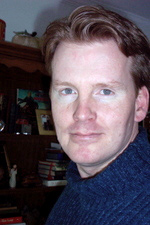
Luke Stanek: Gary Johnson, the Invisible Candidate

Cultural Intelligence

Gary JohnsonGary Johnson: The Invisible Man Running for President

Luke Stanek

TechnocratiSeptember 10, 2011 at 6:13 am

The 2012 race for the GOP nomination has been raging lately.  With the entrance of Rick Perry, many media outlets are becoming increasingly excited over the novelty of a new candidate.  What about the novelty of unique ideas?

Governor Gary Johnson has been running for President since April 21st.  He was in the first Republican debate on May 5th, which included notables like Representative Ron Paul, CEO of Godfather's Pizza Herman Cain, Former Senator Rick Santorum, and Governor Tim Pawlenty.  Since that debate, however, Gary Johnson has been left behind.

We saw what looked like a complete shutout of Ron Paul from media attention in August after the Ames straw poll, which was fairly blatant, since he was in a virtual dead heat with the victor, Representative Bachmann, who has since fallen behind him in multiple state polls.  The block on Gary Johnson is often seen as acceptable by media outlets based on his poll numbers.  While it is true he is polling only around 3%, that is the equivalent of Rick Santorum and Jon Huntsman, both of whom were invited to the Politico debate on September 7th.

The primary goal (in two uses of the word) for Johnson's campaign is to stick to New Hampshire.  If he makes an impact there, his campaign hopes that it will spread to Iowa, South Carolina, and continue to expand his name recognition and support nationally.  It worked for Reagan and Clinton (Bill, not Hill), but it failed for Rudy Giuliani in the last primary season.

Gary Johnson has a unique combination of stances.  According to his campaign website, he supports gay marriage, he believes the prohibition of marijuana is unnecessary, he promises to propose a balanced budget every year (which would reflect the fact that he had a surplus of over 1 billion dollars his final year as governor in New Mexico), he opposes the unnecessary and costly wars that the United States has involved itself in, and he supports the Fair Tax, which is a flat tax on consumption without loopholes.  These views seem to be very unique to the two-term Republican governor.

So the question is, why is Gary Johnson, a four-time competitor in the invitation-only Iron Man Challenge and a man who climbed Mt. Everest with a broken leg, not given any attention by the major media outlets?  Regardless of his stances, he sure makes an interesting story.

Also by Luke Stanek:

Gary Johnson: Outlier to the GOP, or the Future of the GOP?

Phi Beta Iota:  What we find interesting is how blatantly the Republican Party is manipulating the debates by excluding “non-establishment” mavericks; at the same time that the Democratic Party appears to be “frozen” in contemplating any candidate other than the incumbent–we'd certainly like to see Hillary Clinton run, now that it is obvious to one and all that “Hope We Can Believe In” was a total fraud.

Berto Jongman: The Emerging Global Mind

11 Society, Advanced Cyber/IO, Autonomous Internet, Civil Society, Collective Intelligence, Cultural Intelligence, Earth Intelligence, Gift Intelligence, IO Deeds of Peace, Methods & Process, Peace Intelligence, Strategy
Berto Jongman Recommends...

Featured Article

The Emerging Global Mind

Noetic Now, Issue Fourteen, September 2011

by Tiffany Shlain

Fifteen years ago I founded the Webby Awards. I was fascinated by how the Internet was connecting people all over the world in new and unexpected ways. I have also been struck by the many conversations about the problems of our day that view them as separate challenges—whether the environment, women’s rights, poverty, or social justice. It has become increasingly apparent to me that when you perceive everything as connected, it radically shapes your perspective.

The concept of interdependence isn’t new; it’s been around since the dawn of humanity. For two-hundred-thousand years, we’ve been connecting through networks both natural and technological. Interdependence has long been a tenet of Eastern philosophy and indigenous cosmologies. But the recent addition of the Internet has added a new layer, which connects us in a fresh way, giving the world a new type of central nervous system. Something happens in one place, and we can see it, feel it, and do something about it almost instantaneously.

Safety copy below the line (original URL is inconsistent)

Continue reading “Berto Jongman: The Emerging Global Mind”

John Steiner: Dalai Lama et al – Halt Tar Sands Pipeline

03 Economy, 05 Energy, 08 Wild Cards, 11 Society, 12 Water, Civil Society, Commerce, Earth Intelligence, Government
John Steiner

Dalai Lama, Rigoberta Menchu, Nobel Peace Laureates: Halt tarsands

Brenda Norrell

The Narcosphere, 8 September 2011

His Holiness the 14th Dalai Lama and Nobel Peace Laureates Rigoberta Menchu of Guatemala and Archbishop Desmund Tutu of South Africa, joined six other Nobel Peace Laureates urging President Obama to reject the Keystone XL pipeline, an environmental disaster in the making.

Read full article.

Phi Beta Iota:  We find it fascinating that the activists are ignoring the larger crime, the use of fresh water to flush the tar sands in the first place.

See Also:

Chuck Spinney: Big Oil Screwing US for Peak Profits

Paul Fernhout: Open Letter to the Intelligence Advanced Programs Research Agency (IARPA)

John Steiner: US State Department Clueless on Tar Sands

John Steiner: Save Water from Big Oil, Get Arrested in DC

Chuck Spinney: Richard Falk on USG Learning Disability

DefDog: USA as an Occupied Country: Propaganda

Blog Wisdom, Counter-Oppression/Counter-Dictatorship Practices
DefDog

Life in an Occupied Country

Skilluminati, Sep 09, 2011

“Politics will eventually be replaced by imagery. The politician will be only too happy to abdicate in favor of his image, because the image will be much more powerful than he could ever be.” — Marshall McLuhan

Phi Beta Iota:  A compelling portrait of “the narrative” as the ruler of the elite-mass communication is offered.

See Also:

DefDog: PSYOP Reading List for Citizens

Marcus Aurelius: Covert Action – Who’s on First?

09 Justice, 10 Security, 11 Society, Corruption, DHS, Director of National Intelligence et al (IC), DoD, Government, IO Deeds of War, Military, Officers Call
Marcus Aurelius

Washington Times
September 9, 2011
Pg. 1

Military, CIA Shun 9/11 Panel On Covert Operations

Special-ops lead urged in report

By Bill Gertz, The Washington Times

Read full article.

Phi Beta Iota:  Below are the three traditional forms of covert action, and the four new forms.  CIA stinks at all of them, but so does the US military.  No amount of excellence at the tactical level can overcome either comatose leadership at the agency level, or a strategic thinking vacuum at the national leadership level.

Continue reading “Marcus Aurelius: Covert Action – Who's on First?”

Berto Jongman: Forecasting Large-Scale Human Behavior — and Four Flaws in the Concept

09 Justice, Advanced Cyber/IO, Civil Society, Cultural Intelligence, Government, Peace Intelligence
Berto Jongman Recommends...

Culturomics 2.0: Forecasting large-scale human behavior using global news media tone in time and space

Kalev Leetaru

First Monday, Volume 16, Number 9 – 5 September 2011

Abstract

News is increasingly being produced and consumed online, supplanting print and broadcast to represent nearly half of the news monitored across the world today by Western intelligence agencies. Recent literature has suggested that computational analysis of large text archives can yield novel insights to the functioning of society, including predicting future economic events. Applying tone and geographic analysis to a 30–year worldwide news archive, global news tone is found to have forecasted the revolutions in Tunisia, Egypt, and Libya, including the removal of Egyptian President Mubarak, predicted the stability of Saudi Arabia (at least through May 2011), estimated Osama Bin Laden’s likely hiding place as a 200–kilometer radius in Northern Pakistan that includes Abbotabad, and offered a new look at the world’s cultural affiliations. Along the way, common assertions about the news, such as “news is becoming more negative” and “American news portrays a U.S.–centric view of the world” are found to have merit.

Contents

Introduction
Data sources
Method
Forecasting unrest: Conflict early warning
The spatial dimension of news
Mapping the “civilizations” of the world’s press
Conclusions

Phi Beta Iota:  Interesting, and no doubt to be presented to IARPA as a proposed project.  However, there are four major flaws in this approach:

1) it does not recognize the difference between preconditions of revolution and precipitants;

2)  is has no underlying analytic model for understanding true costs and severe imbalances between the few and the many;

3)  it relies on English-language second and third hand depictions of the indigenous press in a handful of languages (there are actually 183 that need to be studied as indigenous populations strive to overturn the Treaty of Westphalia and its artificial boundaries); and

4) it assumes that published media interpretations are a reliable representation of the public mood–in our experience, not only are all media generally biased as they are owned by the “establishment” in one form or another, but they also fail to capture the 80% that is “unpublished” or “unarticulated” but simmering and very reality-based.

John Robb: ROI for 9/11 Attacks 10 Million to One….

03 Economy, 04 Inter-State Conflict, 05 Civil War, 07 Other Atrocities, 09 Justice, 10 Security, 11 Society, Civil Society, Commerce, Corruption, DHS, Director of National Intelligence et al (IC), DoD, Government, IO Deeds of War, Military
John Robb

September 11: Counting the Costs to America

Al Jazeera, 1 September 2011

$5 trillion, and counting

Osama bin Laden spoke often of a strategy of “economic warfare” against the United States, a low-level war aimed at bankrupting the world's economic superpower.  A decade after the 9/11 attacks, it's hard to argue that bin Laden's strategy was ineffective.  The attacks themselves, according to the September 11 commission, cost Al Qaeda between $400,000 and $500,000 to execute.  They have cost America, by our estimate, more than $5 trillion – a “return on investment” of 10,000,000 to one.

Continue reading “John Robb: ROI for 9/11 Attacks 10 Million to One….”

noble gold