Recent Bin Laden Show from CIA/JSOG
Recent 9/11 RECAP
DVD's Reviewed at Phi Beta Iota
Books Reviewed at Phi Beta Iota
Other Posts
9/11 Web Sites (Selected)
9/11 Online Videos
9/11 Audio
Historians will label the events of that September morning 10 years ago as the most destructive act of terrorism ever committed up to that time. But I suspect they will also judge America’s last decade as one of history’s worst overreactions.
Of course overreaction is what terrorists hope to provoke. If judged by that standard, 9/11 was also one of history’s most successful terrorist acts, dragging the United States into two as yet unresolved wars, draining the treasury of $1 trillion and climbing, as well as damaging America’s power and prestige. These wars have empowered our enemies and hurt our friendships, and have almost certainly generated more terrorists than they have killed.
Like other victims of terrorism, the United States believed that somehow the answer could be found in brute force. But ideas seldom yield to force, and militant Islam is an idea. The result has been the militarization of U.S. foreign policy.
For years and years, advocates of big defense spending have argued there is a major economic benefit — jobs. These claims are ever more strident now because of high unemployment and threats to further growth in the defense budget. Hearing the footsteps on the unaffordable, underperforming F-35, Lockheed, among others, touts the jobs they pretend the program creates.
The defense budget does create jobs, but it is highly inefficient at it. Large portions of the total defense budget are spent on things that have nothing to do with jobs in the US; even the procurement and R&D accounts (i.e. the portions that porkers in and out of Congress claim to be US-jobs-rich) are terrible investments for employment.
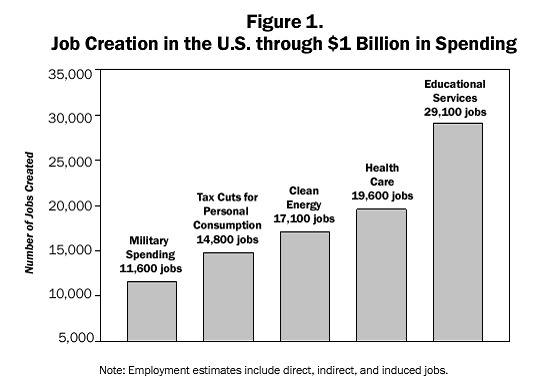
The question is not whether military spending creates jobs – it is whether more jobs could be created by the same amount of money invested in other ways. The evidence on this point is clear.
A billion dollars spent for military purposes creates 25% fewer jobs than a tax cut;
one and one-half times fewer jobs than spending on clean energy production;
and two and one-half times fewer jobs than spending on education.
And though average overall compensation is higher for military jobs than the others, these other forms of expenditure create more decent-paying jobs (those paying $64,000 per year or more) than military spending does.[1]
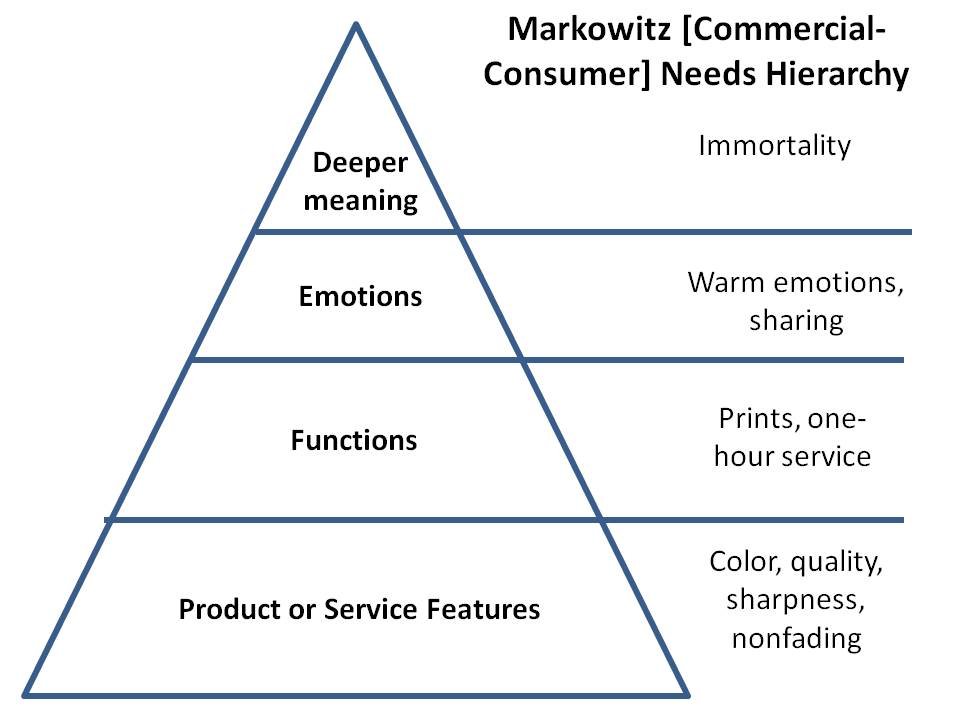
Searches are among the most valuable aspects of this web site, attracting collective intelligence and opening new vistas not otherwise obvious. Thank you for this search. After exploring, we now know that it is not the Joe Markowtiz of Community Open Source Intelligence Program (COSPO) distinction, nor it is Maslow's hierarchy of needs….something much more interesting and highly relevant to public intelligence in the public interest.
Phi Beta Iota: As this is being written, the DVD Temple Gradin is on background. What is becoming so very clear is the immaturity of the Industrial-Era mindset. Stove-pipe non-integrative thinking is killing the Earth and killing humanity.
You come up with a great new idea at work, or at home. Or a political leader actually tries something “new and different” when faced with a previously intractable problem. But then, rather than grateful acceptance, or even a fair hearing, the idea is squashed, ridiculed, or otherwise ignored.
Sound familiar? It should. As anyone who has ever suggested a creative solution knows, people often avoid the uncomfortable uncertainty of novel solutions regardless of potential benefit. Creativity, no matter how much we say we like it, frequently elicits what my grandmother used to warn about, “too smart is half stupid” (for a current illustration look no further than the Obama administration).
Now, new research, soon to appear in Psychological Science, titled “The Bias Against Creativity: Why People Desire But Reject Creative Ideas” empirically documents how our resistance to uncertainty makes the “old ways” far stickier than they should be given the practical benefits of creative, new solutions. Once again, the biases built into our minds leave us simultaneously moving in opposite directions; we like creativity but avoid creative ideas because creative ideas are too, in a word, creative.
Our results show that regardless of how open minded people are, when they feel motivated to reduce uncertainty either because they have an immediate goal of reducing uncertainty, or feel uncertain generally, this may bring negative associations with creativity to mind which result in lower evaluations of a creative idea. Our findings imply a deep irony. Prior research shows that uncertainty spurs the search for and generation of creative ideas …, yet our findings reveal that uncertainty also makes us less able to recognize creativity, perhaps when we need it most.
Osama bin Laden repeatedly said that his strategy for defeating the US and driving it out of the Middle East was to bankrupt the US by suckering it into a string expensive of never ending small wars. Osama may be dead, but the US remains locked in a state of perpetual wars abroad and shrinking civil liberties at home.
So was Osama right?
The dismaying debt ceiling spectacle in Congress is revealing in one psychological sense: A clear majority of US politicians now believe (I think incorrectly [1]) that the US federal government is bankrupt.
On this anniversary of 9-11, in addition to remembering the dead and the sacrifices of the living, we ought to look in the mirror and ask ourselves if America was taken to the cleaners by a Saudi whack job of Yemeni extraction. One way to start is by trying to figure out what kind of cash hemorrhage was triggered by our reaction to Osama's attack. My good friend Winslow Wheeler has been grappling with this problem, and his answer below is not pretty.