John Steiner: Christopher Schaefer on Wealth

03 Economy, 11 Society, Advanced Cyber/IO, Articles & Chapters, Blog Wisdom, Civil Society, Collective Intelligence, Commerce, Commercial Intelligence, Cultural Intelligence, Earth Intelligence, Ethics, Government
John Steiner

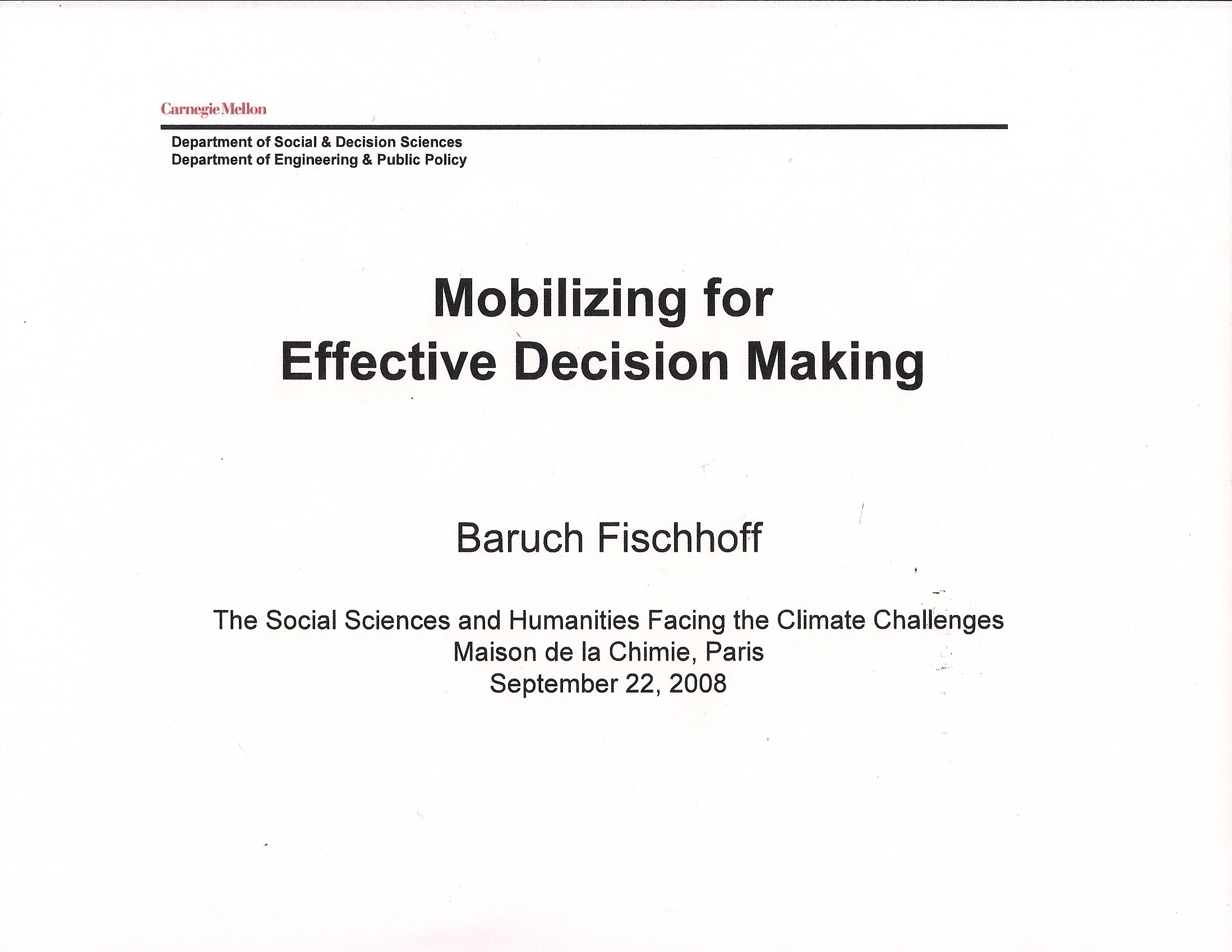
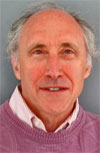
Christopher Schaefer (PhD), gives us both a short essay below recommending two books, and at the link, a five-page essay, “Mind the Gap: Wealth Disparities, the Deficit, and our Economic Future.”

CREATING COMMON WEALTH

Christopher Schaefer

It is now clear that the present global economic crisis is also a political and moral crisis raising fundamental questions about the nature of market capitalism in the West, in particular in the United States and England. Old arguments from the Right and the Left about more government involvement in society or less are often deemed irrelevant as the system is perceived as being corrupt and manipulated by economic and political elites.  A recent Pew Research Poll found that over 92 percent of Americans viewed the economy as bad, over 70 percent say they have suffered job related or financial hardship as a result of the great recession, 25 percent say they have difficulty paying their mortgage and 24 percent in paying their medical bills. Meanwhile 65 percent see government in a negative light and large banks and large corporations as corrupt, ( 67 and 64 percent respectively ). Or as David Korten states in Agenda for a New Economy, (Berrett Koehler) “conservatives and liberals share a sense that the dominant culture and institutions of the contemporary world are morally and spiritually bankrupt, unresponsive to human needs and values , and destructive of the strong families and communities we crave and our children desperately need.(1)

Korten's book is an excellent beginning in rethinking how our economy should be organized and should function. He makes a strong case for a 12 point agenda in achieving independence from Wall Street and and in creating a more local and sustainable economic future. The 12 point Agenda includes:

Continue reading “John Steiner: Christopher Schaefer on Wealth”
Patrick Meier: Renaissance Crowd Sourcing — and Who Won

11 Society, Advanced Cyber/IO, Blog Wisdom, Civil Society, Collective Intelligence, Cultural Intelligence, Hacking
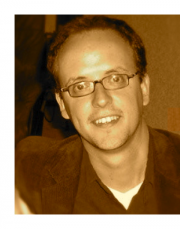
Patrick Meier

Crowdsourcing Solutions and Crisis Information during the Renaissance

Clearly, crowdsourcing is not new, only the word is. After all, crowdsourcing is a methodology, not a technology nor an industry. Perhaps one of my favorite examples of crowdsourcing during the Renaissance surrounds the invention of the marine chronometer, which completely revolutionized long distance sea travel. Thousands of lives were being lost in shipwrecks because longitude coordinates were virtually impossible to determine in the open seas. Finding a solution this problem became critical as the Age of Sail dawned on many European empires.

So the Spanish King, Dutch Merchants and others turned to crowdsourcing by offering major prize money for a solution. The British government even launched the “Longitude Prize” which was established through an Act of Parliament in 1714 and administered by the “Board of Longitude.” This board brought together the greatest scientific minds of the time to work on the problem, including Sir Isaac Newton. Galileo was also said to have taken up the challenge.

. . . . . . .

Interestingly, the person who provided the most breakthroughs—and thus received the most prize money—was the son of a carpenter, the self-educated British clockmaker John Harrison.  And so, as noted by Peter LaMotte, “by allowing anyone to participate in solving the problem, a solution was found for a puzzle that had baffled some of the brightest minds in history (even Galileo!). In the end, it was found by someone who would never have been tapped to solve it to begin with.”

Read full article…

John Robb: When Governments Fail, Criminal Tribes Grow

03 Economy, 09 Justice, 10 Transnational Crime, 11 Society, Blog Wisdom, Corruption, Cultural Intelligence, Government, IO Impotency, Non-Governmental
John Robb

Monday, 25 July 2011

JOURNAL: Knights Templar Norway/Mexico

Two recent attempts at revivals of the Knights Templar.

One:  Norway.  In this video posted by Anders (the Oslo bomber) before his attack.  He makes a plea for a revival of the Knights Templar at the end of the video (the first part is an attack on liberalism/multiculturalism and islamic immigration).  His bloody attack was an attempt to jump start a revival through what's called “a plausible promise.”

Two:  Mexico.  A splinter group from the Michoacan La Familia cartel (which is unravelling) has named themselves the Knights Templar.  They have published a code of conduct, eschew drug use, etc.  This group is active in the drug business, growing quickly (the simple rules of conduct required to join it are very viral), and killing every rival in their way (the Zetas, what's left of La Familia, and the Mexican government troops/police).

Why?  The Knights Templar is an historical model that is a ready made formula for manufacturing fictive kinship.  Fictive kinship is the “glue” or “cement” that holds together tribes.  Manufacturing fictive kinship enables the formation of a tribe/gang/cult that is able to defend itself and its interests.

In the case of religiously grounded historical examples like this, it allows the group and its members to believe they are special.  So special they can transcend the laws, customs, and morality of the outside world without remorse/pause.  The result is a group that will often kill in a far more aggressive way than what is seen with groups that are glued together only through economic ties (al Qaeda used this approach).

DefDog: Criminal Complicity at Department of “Justice”

03 Environmental Degradation, 05 Energy, 07 Other Atrocities, 09 Justice, 11 Society, Civil Society, Corruption, Cultural Intelligence, Government
DefDog Recommends....

CONCLUDING PARAGRAPH:

There is a massive complicity in America today between the corporations that fund elections and the officeholders they elect. Actions like Tim's are aimed at disrupting that complicity. For our children, for our country and for the world, we should honor his courage and self-sacrifice and pledge to follow in his footsteps, each in our own way.

Op-Ed

Tim DeChristopher's courageous bid to save our world

In disrupting a federal auction of oil and gas leases, Tim DeChristopher became a hero, but he now faces as many as 10 years in prison.

By Peter YarrowLos Angeles Times, July 26, 2011
In March, Tim DeChristopher was convicted of two felony counts for a nonviolent act of civil disobedience. Acting out of his deepest convictions and his abiding concern for the survival of humankind, Tim bid on oil and gas leases on federal land that he didn't have the means to pay for. On Tuesday, he could be sentenced to a maximum of 10 years in prison for his actions.

Who’s Who in Public Intelligence: Baruch Fischhoff

Alpha E-H, Public Intelligence
Baruch Fischhoff

BARUCH FISCHHOFF, Ph.D., is the Howard Heinz University Professor in the departments of Social and Decision Sciences and of Engineering and Public Policy at Carnegie Mellon University, where he heads the Decision Sciences major. A graduate of the Detroit Public Schools, he holds a BS in mathematics and psychology from Wayne State University and an MA and PhD in psychology from the Hebrew University of Jerusalem. He is a member of the Institute of Medicine of the National Academy of Sciences and currently chairs the National Research Council Committee on Behavioral and Social Science Research to Improve Intelligence Analysis for National Security. He also chairs the Food and Drug Administration Risk Communication Advisory Committee. He is a member of the Department of Homeland Security's Science and Technology Advisory Committee, the World Federation of Scientists Permanent Monitoring Panel on Terrorism, and the Department of State Global Expertise Program. He is past President of the Society for Judgment and Decision Making and of the Society for Risk Analysis, and recipient of its Distinguished Achievement Award. He was a member of the Eugene, Oregon Commission on the Rights of Women and the Environmental Protection Agency Science Advisory Board, where he chaired the Homeland Security Advisory Committee. He is a Fellow of the American Psychological Association, the Association for Psychological Science (previously the American Psychological Society), the Society of Experimental Psychologists, and the Society for Risk Analysis. He has co-authored or edited six books, Acceptable Risk (1981), A Two-State Solution in the Middle East: Prospects and Possibilities (1993), Elicitation of Preferences (2000), Risk Communication: A Mental Models Approach (2002), Intelligence Analysis: Behavioral and Social Science Foundations (2011), and Risk: A Very Short Introduction.

Forthcoming Books at Amazon:

Search: “True Cost”

Searches, True Cost

True Cost is called by some a triple-bottom line (physical cost, ecological cost, social cost).  Others talk about true cost to own (including all related fuels or batteries, toxic side effects etc), others talk about cradle to grave accounting to include complete recycling.  Technically, true cost accounting prohibits negative external costs from being ignored.  A gallon of gasoline may “cost” $5.00 to buy, but $12-15 in external costs are being imposed on both current and future publics.  At root true cost accounting is about holistic analytics with absolute integrity.

On the larger web, DuckDuckGo produces True Cost.

One path is to use the directory (middle column, under journal):

True Cost (87)

Another path is to search for <True Cost> without quotes.  That produces the following selection, which has been resorted to have the posts appear in alphabetical order:

Continue reading “Search: “True Cost””

noble gold