(Audio) 300-700 Vietnam MIA’s & POW’s left behind + Skiptracing & Personal Data Access

Audio, Communities of Practice, Government, Journalism/Free-Press/Censorship, Media, Military, Privacy, Topics (All Other)
click to listen to the audio

Radio Netherlands show “The State We're In” segments about 300-700 Vietnam MIA's & POW's left behind + Skiptracing & Personal Data Access.

….


..
Comment
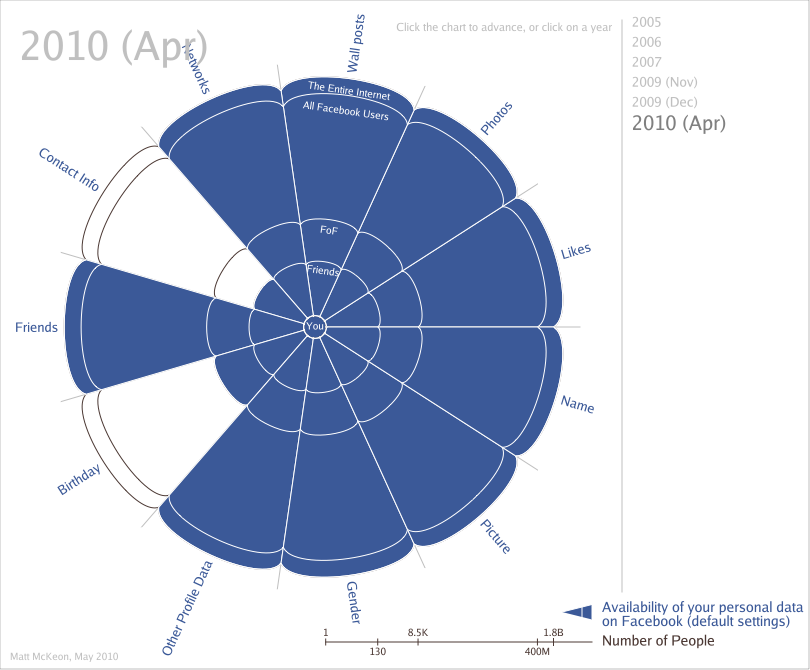
: In regards to personal data, of interest here would be campaigns promoting the idea and legal process of “owning” our data, or, “owning our own data” while redefining “ownership.” We may see a day (hopefully not) when everyone has an i.d. webpage showing profile info and other data that can be brought up by anyone. Your URL will be asked for along with your social security number. Yes, researchers/investigators can cultivate information on people but having a mandate for webpage profiles is another matter.

Related:
Wall Street Journal's “Privacy isn't everything on the web”

Joseph Stiglitz, Bank Secrecy, Corruption, and Financing of Atrocities

03 Economy, 09 Terrorism, 10 Transnational Crime, 9/11 research, Corruption, Research resources, Secrecy & Politics of Secrecy, Videos/Movies/Documentaries
Video: Joseph Stiglitz talks about offshore tax evasion (3:18 point of the video Stiglitz mentions an August 2001 veto by the Bush administration on an OECD bank secrecy reduction convention).

Prof. Stiglitz is a Nobel Laureate, former Chief Economist of the World Bank and former head of the Council of Economic Advisors to President Clinton.

Here is a transcript of the most interesting parts of the video

Related:

Info-Graphics/Maps: provoking resources to explore & learn

Advanced Cyber/IO, info-graphics/data-visualization

The following is a collection of resources found over the past few years which we thought should be shared:

This service is an on-going project to collect and catalogue all graphic products that have been prepared for publications and web-sites from the last 15 years in a wide range of themes related to environment and sustainable development.There are currently 1879 graphics available in the database, with the last update May 21, 2010.
http://maps.grida.no

From oil spills, neglected diseases, world water footprints, US nuclear weapons, food waste, road accidents, opium in Afghanistan and much more –
http://www.flickr.com/photos/gdsdigital/tags/tiffanyfarrant/

Price of water and usage in 30 US cities, shortage, bottled water imports & exports, unsustainable water irrigation, cholera, and more
http://www.circleofblue.org/waternews/tag/visualizations

History of deadly terrorist attacks, arms sales, most prescribed psychiatric drugs, alternative energy investing, richest and poorest neighborhoods, Haiti donations, biggest news stories of the  year, tap water cleanliness, how far food travels, most homicidal countries, and much much more –
http://www.good.is/departments/transparency

News aggregator for armed conflict worldwide – Conflict Map

Below the world map section you will see “thematic maps” of languages, literacy, life expectancy, precipitation and more – http://maps.howstuffworks.com

Natural disasters, illegal drugs in America, Afghanistan conflict, traffic, emissions and more –
http://datavisualization.ch
http://datavisualization.ch/showcases/inspirational-infographic-roundup-3

Unraveling Complexities in Financial Data – http://www.visualeconomics.com

Ideas, issues, knowledge, data – visualized – http://www.informationisbeautiful.net

Telegeography (free and pay): telecom traffic, ocean cables, internet connections and more
http://www.telegeography.com/maps/index.php
Global Telecom Traffic Map 2010

Visualizing.org

Oil from Ocean floor seepage – http://www.sciencedaily.com/images/2009/05/090513130944-large.jpg
..
Continue reading “Info-Graphics/Maps: provoking resources to explore & learn”

Senate Select Committee on Intelligence Unclassified Executive Summary

Intelligence (government)
link to report

SENATE SELECT COMMITTEE ON INTELLIGENCE Unclassified Executive Summary of the Committee Report on the Attempted Terrorist Attack on Northwest Airlines Flight 253

May 18, 2010

The SSCI report identifies fourteen specific points of failure-a series of human errors, technical problems, systemic obstacles, analytical misjudgments, and competing priorities-which resulted in Abdulmutallab being able to travel to the United States on December 25,2009. Those points of failure are:

1. The State Department Did Not Revoke Abdulmutallab's U.S. Visa.2. Abdulmutallab Was Not Placed in the “Terrorist Screening Database” (TSDB), on the Selectee List, or on the No Fly List.

3. Reporting Was Not Distributed to All Appropriate CIA Elements.

4. A CIA Regional Division, at CIA Headquarters, Did Not Search Databases Containing Reports Related to Abdulmutallab.

5. CIA Did Not Disseminate Key Reporting Until after the 12/25 Attempted Attack.

6. A CIA Counterterrorism Center (CTC) Office's Limited Name Search Failed to Uncover the Key Reports on Abdulmutallab.

7. CIA CTC Analysts Failed to Connect the Reporting on Abdulmutallab.

8. FBI Counterterrorism Analysts Could Not Access All Relevant Reports.

9. NCTC's Directorate of Intelligence Failed to Connect the Reporting on Abdulmutallab.

10. NCTC's Watchlisting Office Did Not Conduct Additional Research to Find Additional Derogatory Information to Place Abdulmutallab on a Watchlist.

11. NSA Did Not Pursue Potential Collection Opportunities That Could Have Provided Information on Abdulmutallab.

12. Analysts Did Not Connect Key Reports Partly Identifying Abdulmutallab and Failed to Ensure Dissemination of All Relevant Reporting.

13. NSA Did Not Nominate Abdulmutallab for Watchlisting or the Terrorist Identities Datamart Environment (TIDE) Based on Information Partly Identifying Him.

14. Intelligence Analysts Were Primarily Focused on Al-Qaeda in the Arabian Peninsula (AQAP) Threats to U.S. Interests in Yemen, Rather than on Potential AQAP Threats to the U.S. Homeland.

Related:
http://intelligence.senate.gov

Journal: Brazil, Turkey, Iran Blow Off USA–Righteously

01 Brazil, 02 Diplomacy, 05 Energy, 05 Iran, 08 Wild Cards, 10 Security


Chuck Spinney Recommends

This important essay by Ray McGovern makes a compelling case for the recommendation he makes last two paragraphs which are repeated in italics below:

“As a former CIA analyst, I hope that Obama would have the presence of mind to order a fast-track special National Intelligence Estimate on the implications of the Iran-Brazil-Turkey agreement for U.S. national interests and those of the countries of the Middle East.

Obama needs an unvarnished assessment of the agreement’s possible benefits (and its potential negatives) as counterweight to the pro-Israel lobbying that will inevitably descend on the White House and State Department.”

US, Israel Challenged on Iran

by  Ray McGovern, Antiwar.com,May 20, 2010


The times may be a-changin’ — at least a bit — with the United States and Israel no longer able to dictate to the rest of the world how crises in the Middle East must be handled, though the new reality has been slow to dawn on Secretary of State Hillary Clinton and her neocon friends in Congress and the U.S. media.

They may think they are still in control, still the smart ones looking down at upstarts like the leaders of Turkey and Brazil who had the audacity to ignore U.S. warnings and press ahead with diplomacy to head off a possible new war, this one over Iran.

On Monday, Turkish Prime Minister Recep Tayyip Erdogan and Brazilian President Luiz Inacio Lula da Silva announced success in persuading Iran to send roughly 50 percent of its low-enriched uranium to Turkey in exchange for higher-enriched uranium that would be put to peaceful medical uses.

Read More: 

http://original.antiwar.com/mcgovern/2010/05/19/us-israel-challenged-on-iran/

Journal: Whither EU, Whither NATO?

02 Diplomacy, 03 Economy, 10 Security, 11 Society

Chuck Spinney

One of the probable spinoffs of America's disastrous “you are with us or against us” unilateralism in Iraq, Afghanistan, Pakistan, Yemen, Iran, etc., is a loss of our moral authority to lead other nations into supporting our adventures. In this regard, the future of Nato is the big question mark. This question can not be separated from the internal stress now endangering the future of EU. The attached op-ed by William Pfaff, a euro-centered, American writer, provides an interesting perspective on these questions.  CS

What Next for NATO?

Posted By William Pfaff On May 18, 2010 @ 11:00 pm

The European Union doesn’t know where it stands at this moment. NATO thinks it knows and is gambling.


http://original.antiwar.com/pfaff/2010/05/18/what-next-for-nato/print/

noble gold