Below is a very interesting summary of the political tensions among secularism and religion and modernism and tradition in Tunisia. I think the author, who I do not know but whose writings I have followed, is one of the most knowledgeable observers of the Arab Spring.
THE SPARK THAT ignited the Arab Spring over two years ago came from Sidi Bouzid in Tunisia. For 28 days people across the country revolted against the repression and corruption of the 23-year authoritarian regime of Zine El Abidine Ben Ali. Finally, on Jan. 14, 2011 Tunisians celebrated their victory and resilience over tyranny and oppression when Ben Ali fled the country. But if getting rid of the dictator was relatively short and easy, the dismantling of his regime and its corrosive effects on society has proven to be very challenging indeed.
Striking evidence of the use of American EPW (Earth Penetrating Weapons) nuclear weapons in Syria has come to light. Experts say the proof is irrefutable.
Analysis shows Syria came under attack by Israel using, not just nuclear weapons, but an American nuclear bunker buster bomb, one of several supplied to Israel to use against Iran, one of the last acts of the Bush/Cheney administration.
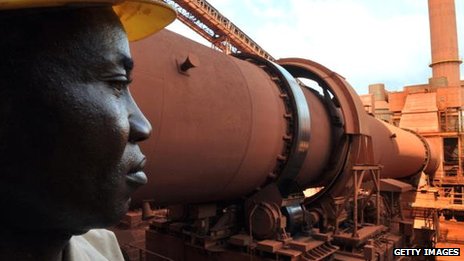
Tax avoidance, secret mining deals and financial transfers are depriving Africa of the benefits of its resources boom, ex-UN chief Kofi Annan has said.
BBC 10 May 2013
Firms that shift profits to lower tax jurisdictions cost Africa $38bn (£25bn) a year, says a report produced by a panel he heads.
“Africa loses twice as much money through these loopholes as it gets from donors,” Mr Annan told the BBC.
It was like taking food off the tables of the poor, he said.
Under-pricing deprives Africa of much-needed money, the report says
The Africa Progress Report is released every May – produced by a panel of 10 prominent figures, including former Nigerian President Olusegun Obasanjo and Graca Machel, the wife of South African ex-President Nelson Mandela.
African countries needed to improve governance and the world's richest nations should help introduce global rules on transparency and taxation, Mr Annan said.
The report gave the Democratic Republic of Congo as an example, where between 2010 and 2012 five under-priced mining concessions were sold in “highly opaque and secretive deals”.
This figure was equivalent to double DR Congo's health and education budgets combined, the report said.
China-North Korea: Update. China's Foreign Ministry declined Wednesday, 8 May, to confirm the Bank of China's closure of the account of the North Korean Foreign Trade Bank. In response to a question at Wednesday's news conference, Ministry spokeswoman Hua Chunying said, “For specifics, please refer it to competent Chinese authorities.”
Sources of the Daily NK reported that since 7 May, “other Chinese state banking entities including China Construction Bank have apparently ceased business dealings with North Korean financial entities as well. The banks did so in accordance with guidance handed down by the China Banking Regulatory Commission, and as such is actually a policy of the Chinese government.”
Comment: If the Chinese are exerting economic pressure against North Korea as punishment for refusing to listen to guidance, some reaction by North Korea should become evident soon. Such action would represent a strategic change in China's relationship with North Korea. More on this later.
Next week I am doing an invited talk in London. My subject is search and Big Data. I will be digging into this notion in this month’s Honk newsletter and adding some business intelligence related comments at an Information Today conference in New York later this month. (I have chopped the number of talks I am giving this year because at my age air travel and the number of 20 somethings at certain programs makes me jumpy.)
I want to highlight one point in my upcoming London talk; namely, the financial challenge which companies face when they embrace Big Data and then want to search the information in the system and search the Big Data system’s outputs.
Click on Image to Enlarge
Notice that precision and recall has not improved significantly over the last 30 years. I anticipate that many search vendors will tell me that their systems deliver excellent precision and recall. I am not convinced. The data which I have reviewed show that over a period of 10 years most systems hit the 80 to 85 percent precision and recall level for content which is about a topic. Content collections composed of scientific, technical, and medical information where the terminology is reasonably constrained can do better. I have seen scores above 90 percent. However, for general collections, precision and recall has not been improving relative to the advances in other disciplines; for example, converting structured data outputs to fancy graphics.
I don’t want to squabble about precision and recall. The main point is that when an organization mashes Big Data with search, two curves must be considered. The first is the complexity curve. The idea is that search is a reasonably difficult system to implement in an effective manner. The addition of a Big Data system adds another complex task. When two complex tasks are undertaken at the same time, the costs go up.
Good thing I have access to CCTV-English (Chinese state television) for international news or I would have totally missed the scoop that Israeli president Benjamin Netanyahu has frozen new settlement activity in the Palestinian West Bank. CCTV-English is a free channel on Freeview, New Zealand’s free digital hook-up.
I suspect this relates to China recently surpassing Australia as our most important trade partner. It looks like World War III is about to break out any day now in Syria. Thus what I like most about CCTV-English is that they have a correspondent in Damascus (unlike US networks, the BBC or even Al Jazeera) with sources among rebel groups and the Syrian military. .
Two nights ago, I was really intrigued to learn that Israeli prime minister Benjamin Netanyahu was in China at the time of the Israeli air strikes on Syria. So was Palestinian president Mahmoud Abbas. This was no accident, as China’s new president Xi Jinping was very hopeful the two leaders would take up his offer to mediate a meeting between them.
Israel’s Export Imperative
Netanyahu was in China hoping to increase exports to the world’s second largest economy. Given that 40% of Israel’s GDP is based on exports, Bibi is keen for trade with China(Israel’s number 3 trading partner) to reach $10 billion over the next three years. While also interested in increasing exports, Abbas is more interested in economic aid China has offered, as well the likelihood their intervention could shift the stalemated peace process.
China’s new president Xi Jinping has issued a four point proposal for resolving the Israeli-Palestinian conflict. According to a statement issued by Chinese foreign ministry spokeswoman Hua Chunying: “The immediate priority is to take credible steps to stop settlement activities, end violence against innocent civilians and lift the blockade of the Gaza Strip in order to create the necessary conditions for the resumption of peace talks.
I visited Levantine Syria [1] for three memorable days in 2008 and was struck by the welcoming, friendly nature of the Syrian people, their effusive pride in Syria’s multicultural heritage, and a pervasive atmosphere of optimism. I had the impression Syria was emerging from the darkness of the Hafez Assad dictatorship. To be sure, his son, Bashir Assad, had inherited the deeply entrenched thuggish Ba’athist machinery and ruled as an autocrat, but it seemed also that he was a struggling reformer of sorts, perhaps a well-intentioned young man in over his head. Based on my limited conversations with the locals, I sensed (perhaps erroneously) the average person on the street was empathetic to his problems and willing to give him a little time to sort things out. Without exception, everyone I talked to on this subject said he was far better than his father.
Bear in mind, I was heart of Ba’ath country. Levantine Syria is where the Syrian Ba’ath party has its roots. It is where the most of the Alawites and Christians are concentrated, but there are plenty of Sunnis and even Turkomens, Kurds, Circassians, etc., in a rich polyglot that is evident in this etho-religious map. In contrast to the prevasive sectarian atmosphere in the similar, but perhaps less complex culture of Lebanon, sectarian tensions in Levantine Syria, to the extent that they existed, were not in evidence in the areas I visited in 2008. The economy, although very poor, showed signs of considerable foreign investment and seemed to have a latent vibrancy. Syria’s contentious relations with its neighbors, especially Turkey, were improving and there was even a modus vivendi with Israel, notwithstanding Syria's alliance with Hezbollah and tense relations with the Lebanese government. In short, optimism was in the air.
Perhaps my impressions were fanciful, because today, that image is in ruins. Syria is in the grip of a vicious sectarian war that, as Rami Khouri explains forcefully below, is being stoked by outsiders having all sorts of agendas, many hidden in a smokescreen of the blind unreasoning fear of chemical weapons [2]. This civil war could easily escalate into a regional war, if as is becoming increasingly likely, these outsiders, including the United States [3], become actively involved in it.