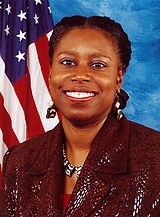
Phi Beta Iota: The following is being circulated world-wide (less US “mainstream” media), and represents both an African view, and the view of those associated with Cynthia McKinney and her related concerns of 21st Century imperialism and genocide against black Africans at the hands of the Libyan forces seeking to topple Qathafi.
Statement by masses in Ghana and also advice on how to organize a demonstration in your own community.
The “US/NATO Hands Off Libya! Hands Off Africa!” coalition consists of revolutionary and progressive African organizations in Ghana who oppose the US/NATO illegal invasion of Libya/Africa and support Muammar Qathafi and the Libyan Jamahiriya to win the war against US/NATO imperialist forces and NTC/Al Qaeda reactionaries. The coalition is organizing a march from Kwame Nkrumah Circle to the US Embassy to demonstrate against the illegal US/NATO invasion and for victory to Qathafi and the Libyan Jamahiriya on 21st September 2011.
We are calling on all Africans in Africa and the diaspora to demonstrate at US embassies on the same day.
Video: The attacks of September 11, 2001 forced Americans to reevaluate their views on the nation's security. A decade later, is the country stronger and better prepared to prevent a terror attack? (Aug. 31)
This is the American era of endless war.
To grasp its sweep, it helps to visit Fort Campbell, Ky., where the Army will soon open a $31 million complex for wounded troops and those whose bodies are breaking down after a decade of deployment.
Phi Beta Iota: This is not new. War has been the norm since President General David Eiserhower warned of the rise of the military-industrial complex. The article is worth reading in full to understand how very smart people can become very stupid–we are in a state of endless war because none of our leaders have the integrity to apply their undeniable intelligence to waging peace, which is vastly cheaper than war–the problem is that peace enriches poor people rather than concentrating wealth.
A small but growing proxy war is underway in Mexico pitting US-assisted assassin teams composed of elite Mexican special operations soldiers against the leadership of an emerging cadre of independent drug organizations that are far more ruthless than the old-guard Mexican “cartels” that gave birth to them.
These Mexican assassin teams now in the field for at least half a year, sources tell Narco News, are supported by a sophisticated US intelligence network composed of CIA and civilian US military operatives as well as covert special-forces soldiers under Pentagon command — which are helping to identify targets for the Mexican hit teams.
Phi Beta Iota: Black SOF means well, but they are out of context and out of control. We recall with sadness that Cuban exiles trained and equipped by CIA to assassinate Castro used those skills and that equipment to assassinate John F. Kennedy, and more recently, many of the special forces trained in Mexico by US special forces have immediately rolled over to work for the cartels. The US Government lacks intelligence and integrity, and continues to throw money at bits and pieces of the old dysfunctional concepts….doing the wrong things righter instead of doing the right thing. Albert Einstein called that “insanity.” Mike Vickers has learned nothing from history, because he does not wish to learn–this is taxpayer funded playtime for him, and he is not being held accountable for the inevitable “blow back” that has accompanied every DoD/CIA assassination play going back fifty years.
“I just want to kill those guys,” Mr. Vickers likes to say in meetings at the Pentagon, with a grin.
. . . . . . .
As covert American wars — in Pakistan, Yemen and Somalia — continue in the second decade after the Sept. 11, 2001, attacks, so will the questions of legality, morality and risk that go along with them.
. . . . . . .
In Mr. Vickers’s assessment, there are perhaps four important Qaeda leaders left in Pakistan, and 10 to 20 leaders over all in Pakistan, Yemen and Somalia. Even if the United States kills them all in drone strikes, Mr. Vickers said, “You still have Al Qaeda, the idea.”
Phi Beta Iota: The insanity of it all is hard to fathom. Vickers is a male counterpart to Fran Townsend. The US Government, “in our name,” is spending over a trillion a year (that it borrows) for elective wars and global assassinations that are pissing off millions of people, while the “Undersecretary of Intelligence” spends all his time trying to kill the dirty dozen. All we can do at this point is recommend a close reading of Paul Fernhout: Open Letter to the Intelligence Advanced Programs Research Agency (IARPA).
Koko Sign: Who is this blond vacuous bimbo that keeps appearing on television with nothing serious to say? Yes, we gorillas know that vacuous bimbo is a tautalogical redundancy, it just seemed appropriate.
Tripoli, Libya (CNN) — Documents seized at the Libyan intelligence headquarters have revealed a surprisingly close relationship between the CIA and their counterparts in the Gadhafi regime.
. . . . . . .
Fran Townsend, CNN counter-terror analyst who worked as President George W. Bush's homeland security adviser, said that when suspects were transferred to any country, not just Libya, U.S. officials asked the government for assurances that they wouldn't violate human rights of the person in question.
Phi Beta Iota: CNN lost its integrity when Ted Turner left, and it has not had anyone really serious on the national security account for a while. Koko is right–Fran Townsend is an idiot who knows nothing. These are trying times–if CNN is serious about getting back into analytics, they need to change their linen.
Don DeBar is an independent journalist who has recently travelled to Libya before the NATO invasion. BSNews emailed him some questions regarding the conflict.
1/ We know that the intervention in Libya was not humanitarian – some suggest oil others, including Ellen Brown, have suggested it was more to do with money and central banking. Do you have a theory on the real reasons for the invasion?
Don DeBar, Morning News Headlines Editor-in-Exile
There is first and foremost the geopolitical consideration – that the US and EU are determined to take direct control of Africa's resources. Libya was – and, thus far, remains – the single largest impediment to this effort, with Gadhaffi personally being the single human being who is the largest obstacle.
Begin with the fact that one of Gadhaffi's first acts after deposing the western puppet King Idris was to evict the US from its only military base on the continent. This act, taken four decades ago, left the US in the position of having to base its AFRICOM force, established in October, 2008, in Stuttgart, Germany, laying bare the nature of this “alliance.”
More immediately, in terms of geopolitical irritations, Libya has heavily invested in African infrastructure, such as telecom system construction, an African satellite, and other communications projects. The revenue which now stays in Africa – hundreds of millions of dollars a month – comes directly out of the pockets of US, EU and other global telecom companies, a trend that is in exactly the opposite direction sought by US/EU power elites.
Even more to the point is that Gadhaffi has been pushing for – and funding the enabling of – an independent and united African economic entity that could rival the EU and other global economic powers. Among the tasks underway at the time of the invasion was the creation of an African sovereign bank and an African currency printed in Africa under African control. This would wrest control over African resources from the French and others whose power to print African currency translates into economic and, ultimately, political control.
One more extremely important point: Libya since 1969 has offered an economic and political model to Africans and others suffering colonial control that stands in stark contrast to the models of such as Nigeria and South Africa. The country's natural wealth has been directly applied to the economic needs of the population, with the result that every Libyan owns their home – without mortgage encumbrance or rent or property tax burdens; a first-rate health care system was built and operated that is free and available to all; a first-rate education system was built and operated through the post-graduate level that is free and available to all; the oil revenues are distributed to the people in the form of a monthly stipend in the thousands of dollars; and public infrastructure – such as roads, water systems, electricity, etc., were constructed and operated efficiently and made available to all.
So the threat is a.) a plan to democratize control of Africa's wealth and b.) a successful example of doing this in Libya, demonstrating that it is possible and offering a “how-to” model to the people of the continent. A serious threat to colonial ambition that is perhaps unmatched in the world at present.
The Arabs face a formidable task — nothing less than rebuilding the entire state structure and system of government in countries as diverse as Tunisia and Egypt, Libya and Yemen. In Syria, too, the Ba‘thist state is almost certainly doomed, whether President Bashar al-Asad survives at its head or not. It has lasted 48 years, ever since the Ba‘th party seized power in 1963. If it is to outlast the present uprising, it would need to be profoundly recast and remade in order to accommodate several neglected forces in Syrian society — sects, ethnicities, tribes, disgruntled intellectuals and the rural poor among others.
What form of government will replace the rickety Arab structures, some of which have already been brought down it, while others are still fighting to survive? What state structures will replace the old autocracies, with their bankrupt one-party rule and their all-powerful military and security apparatus? This is the key question posed by events not only in Damascus, but also in Tunis, Cairo, Tripoli and Sanaa. This is the great unknown.
The monarchies of the Arabian Peninsula (with the exception of Bahrain) stand out as islands of relative stability in the current upheaval — possibly the most radical since the fall of the Ottoman Empire. They are protected by their oil wealth, but not by that alone.
Modernised and reformed over the years, their traditional systems of government have, in most cases, proved responsive to the needs of their citizens. They have provided reasonably good governance, whether in the United Arab Emirates or Qatar, in Kuwait or Oman, or indeed in Saudi Arabia itself, the dominant power in the Peninsula. Good governance would seem to be the secret of their continued legitimacy.
We all know — because it has been said so often — that the revolutionaries of the Arab Spring want social justice, jobs, freedom from police brutality and arbitrary arrest, a chance to advance in life, better prospects for themselves and their families, a fairer distribution of their country’s resources, an end to corruption by a privileged elite, dignity and respect from their rulers. In a word, good governance.
That, above all, is what the Arab world would seem to want, rather than democracy on the Western model, of which the Arabs have had little experience; and for which they have little appetite, if it means any form of Western tutelage.