A current (today; consider time zones) professional assessment on the Ukrainian situation by a retired Army colonel living there and working with their military establishment. Assume this reporting came out by e-mail; if so, it was at some risk. Officer who forwarded to me may have sanitized to protect source. Highlighting is mine.
From: [RETIRED SENIOR SPECIAL OPERATIONS OFFICER]
To: [REDACTED]
Sent: 03-Mar-14
Subj: FW: Ukraine – A good, private letter on the situation
This is a very good, stand alone letter, that should be noticed by most. There has been other talk about the internal problems in Ukraine, but this letter lays it out better than most.
In India, climate change is forcing farmers to adapt in order to survive. While scientists race to breed a new batch of climate-resilient super seeds, locals are instead turning to the ways of their ancestors.
Saltwater intrusion, flooding, droughts, rising sea levels and violent storms wreak havoc on the agriculture of countries like India, forcing many to seek out more resilient seed varieties. Rice conservators like Debal Deb are helping to reintroduce traditional, salt-tolerant solutions for struggling farmers. “They are more precious than gold,” says a local affected by cyclone Isla four years ago. People like Deb say these seeds rival modern scientific billion-dollar investments, including GM. But scientists say reintroducing old seed varieties simply doesn't produce enough to feed 9 billion people on a climate-changing planet.
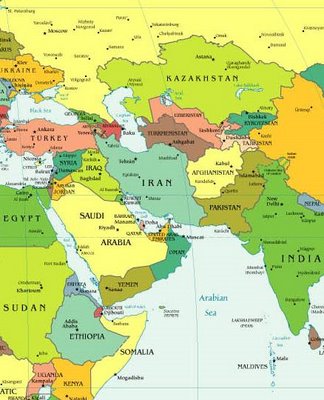
India-Afghanistan: Indian Minister of External Affairs Slaman Khurshid said on 15 February that India will provide helicopters to Afghanistan.
“We are giving them helicopters and we will be supplying them very soon,” Khurshid told reporters accompanying him on a day-long visit to the Afghan city of Kandahar, where he inaugurated an agricultural university built with Indian aid. “We also have been giving them some logistical support and we hopefully will be able to upgrade and refurbish their transport aircraft.”
Khurshid did not specify the number or type of helicopters to be provided to Afghanistan. Nor did he elaborate on transport aircraft contracts.
Angela Merkel and Francois Hollande will review plans to build up a trustworthy data protection network in Europe. The challenge is to avoid data passing through the US after revelations of mass NSA spying in Germany and France.
Merkel has been one of the biggest supporters of greater data protection in Europe since the revelations that the US tapped her phone emerged in a Der Spiegel news report in October, based on information leaked by former NSA contractor Edward Snowden.
Earlier, France learned from reports in Le Monde that the NSA has also been recording dozens of millions of French phone calls, including those of the French authorities. According to the report, in just one month between December 10, 2012 and January 8, 2013, the NSA recorded a total of 70.3 million French phone calls.
Inflection points in history are usually very difficult to see until well after they have occurred. Jonathan Cook, one of the most astute observers of the Palestinian Question, argues that one may be at hand wrt to the Palestinian Question. To me, this seems incredible, but we live in interesting times. CS
Israeli prime minister Benjamin Netanyahu has rarely been so politically embattled. His travails indicate the Israeli right’s inability to respond to a shifting political landscape, both in the region and globally.
The context for his troubles was his commitment in 2009, under great pressure from a newly elected US president, Barack Obama, to support the creation of a Palestinian state. It was a concession he never wanted to make and one he has regretted ever since.
The US secretary of state, John Kerry, has exploited that pledge by imposing the current peace talks. Now Netanyahu faces an imminent “framework agreement” that may require him to make further commitments towards an outcome he abhors.
Mahmoud Abbas, the head of the Palestinian Authority, is not helping. Rather than digging in his own heels, he offers constant accommodation. Last week Abbas told the New York Times that Israel could take a leisurely five years removing its soldiers and settlers from a key piece of Palestinian territory, the Jordan Valley. The Palestinian state would remain demilitarised, while Nato troops could stay “for a long time, and wherever they want”.
The Arab League is another thorn. It has obliged by renewing its offer from 2002, the Arab Peace Initiative, that promises Israel peaceful relations with the Arab world in return for its agreement to Palestinian statehood.
Meanwhile, the European Union is gently turning the screws on the occupation. It regularly trumpets condemnation of Israel’s settlement-building frenzies, including last week’s announcement of 558 settler homes in East Jerusalem. And in the background sanctions loom over settlement goods.
European financial institutions are providing a useful barometer of the mood among the 28 EU member states. They have become the unexpected pioneers of the boycott, divestment and sanctions (BDS) movement, with a steady trickle of banks and pension funds pulling out their investments in recent weeks.
Pointing out that boycotts and “delegitimisation” campaigns are only going to gather pace, Kerry has warned that Israel’s traditional policy is “unsustainable”.
That message rings true with many Israeli business leaders, who have thrown their weight behind the US diplomatic plan. They believe that a Palestinian state is the key to Israel gaining access to lucrative regional markets and continued economic growth.
Netanyahu must have been disconcerted by the news that among those meeting Kerry to express support at the World Economic Forum in Davos last month was Shlomi Fogel, the prime minister’s long-time intimate.
Pressure on these various fronts may explain Netanyahu’s hasty convening last weekend of his senior ministers to devise a strategy to counter the boycott trend. Proposals include a $28 million media campaign, legal action against boycotting institutions, and intensified surveillance of overseas activists by the Mossad.
On the domestic scene, Netanyahu – who is known to prize political survival above all other concerns – is getting a rough ride as well. He is being undermined on his right flank by rivals inside the coalition.
Naftali Bennett, the settlers’ leader, provoked a chafing public feud with Netanyahu this month, accusing him of losing his “moral compass” in the negotiations. At the same time, Avigdor Lieberman, the foreign minister from the far-right Yisrael Beiteinu party, has dramatically changed tack, cosying up to Kerry, whom he has called “a true friend of Israel”. Lieberman’s unlikely statesmanship has made Netanyahu’s run-ins with the US look, in the words of a local analyst, “childish and irresponsible”.
It is in the light of these mounting pressures on Netanyahu that one should understand his increasingly erratic behaviour – and the growing rift with the US.
A damaging falling-out last month, following insults from the defence minister against Kerry, has not subsided. Last week Netanyahu unleashed his closest cabinet allies to savage Kerry again, with one calling the US secretary of state’s pronouncements “offensive and intolerable”.
Susan Rice, Obama’s national security adviser, tweeted her displeasure with a shot across the bows. The Israeli government’s attacks were “totally unfounded and unacceptable”, she noted. Any doubt she was speaking for the president was later dispelled when Obama praised Kerry’s “extraordinary passion and principled diplomacy”.
But despite outward signs, Netanyahu is less alone than he looks – and far from ready to compromise.
He has the bulk of the Israeli public behind him, helped by media moguls like his friend Sheldon Adelson who are stoking the national mood of besiegement and victimhood.
But most importantly he has a large chunk of Israel’s security and economic establishment on side too.
The settlers and their ideological allies have deeply penetrated the higher ranks of both the army and the Shin Bet, Israel’s secret intelligence service. The Haaretz newspaper revealed this month the disturbing news that three of the four heads of the Shin Bet now subscribe to this extremist ideology.
Moreover, powerful elements within the security establishment are financially as well as ideologically invested in the occupation. In recent years the defence budget has rocketed to record levels as a whole layer of the senior military exploits the occupation to justify feathering its nest with grossly inflated salaries and pensions.
There are also vast business profits in the status quo, from hi-tech to resource-grabbing industries. Indications of what is at stake were illuminated recently with the announcement that the Palestinians will have to buy from Israel at great cost two key natural resources – gas and water – they should have in plentiful supply were it not for the occupation.
With these interest groups at his back, a defiant Netanyahu can probably face off the US diplomatic assault this time. But Kerry is not wrong to warn that in the long term yet another victory for Israeli intransigence will prove pyhrrhic.
These negotiations may not lead to an agreement, but they will mark a historic turning-point nonetheless. The delegitimisation of Israel is truly under way, and the party doing most of the damage is the Israeli leadership itself.
Jonathan Cook won the Martha Gellhorn Special Prize for Journalism. His latest books are “Israel and the Clash of Civilisations: Iraq, Iran and the Plan to Remake the Middle East” (Pluto Press) and “Disappearing Palestine: Israel’s Experiments in Human Despair” (Zed Books). His website is www.jonathan-cook.net.
A version of this article first appeared in The National, Abu Dhabi.
Phi Beta Iota: Zionism, and Zionist Israel, are not to be confused with Jews, or loyal American Jews — just as America the Beautiful is not be to confused with the treasonous betrayal of the public trust by the two-party tyranny in the USA, and the global financial crimes it has legalized, or the elite pedophilia it turns a blind eye to. Society is vastly more complex than a mere government. What is happening in the Internet era is the isolation of corrupt government — as John Perrry Barlow foresaw in 1992, the public is now starting to route around corrupt governments.
[ Editors Note: We are featuring a new NEO writer tonight with his first article for them and for us, something which we usually don't do here. But Mr. Orlov has picked an excellent and timely topic with the Saudi military offensive and done a great job with it. It's my job to find them to share with you.
Click on Image to Enlarge
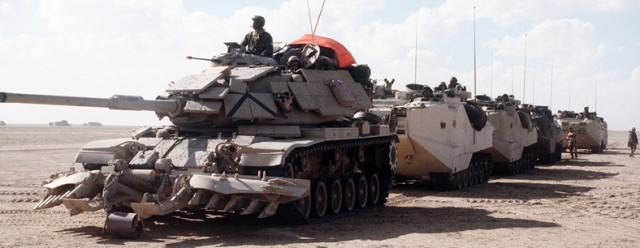
The Saudis have been huge spenders on military equipment for decades now but have never really used much of it in a real shooting war. But they were every defense contractor's favorite sugar daddy.
Why so much weapons spending has many answers. They were a forward base for American military and the expenditures were all part of having American protection for the Royal family dynasty.
Then there was the big fear over Iran, even though it has not invaded anyone in modern history and has no offensive military power in terms of taking or holding territory. Nor have they exhibited any interest in doing so.
Public pressure has helped push back against a bill in Congress that would have torn up the negotiated agreement with Iran by imposing yet more sanctions on the people of that country. The people of this country are not eager for another war, and have not accepted that sanctions lead away from war rather than into it.
But supporters and opponents of that bill tend to agree that Iran has a nuclear weapons program, and that this program must be stopped by one means or another. This underlying assumption is not supported by any evidence and never has been. We've heard it propounded for over thirty years, and the repetition has had its intended effect, but any evidence at all has always been lacking. A belief without evidence is a myth.
Iran has a nuclear energy program because the U.S. and European governments wanted Iran to have a nuclear energy program. The U.S. nuclear industry took out full-page ads in U.S. publications bragging about Iran's support for such an enlightened and progressive energy source. The U.S. was pushing for major expansion of Iran's nuclear program just before the Iranian revolution of 1979.
Since the Iranian revolution, the U.S. government has opposed Iran's nuclear energy program and misled the public about the existence of a nuclear weapons program in Iran. This story is well-told in Gareth Porter's new book, Manufactured Crisis: The Untold Story of the Iran Nuclear Scare, and by Porter is his upcoming interview this week on Talk Nation Radio.
The U.S. assisted Saddam Hussein's Iraq in a war against Iran in the 1980s, in which Iraq attacked Iran with chemical weapons. Iran's religious leaders had declared that chemical, biological, and nuclear weapons must not be used, even in retaliation. And they were not. Iran could have responded to Iraqi chemical attacks with chemical attacks of its own and chose not to.
Iran is committed to not using or possessing weapons of mass destruction. The results of inspections bear that out. Iran's willingness to put restrictions on its legal nuclear energy program — a willingness present both before and after sanctions — bears that out. Inspections should continue. All steps should be taken to move the world toward safe and sustainable energy sources. But can we drop the idea that Iran wants to nuke us?