The NSA monitors banks and credit card transactions — sometimes in apparent violation of national laws and global regulations. The European SWIFT financial transaction network is being tapped on different levels, internal documents from the US spy agency show.
EXTRACT
Monitoring SWIFT
The classified documents show that the intelligence agency has several means of accessing the internal data traffic of the Society for Worldwide Interbank Financial Telecommunication (SWIFT), a cooperative used by more than 8,000 banks worldwide for their international transactions. The NSA specifically targets other institutes on an individual basis. Furthermore, the agency apparently has in-depth knowledge of the internal processes of credit card companies like Visa and MasterCard. What's more, even new, alternative currencies, as well as presumably anonymous means of payment like the Internet currency Bitcoin, rank among the targets of the American spies.
The Vietnam War ended nearly 40 years ago, but the casualties continue as birth defects plague the country.
There are claims that thousands of children continue to be born with horrific facial deformities due to the 20 million gallons of Agent Orange chemical sprayed by the United States.
The Vietnamese call the disfigured youngsters ‘the children of Agent Orange'.
Da Nang in central Vietnam is thought to have the highest level of congenital deformity in the world.
Inside Out's Mark Jordan joins a team of top London plastic surgeons on their unpaid mission to help these children through the charity Facing the World.
Inside Out is broadcast on Monday, 9 September at 19:30 BST on BBC One London and nationwide on the iPlayer for seven days thereafter.
The United States, Afghan, Qatari, and Pakistani governments have all voiced their support for the opening of a Taliban office in Doha in order to promote peace negotiations. Some consider transforming the Taliban from an armed insurgency into a legitimate political group to be the critical first step in the Afghan peace process. However, to date, reconciliation efforts have stalled and focus more on rhetoric rather than substance.
There is no concrete evidence that Taliban leadership is either worn down or desperate to reach a peace agreement. Attempting to secure his legacy as a peacemaker, Afghan President Hamid Karzai wants to reach an agreement before the end of his term in April 2014. Because the Taliban have also cooperated somewhat with this principle of reconciliation, it is not immediately clear why the current approach has achieved nothing.
Viet-Nam Viet-Cong Redux
The answer is that the Doha peace process has been riddled with unrealistic expectations, and remains hopelessly inconsistent. Such reconciliation efforts without strategy and clear objectives reflect a hook without bait – while encouraging, these talks are doomed to fail without significant reform. Only with realistic expectations, a coherent strategy, national solidarity, and lots of patience, will reconciliation stand a chance of materializing.
Where We've Been Thus Far
The reconciliation offer requires three specific things from the Taliban: ending violence, breaking ties with al-Qaeda, and accepting the Afghan Constitution. The fourth, less advertised condition is the acceptance of a residual ISAF element in Afghanistan post-2014. At a recent summit in London, British, Afghan and Pakistani leaders set a six-month timeline to reach a peace settlement.
But substantive results are unlikely to emerge until after the 2014 Afghan Presidential elections. This is the single most important date in the reconciliation process and will set the tone for future debate. A six-month deadline to reach an agreement is not only unrealistic, but also damaging to the credibility of the process.
None of the works under review provides the full answers to these questions, although Alexander Cooley’s book, Great Games, Local Rules, comes closest. They all agree on the unprecedented rise of China’s influence in Central Asia. Marlène Laruelle and Sébastien Peyrouse, scholars at George Washington University in Washington, D.C., demonstrate in The Chinese Question in Central Asia that China is already the dominant economic power in the region.
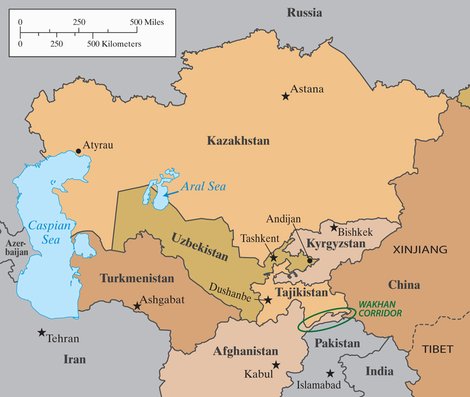
Click on Image to Enlarge
China has also taken care of one vital strategic interest since 1991: making sure that the Uighurs, China’s largest Muslim ethnic group who live in the western province of Xinjiang, do not seriously threaten to become independent and that the hundreds of thousands of Uighurs who live in Central Asia do not help them do so. During the 1950s large numbers of Uighurs fled the Maoist regime to seek shelter in Soviet Central Asia where they were relatively well treated.
After 1991 China put immense pressure on the three Central Asian states that border Xinjiang—Kazakhstan, Tajikistan, and Kyrgyzstan—to tightly restrict all Uighur political activity on their soil. China offered sweeteners such as resolving the border disputes that had plagued Chinese–Soviet relations in Central Asia for decades. Within a decade the borders between China and the Central Asian states were demarcated and settled, allowing for China’s rapid economic involvement in the region.
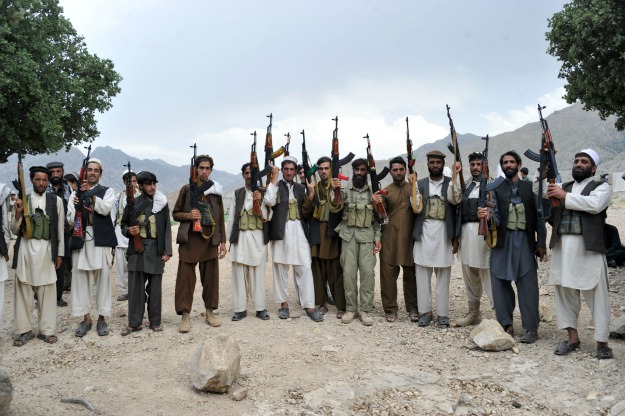
Still, Uighur nationalism and Islamic militancy have continued to mount in Xinjiang, as China has inundated the province with Han Chinese and severely repressed the Muslims. While the Uighur populations in Central Asia have been largely silenced, some Uighurs have been training and fighting with the Taliban in Pakistan and Afghanistan.
During the past decade China has invested heavily in Central Asia. Laruelle and Peyrouse write that
Key takeaway from this item by Julian Assange, which came out in Australia August 24, 2013 (my emphasis):
“Back in 2011 I had a meeting with Eric Schmidt, the then Chairman of Google, who came out to see me with three other people while I was under house arrest. You might suppose that coming to see me was gesture that he and the other big boys at Google were secretly on our side: that they support what we at WikiLeaks are struggling for: justice, government transparency, and privacy for individuals. But that would be a false supposition. Their agenda was much more complex, and as we found out, was inextricable from that of the US State Department. The full transcript of our meeting is available online through the WikiLeaks website.
The pretext for their visit was that Schmidt was then researching a new book, a banal tome which has since come out as The New Digital Age. My less than enthusiastic review of this book was published in the New York Times in late May of this year. On the back of that book are a series of pre-publication endorsements: Henry Kissinger, Bill Clinton, Madeleine Albright, Michael Hayden (former head of the CIA and NSA) and Tony Blair. Inside the book Henry Kissinger appears once again, this time given pride of place in the acknowledgements.
Schmidt’s book is not about communicating with the public. He is worth $6.1 billion and does not need to sell books. Rather, this book is a mechanism by which Google seeks to project itself into Washington. It shows Washington that Google can be its partner, its geopolitical visionary, who will help Washington see further about America’s interests. And by tying itself to the US state, Google thereby cements its own security, at the expense of all competitors.
The newly disclosed information includes individual agency budgets along with program area line items, as well as details regarding the size and structure of the intelligence workforce. So one learns, for example, that the proposed budget for covert action in FY2013 was approximately $2.6 billion, while the total for open source intelligence was $387 million.
Some of the information only confirms what was already understood to be true. The budget for the National Security Agency was estimated to be about $10 billion, according to a recent story in CNN Money (“What the NSA Costs Taxpayers” by Jeanne Sahadi, June 7, 2013). The actual NSA budget figure, the Post reported, is $10.8 billion.
And the involuntary disclosure of classified intelligence budget information, while rare, is not unprecedented. In 1994, the House Appropriations Committee inadvertently published budget data for national and military intelligence, the size of the CIA budget, and other details. (“$28 Billion Spying Budget is Made Public by Mistake” by Tim Weiner, New York Times, November 5, 1994)
But the current disclosure of intelligence budget information dwarfs all previous releases and provides unmatched depth and detail of spending over a course of several years, based on original documents. The disclosure is doubly remarkable because the Post chastely refrained from releasing about 90% of the Congressional Budget Justification Book that it obtained. “Sensitive details are so pervasive in the documents that The Post is publishing only summary tables and charts online,” Post reporters Gellman and Miller wrote.
This is not a whistleblower disclosure; it does not reveal any illegality or obvious wrongdoing. On the contrary, the underlying budget document is a formal request to Congress to authorize and appropriate funding for intelligence.
But the disclosure seems likely to be welcomed in many quarters (while scorned in others) both because of a generalized loss of confidence in the integrity of the classification system, and because of a more specific belief that the U.S. intelligence bureaucracy today requires increased public accountability.
Though it has never been embraced as official policy, the notion of public disclosure of individual intelligence agency budgets (above and beyond the release of aggregate totals) has an honorable pedigree.
In 1976, the U.S. Senate Church Committee advocated publication of the total intelligence budget and recommended that “any successor committees study the effects of publishing more detailed information on the budgets of the intelligence agencies.”
In a 1996 hearing of the Senate Intelligence Committee, then-Chair Sen. Arlen Specter badgered DCI John Deutch about the need for intelligence budget secrecy.
“I think that you and the Intelligence Community and this committee have got to do a much better job in coming to grips with the hard reasons for this [budget secrecy], if they exist. And if they exist, I'm prepared to help you defend them. But I don't see that they exist. I don't think that they have been articulated or explained,” the late Sen. Specter said then.
Committee Vice Chair Sen. Bob Kerrey added: “I would concur in much of what the Chairman has just said. I do, myself, believe not only the top line, but several of the other lines of the budget, not only could but should, for the purpose of giving taxpayer-citizens confidence that their money is being well spent.”
In 2004, the 9/11 Commission itself recommended disclosure of intelligence agency budgets: “Finally, to combat the secrecy and complexity we have described, the overall amounts of money being appropriated for national intelligence and to its component agencies should no longer be kept secret” (at page 416, emphasis added).
These are clearly minority views. They could have been adopted at any time — as disclosure of the aggregate total was — but they haven't been. (And even these voices did not call for release of the more detailed budget line items that are now public.) And yet they are not totally outlandish either.
The initial response of the executive branch to the Washington Post story will be to hunker down, to decline explicit comment, and to prohibit government employees from viewing classified budget documents that are in the public domain. Damage assessments will be performed, and remedial security measures will be imposed. These are understandable reflex responses.
But in a lucid moment, officials should ponder other questions.
How can public confidence in national security secrecy be bolstered? Is it possible to imagine a national security secrecy system that the public would plausibly view not with suspicion but with support, much as the strict secrecy of IRS tax returns is broadly understood and supported? What steps could be taken to reduce national security secrecy to the bare minimum?
Looking further ahead, is it possible to devise an information security policy that is based on “resilience” to the foreseeable disclosure of secrets rather than on the fervently pursued prevention of such disclosure?