Journal: Goldman Sachs Captures the White House

03 Economy, 07 Other Atrocities, 10 Security, Corruption, Government, Money, Banks & Concentrated Wealth
Chuck Spinney Recommends...

.. why Henry Kissinger may end up looking good.

Obama Hires a Hustler

Posted on Oct 19, 2010

By Robert Scheer

One day as Wall Street was crashing, President George W. Bush had the temerity to plaintively ask his treasury secretary, Henry Paulson: “How did this happen?” Paulson, who headed Goldman Sachs before taking the Treasury job, remarks in his memoir: “It was a humbling question for someone from the financial sector to be asked—after all, we were the ones responsible.”

That’s an honest enough admission about the culpability of the financial community in bundling the toxic derivatives packages still disastrously undermining the economic health of the nation. Even more startling was Paulson’s admission in his memoir that he, at the time he was advising the president, still did not know that home mortgages were at the heart of those troubling securities that his former company had marketed to others with such wild abandon.

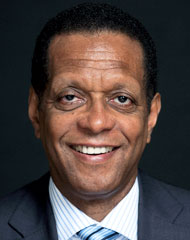
Were President Barack Obama to ask that question about the origins of this crisis of Tom Donilon, one of his closest aides whom he recently appointed to the critical job of national security adviser, Donilon would find it even more awkward to invoke the defense of ignorance. As the chief lobbyist for Fannie Mae from 1999 to 2005, he was far more intimately involved than Paulson in the manufacturing of this crisis. He successfully pressured Congress to give Fannie Mae the green light to speed past any sound regulation. Indeed, had Congress endorsed the barest semblance of regulation of the Fannie Mae-led housing scam, it would have been stillborn instead of being a very much alive Frankenstein creation.

Read rest of article….

Phi Beta Iota: Henry Kissinger was and remains a de facto war criminal (see The Trial of Henry Kissinger) but he never actively cheated the entire US public or was party to the deliberate–with malice aforethought–destruction of the entire US economy in the intimate manner of the new “National Security Advisor,” one Tom Donilon.  Perhaps his title should be changed to Goldman Sachs Security Advisor.  Kissinger did assure the death of another 20,000 US soldiers by cravenly undermining the Paris Peace Talks the first time around, and he did approve of NATO/CIA “dirty tricks” that killed people in Europe, so perhaps it is a toss-up.  Relevant book:  Politics Lost–How American Democracy Was Trivialized By People Who Think You’re Stupid (Hardcover).

Journal: The Death of Responsible Government

03 Economy, 07 Other Atrocities, 10 Transnational Crime, Civil Society, Collective Intelligence, Commerce, Commercial Intelligence, Corruption, Cultural Intelligence, Government, Law Enforcement
Chuck Spinney Recommends

October 23, 2010

What Happened to Change We Can Believe In?

By FRANK RICH

The New York Times

Phi Beta Iota: Extracts are provided.  This is an important document that confirms the total abdication by Congress and the Executive of their Constitutional duties with respect to the public interest.  The USA is owned and operated by Wall Street for its benefit, and We the People have been completely disenfranchised at the same time that the Commonwealth has been looted.

EXTRACT:

No matter how much Obama talks about his “tough” new financial regulatory reforms or offers rote condemnations of Wall Street greed, few believe there’s been real change. That’s not just because so many have lost their jobs, their savings and their homes. It’s also because so many know that the loftiest perpetrators of this national devastation got get-out-of-jail-free cards, that too-big-to-fail banks have grown bigger and that the rich are still the only Americans getting richer.

This intractable status quo is being rubbed in our faces daily during the pre-election sprint by revelations of the latest banking industry outrage, its disregard for the rule of law as it cut every corner to process an avalanche of foreclosures. Clearly, these financial institutions have learned nothing in the few years since their contempt for fiscal and legal niceties led them to peddle these predatory mortgages (and the reckless financial “products” concocted from them) in the first place. And why should they have learned anything? They’ve often been rewarded, not punished, for bad behavior.

EXTRACT:

The much acclaimed new documentary about the global economic meltdown, “Inside Job,” has it right. As its narrator, Matt Damon, intones, our country has been robbed by insiders who “destroyed their own companies and plunged the world into crisis” — and then “walked away from the wreckage with their fortunes intact.” These insiders include Dick Fuld and four other executives at Lehman Brothers who “got to keep all the money” (more than $1 billion) after Lehman went bankrupt. And of course Robert Rubin, who encouraged Citigroup to step up its investment in high-risk bets like Countrywide’s mortgage-backed securities. Rubin, now back as a rainmaker on Wall Street, collected more than $115million in compensationduring roughly the same period Mozilo “earned” his half a billion. Citi, which required a $45 billiontaxpayers’ bailout, recently secured its own slap-on-the-wrist S.E.C. settlement — at $75 million, less than Rubin’s earnings and less than its 2003 penalty ($101 million) for its role in hiding Enron profits.

It should pain the White House that its departing economic guru, the Rubin protégé Lawrence Summers, is an even bigger heavy in “Inside Job” than in the hit movie of election season, “The Social Network.” Summers — like the former Goldman Sachs chief executive and Bush Treasury secretary Hank Paulson — is portrayed as just the latest in a procession of policy makers who keep rotating in and out of government and the financial industry, almost always to that industry’s advantage. As the star economist Nouriel Roubini tells the filmmaker, Charles Ferguson, the financial sector on Wall Street has “step by step captured the political system” on “the Democratic and the Republican side” alike. But it would be wrong to single out Summers or any individual official for the Obama administration’s image of being lax in pursuing finance’s bad actors. This tone is set at the top.

Asked in “Inside Job” why there’s been no systematic investigation of the 2008 crash, Roubini answers: “Because then you’d find the culprits.” With the aid of the “Manhattan Madam” (and current stunt New York gubernatorial candidate) Kristin Davis, the film also asks why federal prosecutors who were “perfectly happy to use Eliot Spitzer’s personal vices to force him to resign in 2008” have not used rampant sex-and-drug trade on Wall Street as a tool for flipping witnesses to pursue the culprits behind the financial crimes that devastated the nation.

EXTRACT:

Even as the G.O.P. benefits from unlimited corporate campaign money, it’s pulling off the remarkable feat of persuading a large swath of anxious voters that it will lead a populist charge against the rulers of our economic pyramid — the banks, energy companies, insurance giants and other special interests underwriting its own candidates. Should those forces prevail, an America that still hasn’t remotely recovered from the worst hard times in 70 years will end up handing over even more power to those who greased the skids.

We can blame much of this turn of events on the deep pockets of oil billionaires like the Koch brothers and on the Supreme Court’s Citizens United decision, which freed corporations to try to buy any election they choose. But the Obama White House is hardly innocent. Its failure to hold the bust’s malefactors accountable has helped turn what should have been a clear-cut choice on Nov. 2 into a blurry contest between the party of big corporations and the party of business as usual.

Read Full Article….

Phi Beta Iota: The Tea Party is an unwitting circus act fully funded and controlled by the New York mandarins.  The lack of responsible alternatives on the left or the right, combined with the naivete of the public in thinking that the Tea Party is anything other than a side show, could lead–we never thought we would say this–to a new Administration and Congress even more ineffective than the last two.  The further American governance moves from the truth, the deeper our grave.

See Also:

Election 2008 Chapter: Paradigms of Failure

Election 2008 Chapter: The Substance of Governance

Journal: Military Pay and Benefits–Three Solutions

03 Economy, 10 Security, 11 Society, Civil Society, Collective Intelligence, Commercial Intelligence, Corruption, Military, Officers Call, Peace Intelligence

Marcus Aurelius Recommends

As I See It — Fighting the Budget Shrug

2010/10/15

By Col. Steve Strobridge, USAF-Ret.

A recent article in Christian Science Monitor on military health care costs identified, in microcosm, the battle we face in the coming years in defending the military community’s sunk investment in its future.

Full Story Online

After citing all DoD’s arguments that it’s being “eaten alive” by “unsustainable” military health care cost increases, the reporter had the courtesy of quoting me on the other side of the argument:

“’There’s a fundamental difference between social insurance programs open to every American and military benefits earned by decades of service and sacrifice,’ said Steve Strobridge, director of Governmental Relations for MOAA.

“What Mr. Strobridge raises here is a moral issue: Should the military be treated differently than nonmilitary America when it comes to pay and benefits? The armed forces put their lives, limbs, and mental health on the line for the safety of the country, or they potentially do. On a practical level, you need strong benefits to recruit and maintain a strong, all-volunteer military.”

And then came this kicker:

“But here’s another moral angle: Sacrifice goes with the territory of being in the armed services, and the military budget needs serious cutting. Should sacrifice not also extend to the defense of the nation’s financial health if it’s in critical danger?”

And there’s the problem. Sacrifices already endured are assigned no value. It’s the budget shrug: “They volunteered, didn’t they?”

Every 15 years or so, that indifference leads to cuts that eventually wreck retention — and then national leaders have to pull out all the stops and spend even more to solve the military manpower crisis they refused to prevent.

The real issue is, “How much is it worth for the country to be able to defend itself?”

Read rest of story….

Phi Beta Iota: With all due respect to MOAA, the real issue is NOT “what price defense” but rather “how best to defend.”  There are three simple solutions to the military and and benefits problem that do NOT require reductions:

1.  Restore the universal draft including immigrants and including a mid-career “sabatical” between military and private sector.  This bonds the nation–one boot camp, three choices: Armed Forces, Peace Corps, Homeland Service.

2.  Establish Constitutional honest government tht does not lead the Republic into elective wars for ideological and private reasons on the basis of (most recently) 935 documented lies.  The same honest government can be expected to end the acquisition of things we do not need (e.g. missile defense in Poland, J-22, new nuclear submarine) at costs we cannot afford.

3.  End the fiction that future Medicare costs re unfunded.  They are only unfunded because a corrupt Congress in cahoots with a corrupt Administration (both parties) has forbidden price negotiation.  The minute we restore honest government current and future Medicare costs come down to 1% (ONE percent) of what we pay now.

Thomas Jefferson:  A Nation's best defense is an educated citizenry.

Russell Ackoff:  Stop trying to do the wrong things righter; do the right things.

Robert Steele:  The truth at any cost reduces all other costs.

Journal: Violating Our Troops, Violating Others, Violating We

03 Economy, 06 Family, 07 Health, 09 Justice, 10 Security, 11 Society, Civil Society, Military, Officers Call
Chuck Spinney Recommends

OP-ED COLUMNIST

The Way We Treat Our Troops

By BOB HERBERT

Published: October 22, 2010

You can only hope that the very preliminary peace efforts in Afghanistan bear fruit before long. But for evidence that the United States is letting its claim to greatness, and even common decency, slip through its fingers, all you need to do is look at the way we treat our own troops.

The idea that the United States is at war and hardly any of its citizens are paying attention to the terrible burden being shouldered by its men and women in uniform is beyond appalling.

Bob Herbert

We can get fired up about Lady Gaga and the Tea Party crackpots. We’re into fantasy football, the baseball playoffs and our obsessively narcissistic tweets. But American soldiers fighting and dying in a foreign land? That is such a yawn.

I would bring back the draft in a heartbeat. Then you wouldn’t have these wars that last a lifetime. And you wouldn’t get mind-bending tragedies like the death of Sgt. First Class Lance Vogeler, a 29-year-old who was killed a few weeks ago while serving in the Army in his 12th combat tour. That’s right, his 12th — four in Iraq and eight in Afghanistan.

Read rest of this article….

Journal: Bank of America into Receivership?

03 Economy, 07 Other Atrocities, 10 Transnational Crime, Commerce, Commercial Intelligence, Corporations, Corruption, Money, Banks & Concentrated Wealth

‘FORECLOSE ON THE FRAUDSTERS'
White Collar Crime Expert Calls For FDIC To Take Control Of Bank Of America

Full Story Online

Charging that the ongoing foreclosure fraud epidemic is the work of precisely the same unrepentant bank officers whose fraudulent mortgage schemes crashed the financial system in the first place, two leading critics of the financial industry are calling on the FDIC to put some of the nation's biggest banks into receivership — starting with the Bank of America — and make them clean house.

William K. Black, a former regulator and white-collar crime expert who cracked down on massive fraud during the savings and loan scandal of the 1980s, and his fellow economics professor at the University of Missouri-Kansas City, L. Randall Wray, write in the Huffington Post that it's time to “foreclose on the foreclosure fraudsters”. They write:

Read on….

NIGHTWATCH Extract: China Using Rare Earth Elements (REE) to Test Economic & Technical Pressure Options

02 China, 03 Economy, 10 Security, Commerce, Commercial Intelligence, Earth Intelligence, Government, Military

China and Rare Earth Elements: China's new Five-Year Program will fail to bring any rapid change in export quotas for rare earth elements (REE), Chinese Ambassador to the World Trade Organization Sun Zhenyu said, Reuters reported. He also said China's REE reserves were depleting quickly and that Beijing must conserve them. According to Sun, China's reserves have fallen from 33 percent of the world's total in 1996 to 30 percent presently, and that they will last only for another 15-20 years. He urged other nations to begin developing their own REE reserves.

China-Japan: Japan's stockpile of rare earth elements (REE), if China does not restart REE exporting, could empty by March or April 2011, said Yoshikatsu Nakayama, Japanese vice-minister of the economy, trade and industry, Agence France-Presse reported on 21 October.

China-Germany: German companies have been told by Chinese officials to increase their investments in China if they wish to continue to receive rare earth elements (REE) and two other elements China mines, tungsten and antimony, The New York Times reported on 21 October, citing a spokeswoman for the German engineering federation.

On 21 October, unidentified German industry officials said that Chinese customs officials were for the fourth day blocking the final paperwork approval necessary for REE to be exported to Germany. The officials said China is still exporting REE that had paperwork approved before 18 October.

NIGHTWATCH Comment: The Chinese appear to be using rare earth elements exports for testing economic pressure tactics against potential rivals or adversaries. Rare earth elements are used in many high technology applications.

NIGHTWATCH KGS Home

Phi Beta Iota: This is what happens when government becomes irresponsible, divorced from reality, without a strategic analytic model, and so ideologically insane as to make a lobbyist for Goldman Sachs the National Security Advisor.  This all started in the 1970's, it is not new, but now it is close to a fatal sucking chest wound for the Republic.

See Also:

Election 2008 Chapter: The Substance of Governance

Event: 5 Nov 2010, New York City, Columbia Univ, Mobile Money II

01 Poverty, 03 Economy, Academia, Civil Society, Commerce, Mobile, Technologies

Mobile Money II

Columbia Institute for Tele-Information

Columbia Business School

Uris Hall TBD

In April 2010 CITI held its first conference on “Mobile Money”, focusing on the macroeconomic aspects.  Since then, developments have accelerated.  Around the world, the rapid spread of mobile phones is being followed by their use as a tool for financial transactions.  The cell phone serves as a bank account, debit card, and money creator. Developing countries lack effective financial infrastructure.  The positive economic impact of the mobile telecommunications infrastructure has been demonstrated, as has been the ability of microfinance to stimulate economic activity.  Now a hybrid of the technologies has begun to emerge, enabling a mobile financial system.  A notable example is Kenya where the M-PESA system (‘m-money’ in Swahili) has transferred in its short history over $5.4 billion by 12 million customers. This conference addresses some of the following issues:

  • What are the economics of mobile money?
  • What policy issues does it raise?
  • Is m-money a threat to the traditional banking system?
  • How might it be regulated?
  • Security issues
  • Consumer protection perspectives
  • Investor perspectives
  • Indicators for demand
  • M-money and m-health
  • What are consumer and privacy protection issues?
  • Who will control the system—banks or telecom operators?
  • What are the emerging trends?
 Continue reading "Event: 5 Nov 2010, New York City, Columbia Univ, Mobile Money II"
noble gold