Corruption threatens global economic recovery, greatly challenges countries in conflict
Berlin, 17 November 2009
As the world economy begins to register a tentative recovery and some nations continue to wrestle with ongoing conflict and insecurity, it is clear that no region of the world is immune to the perils of corruption, according to Transparency International’s 2009 Corruption Perceptions Index (CPI), a measure of domestic, public sector corruption released today.
“At a time when massive stimulus packages, fast-track disbursements of public funds and attempts to secure peace are being implemented around the world, it is essential to identify where corruption blocks good governance and accountability, in order to break its corrosive cycle” said Huguette Labelle, Chair of Transparency International (TI).
Full Story Online
Afghanistan slips in corruption index despite aid
BERLIN – Afghanistan has slipped three places to become the world's second most-corrupt country despite billions in aid meant to bolster the government against a rising insurgency, according to an annual survey of perceived levels of corruption.
Only lawless Somalia, whose weak U.N.-backed government controls just a few blocks of the capital, was perceived as more corrupt than Afghanistan in Transparency International's Corruption Perceptions Index.
Iraq saw some improvement, rising to 176 of 180 countries, up two places up from last year. Singapore, Denmark and New Zealand were seen as the least corrupt countries in the list based on surveys of businesses and experts.
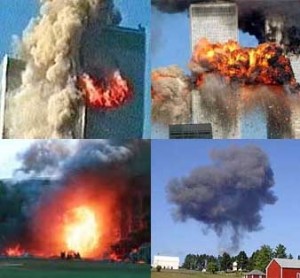
The Subprime Crisis and the Terrorist Attacks on September 11 2001_2612
The time has come for the public to do its own intelligence on treason and fraud. This second part of the report names many names, including Henry Kissinger. The two reports together, in our judgment, amply justify a public demand for a Grand Jury to indict all named individuals.
On May 4, the Obama administration announced a plan to crack down on offshore tax havens, which it said are costing the United States tens of billions of dollars each year. The President's proposals were primarily aimed at finding ways to increase revenue from wealthy companies and investors who use loopholes in the law and offshore subsidiaries to reduce their US taxes. But the administration is largely missing a far more devastating problem related to offshore finance: money gained from criminal and other illicit sources. With the use of tax havens and other elements of an increasingly complex ‘shadow' financial network, vast sums of illegal money are being shifted throughout the global economy virtually undetected.
Phi Beta Iota: The illicit global economy is at least two trillion dollars a year against a seven trillion dollar a year legitimate economy, and the latter is both full of legal crime and legal tax avoidance, as well as focused on the one billion rich rathyer than the five billion poor. One of the many dirty not-so-little secrets about Wall Street is that it relies heavily on laundered drug money for its liquidity; another is that the banking community has been all too happy to manage the funds of dictators and war lords and others. Below are just three of the many books we recommend in this area.
The Afghan debacle is becoming a case study of how political debate in Versailles drips in a naturally self-organizing way to protect the dysfunctional status quo.
As I indicated yesterday and in September, the fundamental flaw that set the stage for the current policy making fiasco was the unexamined analytical hole in General McChrystal's escalation strategy — namely, its dependence of the rapid expansion of the corrupt and ineffective Afghan national security forces. McChrystal did not analyze this corruption/ineffectiveness issue, but that crucial omission was ignored the hoorah accompanying the immediate leaking of report by his allies buried somewhere in the Versailles apparat.
Phi Beta Iota: a 59 page memorandum is rocketing around the Internet, entitled Collateral Damage: U.S. Covert Operations and the Terrorist Attacks on September 11, 2001. Read the report, which includes very specific details and charts with head and shoulder photos. This material is substantiated not just by the sources cited in the endnotes, but by many other sources such as those reviewed at 9-11 Truth Books & DVDs (23) and (indirectly) at Empire, Sorrows, Hubris, Blowback (145).
Jim Routh and Gary McGraw examine why twenty-somethings skateboard right past security controls, and what it means for employers (i.e. you!)
November 02, 2009
The insider threat, the bane of computer security and a topic of worried conversation among CSOs, is undergoing significant change. Over the years, the majority of insider threats have carried out attacks in order to line their pockets, punish their colleagues, spy for the enemy or wreak havoc from within. Today's insider threats may
have something much less insidious in mind—multitasking and social networking to get their jobs done.
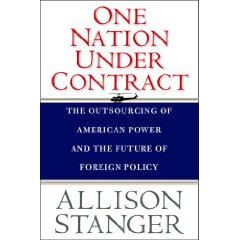
In 2008, notes Stanger, roughly 80 percent of the State Department’s requested budget went out the door in the form of contracts and grants. The Army’s primary support contractor in Iraq, KBR, reportedly has some 17,000 direct-hire employees there.
The U.S. military is now proposing a huge nation-building project for Afghanistan to replace its dysfunctional government with a state that can deliver for the Afghan people so they won’t side with the Taliban. I might be more open to that project if we had a true global alliance to share the burden of an effort that will take decades. But we don’t. European publics do not favor this war, and our allies will only pony up just enough troops to get their official “Frequent U.S. Ally Card” renewed. We’ll make up the difference by hiring private contractors.