Syria claims sarin seizure at rebel hideout as Russia ‘blocks’ UN’s Qusair resolution
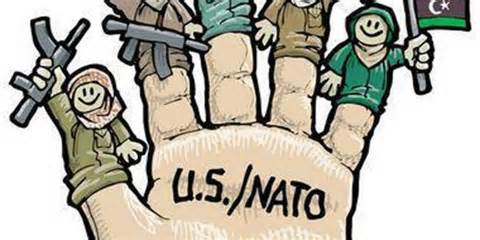
If the Syrian Dictator Must Go… Why Not the Dictators in Saudi Arabia, Qatar and Bahrain?

The truth at any cost lowers all other costs — curated by former US spy Robert David Steele.

35 Islmaic comunes across 22 states
Published on Dec 9, 2012
http://www.christianaction.org/
Scattered around the United States, unknown by most Americans, are dozens of Islamic terrorist-training compounds known as “Muslims of the Americas.” Under the leadership of a radical Pakistani cleric, Sheikh Mubarik Gilani, Muslims of the Americas has thousands of devoted followers who are being groomed for homegrown jihad.
In never-before-seen video footage, Christian Action Network exposes these dangerous terrorist compounds and reveals for the first time a secret training tape in which American Muslims are recruited to “join one of the most advanced training courses in Islamic military warfare”… right here in America.
Part 2:
Experts unearth concerns over ‘peak soil'
In the past 40 years, 30 percent of the planet's arable land has become unproductive due to erosion, scientists say.
Reykjavik, Iceland – Soil is becoming endangered, and this reality needs to be part of our collective awareness in order to feed nine billion people by 2050, say experts meeting in Reykjavík.
And a big part of reversing soil decline is the use of carbon, the same element that is helping to overheat the planet.
“Keeping and putting carbon in its rightful place,” needs to be the mantra for humanity if we want to continue to eat, drink and combat global warming, concluded 200 researchers from more than 30 countries.
“There is no life without soil,” said Anne Glover, chief scientific adviser to the European Commission.
“While soil is invisible to most people it provides an estimated $1.5tn to $13tn dollars in ecosystem services annually,” Glover said at the Soil Carbon Sequestration conference that ended this week.
The dirt beneath our feet is a nearly magical world filled with tiny, wondrous creatures. A mere handful of soil might contain a half million different species including ants, earthworms, fungi, bacteria and other microorganisms. Soil provides nearly all of our food – only one percent of our calories come from the oceans, she said.
Soil also gives life to all of the world's plants that supply us with much of our oxygen, another important ecosystem service. Soil cleans water, keeps contaminants out of streams and lakes, and prevents flooding. Soil can also absorb huge amounts of carbon, second only to the oceans.
“It takes half a millennia to build two centimetres of living soil and only seconds to destroy it,” Glover said.
UK pays price for MI5 courting terror
By Nafeez Mosaddeq Ahmed
Asia Times, 30 May 2013
The brutal murder of an off-duty British soldier in broad daylight in the southeast London district of Woolwich raises new questions about the British government's national security strategy, at home and abroad. Officials have highlighted the danger of “self-radicalizing” cells inspired by Internet extremism, but this ignores overwhelming evidence that major UK terror plots have been incubated by the banned al-Qaeda-linked group formerly known as Al Muhajiroun.
Equally, it is no surprise that the attackers had been seen earlier on the radar of MI5, the UK's domestic counter-intelligence and security agency. While Al Muhajiroun's emir, Syrian cleric Omar Bakri Mohammed – currently self-exiled to Tripoli in northern Lebanon – has previously claimed “public immunity” due to murky connections with British intelligence, compelling evidence suggests such connections might still be operational in the context of foreign policy imperatives linked to oil and gas interests.
Continue reading “Berto Jongman: GLADIO B Comes Home to London — USA Next?”

I strongly agree with [former US CIA Director] R. James Woolsey and [a former CIA analyst and Executive Director of the Task Force on National and Homeland Security, an Advisory Board to Congress] Dr. Peter Vincent Pry that the electromagnetic pulse (EMP) threat to the U.S. demands our strongest attention (“How North Korea Could Cripple the U.S.,” op-ed, May 21).

A good trend.
Shares of Monsanto (MON) dropped again Friday after South Korea joined Japan in suspending importation of genetically modified wheat sourced to the crop seed company.
The moves came after the U.S. Department of Agriculture announced Wednesday that it found genetically engineered wheat, never approved for sale and thought to have been shelved, growing on a farm in Oregon.
. . . . . . . .
Japan earlier canceled plans to buy more wheat from the U.S. Other Asian countries said they're mulling similar moves.
Meanwhile, Monsanto plans to quit lobbying for acceptance of its genetically modified seed in Europe, where it's met with strong resistance. Everyone from French wine producers to German crop growers has objected to its modified seed.
. . . . . . . .
Last year, GM crops accounted for 88% of all corn in the U.S., 94% of cotton and 93% of soybeans, according to USDA figures. In Europe, they're estimated to account for less than 1% of crops.
