There is a massive complicity in America today between the corporations that fund elections and the officeholders they elect. Actions like Tim's are aimed at disrupting that complicity. For our children, for our country and for the world, we should honor his courage and self-sacrifice and pledge to follow in his footsteps, each in our own way.
Op-Ed
Tim DeChristopher's courageous bid to save our world
In disrupting a federal auction of oil and gas leases, Tim DeChristopher became a hero, but he now faces as many as 10 years in prison.
By Peter YarrowLos Angeles Times, July 26, 2011
In March, Tim DeChristopher was convicted of two felony counts for a nonviolent act of civil disobedience. Acting out of his deepest convictions and his abiding concern for the survival of humankind, Tim bid on oil and gas leases on federal land that he didn't have the means to pay for. On Tuesday, he could be sentenced to a maximum of 10 years in prison for his actions.

Farm thefts in California. From copper to iron to avocados to bees to solar panels. Combo of economic depression/financial collapse (a loss of legitimacy) that continues to ravage CA and legal decay (budgets to protect against this are down by 50% in three years
EXTRACT
Like many lawmen in vast agricultural areas, Sheriff Anderson said a major challenge was the remoteness of farms and the lack of witnesses. “It’s not like breaking into the neighbor’s house and the dog barking,” he said. “These things are just sitting out here in the middle of nowhere.”
Phi Beta Iota: This one quote is gripping, because it describes the insanity of what the US Government is trying to do with Homeland Security: “It’s difficult to lock up 1,400-plus acres,” he said. “The value of the fences would be worth more than I’m worth.”
“The enterprise has proved to be a model of how not to go about such things, breaking all the rules of grand strategy: getting in without having any idea of how to get out; almost wilful misdiagnosis of the challenges; changing objectives, and no coherent or consistent plan; mission creep on an heroic scale; disunity of political and military command, also on an heroic scale; diversion of attention and resources [to Iraq] at a critical stage in the adventure; poor choice of local allies, who rapidly became more of a problem than a solution; unwillingness to co-opt the neighbours into the project, and thus address the mission-critical problem of external sanctuary and support; military advice, long on institutional self-interest, but woefully short on serious objective analysis of the problems of pacifying a broken country with largely non-existent institutions of government and security; weak political leadership, notably in subjecting to proper scrutiny militarily heavy approaches, and in explaining to the increasingly, and now decisively, sceptical domestic press and public the benefits of expending so much treasure and blood.”
Sir Sherard Cowper-Coles
British ambassador in Kabul and as special envoy to Afghanistan and Pakistan
Phi Beta Iota: A full reading of “The Afghan misadventure” by Lionel Barber is highly recommended. The ends with several lessons not understood in Washington, and a marvelous description of NATO as a “tethered goat.” He also recommends these three books:
According to Sir Liam Donaldson, the WHO's newly-appointed Envoy for Patient Safety, the chances of dying from a medical error in a hospital anywhere in the world is about 1 in 300. That compares with the risk of dying in a plane crash, of about 1 in 10 million passengers.
Phi Beta Iota: this story encapsulates much of what is wrong with modern society, from fog facts (knowns that are not known by most) to corruption. When combined with the documentation on 50% of every health dollar being waste, and the larger challenge of incoherent uniniformed policy across all ten threats and all twelve core policy domains.
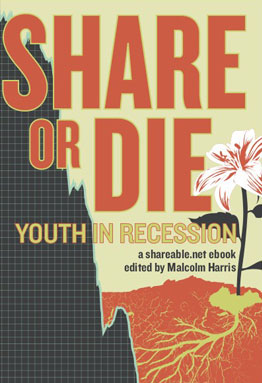
It’s October 2010, and I’m reclined in an all expenses paid seat in business class on a flight to Berlin. I’m going there for two weeks to collaborate on a video project with a couple of artists I met online, then flying to Amsterdam to present the video to a room full of bankers at the largest financial services conference on the planet. I’m not a media producer, nor do I work in the financial industry. All I can think to myself is “How the hell did I get here?”
. . . . . . .
Now I see this life as an Epic Adventure, with each of us in control of being the hero of our own personal mission. Here are three big insights I’ve had these past few years that make me confident in this belief:
Your community already exists, and is waiting for you.
Your vision already exists – it is a shared one.
The tools of empowerment already exist, and are ready to be wielded.
The pieces you need really are there, they’re just often hard to recognize. I went through a long phase of utter despair and hopelessness, and had no idea how to move forward. Only after putting myself out there with authenticity and a beginner’s mind did I see I was surrounded by a community of change agents with the heart, the vision, and the capacity to act.
As we all move forward in building the kind of society we want to see and the lives we want to lead, we realize more and more that everything is interconnected and we can go further by connecting, collaborating, and amplifying each other’s efforts than by stubbornly trying to reinvent the wheel.
We’re all in this together. Find your tribe and go change the world.
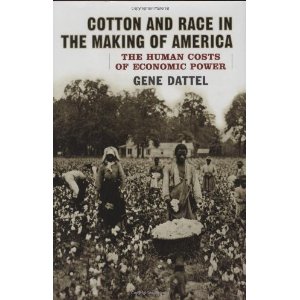
Just reading Cotton and Race in the Making of America, written by an old friend several years ago. I think most would find it fascinating and worthy of review.. http://genedattel.com/
Amazon Page
“Gene Dattel has written a very important and necessary book, by locating the expansion of cotton production as a driving force not only in the antebellum South, but in the economy at large. He exposes slave-produced cotton's central role in causing the Civil War and as the global economic engine that prolonged slavery. Cotton was coveted by New York merchants and the textile barons of England and New England. He shows that after the Civil War cotton and race remained linked until technology finally displaced black labor. He devastatingly critiques the complicit role of the racist North in containing African Americans in the cotton fields. The legacy of this vital crop was economic growth and the social tragedy of slavery and segregation. No examination of American heritage is complete without an understanding of the force that cotton wrought upon its economic and social landscape. America's racial dilemma cannot be sequestered to one part of the country.” –Roger Wilkins, Clarence J. Robinson Professor Emeritus, George Mason University