Let the word go out, indeed. “Those are OUR streets, and we will always be there to demonstrate… people learned a lot… we are no longer that post ideological generation, we are no longer that generation that doesn’t care… we are now the generation that will stand with everyone who’s fighting back…” They’re mad as hell, and they’re not going to take it anymore.
15 year old Tells Establishment to Stick-it.
Coalition of Resistence National Conference 27 November 2010 Camden UK
Some things sell for not much more than they cost to make. Things like steel.
Others? They sell for high multiples of cost. Spa services, fancy ties, long haul airplane tickets, coaching, books–these are things that might cost a bunch to set up, but once the factory is rolling, the marginal cost of one more unit is really low. The challenge, then, is to find a way to get new customers without alienating the folks that have paid full price. Even better, to turn those new trial customers into loyal customers.
One of the challenges of selling to new customers cheap is that you might end up with a price shopper, someone who is always cheap, someone who will never convert into the kind of customer your high margin business needs to survive.
Priceline was a pioneer in figuring out how to isolate one customer type from another. The reason the original Priceline was so incredibly difficult to use (with blind reverse auctions, etc.) was that they wanted it that way. Anyone who was willing to through that hassle and anxiety to save $100 bucks for a ticket on Delta was clearly not someone Delta was going to have an easy time selling a regular ticket to. In other words, Jay Walker had figured out how to create a second type of air travel. One for cheapskates. The alternative to Priceline was a bus ticket or no travel at all… And Delta was fine with offloading excess seats to them, because they didn't have to worry about alienating their core customer.
Groupon is a very different thing. Here, it's not a hassle, it's the fun factor. Buying this way is exciting, you never know what's next, you do it with friends, the copy is funny, it's an adventure. As a result, many Groupon customers in fact do convert to becoming long time patrons of the place they tried, because they're not inherently cheap shoppers. When they're on Groupon they're hunting for fun. But if you offer an astonishing product and great service after they try you, they may convert into shopping with you for the long haul, not because you're a Groupon replacement, but because you bring them more than the alternatives.
And the magic basket? Tim Ferriss just finished offering more than $1600 worth of high-margin items in a basket to people who bought 30 copies of his new book. The marketing partners get trial among a group of people who are each paying more than the cost of a single item in the basket, these customers are proving they're not among the ultra-cheap. And the products are quasi-aligned, appealing to the same sort of consumer. Is there a cheaper way for one of these companies to reach this precise person? I'm not sure there is.
Imagine taking this even further and leaving out the book part. A basket of aligned items, all high margin, none from the market dominator, each holding out the possibility of future business… You could do this with an 8 pack of computer games or phone apps, or drink coupons from a dozen bars in the same town, or even clothing for guys size 38. Alex has experimented with this at Swagapalooza. I'm betting that there's quite a lot to be done in becoming this market creator/differentiator/middleman.
What's missing so far is an intelligent way to get permission, to follow up, to further organize those that do a trial and teach them and connect them so that they see a further incentive in sticking with the thing they just tried.
What's also missing is a willingness on the part of high-margin marketers to use their products and these sort of interactions as a replacement for the unmeasurable and largely ineffective lifestyle advertising they use now.
The net, once again, is making it easier to find and organize tribes of people, even for short durations. When you intersect these aligned groups with high-margin products, you can create fascinating commerce opportunities.
If I didn’t know better, I would think the whole “No Labels” movement was a giant, self-parodying prank.
I tuned in to the webcast of the group’s kickoff to hear a woman saying, “You just have to look to Arizona to see extremists who are trying to divide us.” I guess I know how the group feels about the Arizona immigration enforcement law. Of course, I thought the point of the group was to stop labeling people; but I guess it’s okay to label the overwhelming majority of Arizonans “extremists.”
Bruce Braley, D-Iowa, introduced himself “a proud Democrat… who is also proud that he grew up in a no-labels house in a proud no-labels town.” He continued to sing the joys of the label-free lifestyle in a manner that probably should make his constituents look to their shoes in shame: “The most important place I go every day is the House gym. Because there are no labels in the House gym.”
I can’t help but notice that the Republicans involved all lost primaries or fled the party: Bob Inglis, Mike Castle, Charlie Crist, Michael Bloomberg.
Early Comments by Others:
Dan Davis: Funny how the people behind “No Labels” seem to be people that were sporting labels that Americans rejected in a resounding manner. Labels are not the problem. It is the worldviews and ideals that they themselves imbued said labels with! Ditching the labels is a short term solution.
EMC Geek: So if something doesn't have a label, isn't that an indication it's reached it's expiration date?
Blackhawks: I don't totally disagree with their stated goals, but their “no labels” reminds me a little too much of the “No Logo” Naomi Klein book, which I definitely disagreed with.
Davidinvirginia: Well, after all, some of the best and funniest self-parody is completely unintentional. 🙂
This bunch is almost too sad and pathetic to be funny, though.
A new movement called “No Labels” is hoping to help tone down the heated rhetoric in Washington. Headed by New York Mayor Michael Bloomberg, a veritable ‘who's who' of moderate politicians are participating in the No Labels launch in New York City. Among the participants are: retiring Sen. Evan Bayh (D-Ind.), Sen. Kirstin Gillibrand (D-N.Y.), Rep. Bob Inglis (R-S.C.), former Rep. Tom Davis (R-Va.), Sen. Joe Lieberman (I-Conn.) and Republican-turned-independent Florida Gov. Charlie Crist.
Phi Beta Iota: These folks mean well, but they are totally without a clue when it comes to actually embracing, empowering, and exploiting (in the positive sense of the word) the collective intelligence of the Republic. This is an apparatchik move through and through, and the manner in which it has been organized, the money behind it, and the total absence of any intelligent structure (e.g. electoral reform, virtual cabinet, online participatory policy-budget exercise) make it clear that it is a dead end. Preliminary voting suggested that most are not fooled and see it for the negative it is–another theatrical display lacking in authenticity.
On the third Wednesday of every month, the nine members of an elite Wall Street society gather in Midtown Manhattan.
The men share a common goal: to protect the interests of big banks in the vast market for derivatives, one of the most profitable — and controversial — fields in finance. They also share a common secret: The details of their meetings, even their identities, have been strictly confidential.
Drawn from giants like JPMorgan Chase, Goldman Sachs and Morgan Stanley, the bankers form a powerful committee that helps oversee trading in derivatives, instruments which, like insurance, are used to hedge risk.
In theory, this group exists to safeguard the integrity of the multitrillion-dollar market. In practice, it also defends the dominance of the big banks.
The banks in this group, which is affiliated with a new derivatives clearinghouse, have fought to block other banks from entering the market, and they are also trying to thwart efforts to make full information on prices and fees freely available.
Phi Beta Iota: Derivatives are legalized financial crime, and a major reason why these criminal assets inflated in value seventeen times while asset-based values only went up five times during the same period addressed by William Greider in his latest book, Come Home America: The Rise and Fall (and Redeeming Promise) of Our Country. Any government that permits derivatives trading is itself complicit in this crime against humanity.
Harnessing Collective Intelligence to Save Democracy
“The most durable and dangerous ‘special interest’ – the only one that can directly traduce the Constitution – is the political class.” George F. Will
Robert David Steele (Vivas) has produced a significant, but short, political essay for the Huffington Post, titled, “Citizens Fiddle, Obama Dances.” The central argument of the essay is that there is a ‘confrontational convergence’ of major proportions set to occur in the U.S. presidential election year of 2012 between a set of negative and positive forces that Steele has been able to identify and summarize. At stake is nothing less than the constitutional government of the U.S. and the continued prosperity of the U.S. and probably the world.
To put it another way, the current U.S. Political System has two major problems that threaten the Constitutional Foundations on which it is built:
First to a greater extent than anytime in U.S. History, the U.S. Government no longer effectively represents the interests of the majority of its citizens, but is actually controlled by a very wealthy minority (an oligarchy–many would say a kleptocracy).
Michael Lind
Michael Lind in a perceptive article “Nobody Represents the American People,” at Salon, makes this point most clearly. And he correctly, I believe, noted that this control was not the result of a vast conspiracy against popular democracy, but was due to a systemic problem. The way the U.S. Political System is structured and operated, wealthy individuals and institutions have gained inordinate influence over both political parties and the politicians that they sponsor. The people who pay the bills have the ability to direct legislation and guide policy formulation. As the result, politicians of both parties will pay lip service to the popular will during elections, but in the end it is the people who actually pay for their campaigns who own their allegiance. Lind somewhat overstates his case for the decline of mass participation in public affairs, but basically he is correct.
Second political power is addictive and in the absence of real safeguards, the Republican and Democratic Parties have colluded to exclude any other parties from threatening their hold on government.And since they are controlled by the same set of wealthy patrons their policies are essentially identical, a fact concealed by political rhetoric and a highly suspect public media. They form a duopoly that has been able to hold on to power for forty years and to marginalize non-duopoly candidates by manipulating election laws, election districts, political debates and, of course, the print and broadcast media. As a toxic by-product of duopoly control of government, civil liberties as guaranteed by the Constitution have been steadily eroded usually under the guise of public safety. In the elegant prose of Michael Lind, “The disconnect between the actions of the government and public opinion is the central fact of American politics today. It doesn’t seem to matter whether liberal Democrats or conservative Republicans are in power. Only minor, marginal reforms ever take place.”
So what is the solution to these dangerous, I use the word advisedly, problems? Well Steele with the aid of some collaborators has devised what he correctly suggests is the “Magna Carta’ of the 21st Century, the Election Reform Act of 2011. This is a one page document that is presented among other places in his Huffington Post essay Electoral Reform (1 Page, 9 Points). If enacted it would break the power of the duopoly and its wealthy patrons and truly return power to the people. But would it ever be enacted by a congress controlled by a power addicted duopoly which in turn is employed by a wealthy oligarchy? The original Magna Carta of 1214 (CE) was forced down King John’s throat by a consortium of land barons and wealthy merchants who gave him the choice of acceptance or abdication. Does the U.S. citizenry have similar leverage over congress? Certainly not now, but Steele believes that a
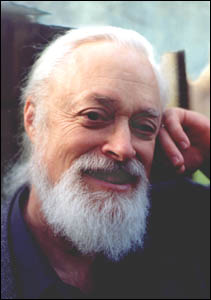
Tom Atlee
movement started by thought leader Tom Atlee, with the meme of “Change the Game,” may be able to mobilize enough voters to force congress to pass the act and the executive branch to enforce it.
Atlee heads an Oregon based outfit called the “Co-intelligence Institute”, which to date has not been co-opted the U.S. oligarchy. The Institute in essence is trying to create a collaborative movement among the voters that will be a force for change through the power of the collective intelligence of its participants. Among other things Atlee hopes that as the movement grows, natural leaders will come to fore who will use integrity and decency to turn the movement into a politically powerful force.
If Atlee can reach enough citizens through other means, such as GroupOn (originally a citizen democracy idea by founder Andrew Mason), the National Council on Dialog and Deliberation (NCDD); and what Steele calls the “eight tribes” of intelligence, he–Tom Atlee–may be offering us all a last chance at regaining true political freedom and restoring the Republic.
Robert Steele, a truly important and original thought leader himself, has somehow managed to retain his sanity and integrity in spite of living within spitting distance of the nation’s capital. He now is pleading for monetary and participatory support for Tom Atlee and his institute; I think this plea should be heeded.
Richard Wright
From the Heartland
12 December 2011
Phi Beta Iota: $25 is the norm, send more if you can, this is the one person in the USA who is absolutely without question working on behalf of We the People. Donation Link Here. Below is from the Co-Intelligence Institute donation page.
Why should I donate to the Co-Intelligence Institute rather than some other charity or cause?
We hope that you will donate to the Co-Intelligence Institute if you believe, as we do, that our work offers a very high potential for positive change.
We believe that our current social systems — especially our political and governance systems — are dangerously unresponsive to positive change, and even actively block the very changes we need to survive and thrive in the 21st century.
No matter what other issues concern you (and there are a huge number that concern us), we suggest that the existing system will not handle them well. The Co-Intelligence Institute is currently focusing on changing the political system so that it will handle every other issue wisely — and inspiring a movement of conscious evolutionary agents to catalyze cultural shifts, systemic evolution, and technological development into more co-intelligent forms.
To the extent we succeed at that, we'll get the world we all want, because we'll be able to freely and wisely co-create it, using these more responsive and wise democratic systems. We invite you to consider the logic of this and — if you agree — support our work.
If you believe, as we do, that our work offers a very high potential for positive change, we hope that you will donate to the Co-Intelligence Institute.
What if the greatest scam ever perpetrated was blatantly exposed, and the US media didn’t cover it? Does that mean the scam could keep going? That’s what we are about to find out.
. . . . . . .
The Fed doled out $12.3 trillion in near-zero interest loans, using the American people as collateral, demanding nothing in return, other than a bunch of toxic assets in some cases. They only gave this money to a select group of insiders, at a time when very few had any money because all these same insiders and speculators crashed the system.Do you get that? The very people most responsible for crashing the system, were then rewarded with trillions of our dollars. This gave that select group of insiders unlimited power to seize control of assets and have unprecedented leverage over almost everything within their economies – crony capitalism on steroids.