01 Do the American people deserve to know the truth regarding the on-going war in Iraq, Afghanistan, Pakistan, and Yemen?
02 Could a larger questions be how can an Army private gain access to so much secret information?
03 Why is the hostility mostly directed at Assange the publisher and not our government's failure to protect classified information?
04 Are we getting our money's worth from the $80 billion dollars per year we are spending on intelligence gathering?
05 Which has resulted in the greatest number of deaths? Lying us into war, or WikiLeaks revelations or the release of the Pentagon Papers?
06 If Assange can be convicted of a crime for information that he did not steal, what does this say about the future of the First Amendment and the independence of the Internet?
07 Could it be that the real reason for the near universal attacks on Wikileaks is more about secretly maintaining a seriously flawed foreign policy of empire than it is about national security?
08 Is there not a huge difference between releasing secret information to help the enemy in a time of declared war, which is treason, and the releasing of information to expose our government lies that promote secret wars, death, and corruption?
09 Was it not once considered patriotic to stand up to our government when it is wrong?
Around 60 countries worldwide are viewed as “systemically corrupt,” and with globalization multiplying the avenues by which corrupt practices cross borders and span the globe, experts are debating the nature of corruption and how to stop it.
By Robert Coalson for Radio Free Europe/Radio Liberty (RFE/RL)
ISN ETH Zurich 10 December 2010
EXTRACT: Systemic corruption cuts across key state institutions, runs from the top to the bottom, and is fundamentally political in nature. University of Colorado political scientist Christoph Stefes, who studies corruption in post-Soviet countries, says systemic corruption is qualitatively different from traditional notions of case-by-case malfeasance.
It is becoming increasingly clear that the United States passed through some kind of fork in the economic road in the aftermath of the Vietnam War and has now landed on onto an evolutionary pathway toward some kind of decline. The questions of what interplay of chance and necessity created the turning movement in the pathway of socio-economic evolution, how enduring that new pathway is, or where it is leading no one can answer; but with the advantage of hindsight, it is becoming empirically clear that most of the adverse economic trends of de-industrialization, deregulation, increasing debt, a collapsing trade balance, the stagnation of real wages, rising income inequality, etc., took a systemic turn for the worse during the five years between 1977 and 1982.
Attached are two reports (in pdf format) on one aspect of anatomy of decline: rising income inequality. They build on the seminal research (which can be downloaded here and here) of Professors Emanuel Saez's (Univ. of Calif. Berkeley) and ThomasPiketty (Paris School of Economics), which quantified and analyzed the size, nature, and effects of rising income inequality in the United States.
The first report has been prepared by the democratic majority staff of the Joint Economic Committee in Congress and therefore may be discounted by some as partisan — to those readers inclined to dismiss this report, I suggest that they compare its results of the Saez-Piketty analyses before jumping to any conclusions.
The second report is a non partisan analysis produced by Frank Levy and Peter Temlin of Industrial Performance Center of MIT.
If you're reading this, it's probably because literature matters to you, because you agree with the Peruvian writer Mario Vargas Llosa that literature is “one of the common denominators of human experience through which human beings may recognize themselves and converse with each other, no matter how different their professions, their life plans, their geographical and cultural locations, their personal circumstances.”
Yet here in the United States, we seem to be conversing mostly with ourselves. Even among those of us who love to read, we are largely cut off from the great dialogue that connects so much of the world (and missing some damn good books) due to the fact that less than three percent of what's published in this country is translated from other languages.
Three percent is low: in France and Spain, for example, both of which produce prodigious amounts of their own literature, more than half the new books published in a given year are translated from other languages. And even among the small number of foreign-language books that do make it into English in this country, about 300 to 400 titles in an average year, how many do you hear about?
If your main source for book news is mainstream media, the answer is: not many. Nine of the ten books on The New York Times's “Best Books of 2009” list were written by Americans (the tenth was by a Brit), as were nearly all the titles on their year-end list of 100 notable books. And very few of the books reviewed in any major American newspaper come from beyond our borders.
Phi Beta Iota: The author makes an very important point. Read the entire post to see his thoughtfully selected examples of books Americans should be but are not reading.
Ex-Intelligence Officers, Others See Plusses in WikiLeaks Disclosures
WASHINGTON – December 7 – The following statement was released today, signed by Daniel Ellsberg, Frank Grevil, Katharine Gun, David MacMichael, Ray McGovern, Craig Murray, Coleen Rowley and Larry Wilkerson; all are associated with Sam Adams Associates for Integrity in Intelligence.
WikiLeaks has teased the genie of transparency out of a very opaque bottle, and powerful forces in America, who thrive on secrecy, are trying desperately to stuff the genie back in. The people listed below this release would be pleased to shed light on these exciting new developments.
How far down the U.S. has slid can be seen, ironically enough, in a recent commentary in Pravda (that's right, Russia's Pravda): “What WikiLeaks has done is make people understand why so many Americans are politically apathetic … After all, the evils committed by those in power can be suffocating, and the sense of powerlessness that erupts can be paralyzing, especially when … government evildoers almost always get away with their crimes. …”
So shame on Barack Obama, Eric Holder, and all those who spew platitudes about integrity, justice and accountability while allowing war criminals and torturers to walk freely upon the earth. … the American people should be outraged that their government has transformed a nation with a reputation for freedom, justice, tolerance and respect for human rights into a backwater that revels in its criminality, cover-ups, injustices and hypocrisies.
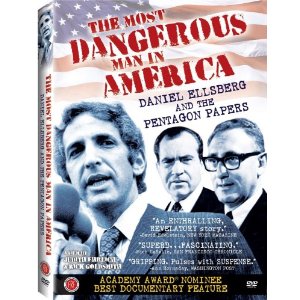
I completely missed the release of this film in July, and stumbled on it while picking movies for a sick son.
It opens with Henry Kissinger, since demonstrated to be a war criminal, calling Daniel Elsberg the most dangerous man in America, and lamenting the release of secret documents (that ultimately proved government perfidy). Fast forward to WikiLeaks as a sequel to the 935 documented lies led by Dick Cheney.
In short, the horror story collapses as soon as anyone gives it any serious thought. The Wall Street gang can hardly be faulted for trying cheap scare tactics for pushing its agenda; after all it worked so brilliantly with the TARP two years ago. At the time the plot line was that unless we immediately gave all our money to the Wall Street banks, with no questions asked, then the whole economy would collapse.
Joseph Stiglitz outlines a very sensible approach for placing the United States on a pathway toward correcting the problems paralyzing our political economy. Of course, his ideas will never be seriously considered by the let-them-eat-cake oligarchs now running Versailles on the Potomac, because to put this plan into action, someone must smash the Hall of Mirrors that is distorting what passes for reality in our collective OODA Loops. CS<
A five-part plan to cut the deficit, narrow inequality, and strengthen the economy—and why special interests would block it.
By Joseph E. Stiglitz, Slate, Monday, Dec. 6, 2010
Technically, reducing a deficit is a straightforward matter: One must either cut expenditures or raise taxes. It is already clear, however, that the deficit-reduction agenda, at least in the United States, goes further: It is an attempt to weaken social protections, reduce the progressivity of the tax system, and shrink the role and size of government— all while leaving established interests, like the military-industrial complex, as little-affected as possible.
Precis: history includes massive increase in defense expenditures, growth in inequality, underinvestment in public sector including infrastructure, and growth in corporate welfare. Remediation demands increased spending on high-return public investments, cut in military expenditures “not just funding for the fruitless wars, but also for the weapons that don't work against enemies that don't exist;” eliminate corporate welfare; create a fairer and more efficient tax system; 5% increase in taxes actually paod (focus on top 1%).
Joseph E. Stiglitz, a Nobel laureate in economics, is University Professor at Columbia University. The paperback version of his latest book, Freefall: Free Markets and the Sinking of the Global Economy,with a new afterword, was published in October.
Phi Beta Iota: The Deficit Commission has not produced any supporting documentation. The public intelligence available, of which the above is a small sample, is overwhelming in suggesting that the deficit commission is a criminal fraud being perpetuated on the American public. Wall Street and the two-party tyranny appear to believe that the public is both stupid and permanently inert, and that they can get away with this. Time will tell. We condemn it–and note that Joseph Stiglitz was appointed Director of the Office of Management and Budget (OMB) in the Virtual Cabinet at Huffington Post. We trust him.





 Stunningly Relevant Today and Always