Phi Beta Iota: Dr. Walter Dorn is one of a tiny handful of truly authoritative academic observers of UN intelligence, a pioneer in his own right, and perhaps the only person who has followed UN intelligence from the Congo in the 1960's to the creation of new capabilities in Haiti and elsewhere in the 21st Century. He is the dean of UN intelligence authors. See also Who’s Who in Peace Intelligence: Walter Dorn.
Phi Beta Iota: This is a seriously misleading article, our comments are provided after each paragraph.
The legislation authorizing post-Sept. 11 intelligence reform — the Intelligence Reform and Terrorism Prevention Act of 2004 — was signed into law five years ago this week. We are often asked whether the new organizations, authorities and additional resources have made a difference. The answer is yes.
Phi Beta Iota: In combination with the Patriot Act, which was not read before passage, the legislation has perpetuated all of the bad practices of the past and poured gasoline on the fire by giving incompetent intelligence managers more money.America is less safe today because of the combination of $75 billion a year wasted on a system that still does not process more than 10% of what it collects, still cannot do machine speed multi-lingual exploitation, and still cannot do multinational human engagement and multi-lingual open source.
To be clear, the task of reinventing our intelligence structure and integrating the capabilities, cultures and information technologies of 16 diverse intelligence agencies is massive, and it is incomplete. Problems persist in our technologies, business practices and mind-sets. I have no illusions about how challenging they will be to overcome. But there is an ocean of difference between difficult and impossible.
Phi Beta Iota: Every single criticism in ON INTELLIGENCE: Spies and Secrecy in an Open World (AFCEA, 2000) remains valid today. NOTHING HAS CHANGED in the way of fundamentals. The clandestine service is still full of cowboys under official cover; there still is no processing; the CIA analysts are babies and the DIA analysts are brain dead; technical sources are too big, too late, and too expensive; the list is long. Analysts still spend a quarter of their time trying to access the disparate classified databases at the same time that the Open Source Center remains a national disgrace, unable to do multinational engagement and totally out of touch with the 80% of the information we need that is free, open, and in 183 languages we do not speak.Note: Blair has a set of Steele's book in his possession, he obviously has not read them or this article of his would be completely different.He has no power, no authority, no vision, and with the possible exception of Andy Shepard, no one with a proven track record of knowing what is actually needed–Shepard knew in 1992 and has had to wait 17 years to be heard.
I doubt it, but hope springs eternal could this be a significant development? To date, Simon Johnson has been a very astute observer of the financial meltdown and has been crusading for breaking up the mega banks …
For most the past 12 months, Paul Volcker was sitting on the policy sidelines. He had impressive sounding job titles – member of President Obama’s Transition Economic Advisory Board immediately after last November’s election, and quickly named to head the new Economic Recovery Board.
But the Recovery Board, and Volcker himself, have seldom met with the President. Economic and financial sector policy, by all accounts, has been made largely by Tim Geithner at Treasury and Larry Summers at the White House, with help from Peter Orszag at the Office of Management and Budget, and Christina Romer at the Council of Economic Advisers.
With characteristic wry humor, Volcker denied in late October that he had lost clout within the administration: “I did not have influence to start with.”
But that same front page interview in the New York Times [10/21/09] contained a well placed shock to then prevailing policy consensus.
Volcker, legendary former chairman of the Federal Reserve Board with much more experience of Wall Street than any current policymaker, was blunt: We need to break up our biggest banks and return to the basic split of activities that existed under the Glass-Steagall Act of 1933 – a highly regulated (and somewhat boring) set of banks to run the payments system, and a completely separate set of financial entities to help firms raise capital (and to trade securities).
Contrary to popular belief, the US actually has 189,000 personnel on the ground in Afghanistan right now—and that number is quickly rising.
by Jeremy Scahill
A hearing in Sen. Claire McCaskill's Contract Oversight subcommittee on contracting in Afghanistan has highlighted some important statistics that provide a window into the extent to which the Obama administration has picked up the Bush-era war privatization baton and sprinted with it. Overall, contractors now comprise a whopping 69% of the Department of Defense's total workforce, “the highest ratio of contractors to military personnel in US history.” That's not in one war zone-that's the Pentagon in its entirety.
In Afghanistan, the Obama administration blows the Bush administration out of the privatized water. According to a memo [PDF] released by McCaskill's staff, “From June 2009 to September 2009, there was a 40% increase in Defense Department contractors in Afghanistan. During the same period, the number of armed private security contractors working for the Defense Department in Afghanistan doubled, increasing from approximately 5,000 to more than 10,000.”
At present, there are 104,000 Department of Defense contractors in Afghanistan. According to a report this week from the Congressional Research Service, as a result of the coming surge of 30,000 troops in Afghanistan, there may be up to 56,000 additional contractors deployed. But here is another group of contractors that often goes unmentioned: 3,600 State Department contractors and 14,000 USAID contractors. That means that the current total US force in Afghanistan is approximately 189,000 personnel (68,000 US troops and 121,000 contractors). And remember, that's right now. And that, according to McCaskill, is a conservative estimate. A year from now, we will likely see more than 220,000 US-funded personnel on the ground in Afghanistan.
“The Crusader would have been quite justified in suspecting the Muslim even if the Muslim had merely been a new stranger; but as a matter of history he was already an old enemy. The critic of the Crusade talks as if it had sought out some inoffensive tribe or temple in the interior of Tibet, which was never discovered until it was invaded. They seem entirely to forget that long before the Crusaders had dreamed of riding to Jerusalem, the Muslims had almost ridden into Paris.”—G.K Chesterton (1874-1936)
“O you who believe! do not take the Jews and the Christians for friends; they are friends of each other; and whoever amongst you takes them for a friend, then surely he is one of them; surely Allah does not guide the unjust people.” —Qur’an (5:51)
“No one can be a true Muslim and a true American simultaneously.”—Wafa Sultan (From “A God Who Hates”)
Are you familiar with the word “dhimmi?” You should be; it means an infidel (non-Muslim) living under the heel of an Islamic theocracy. The plural is “dimam,” and Europe has increasingly become a Balkanized checkerboard of nationalistic strongholds, and Islamic dimam regions.
The servitude of the dimam will be America’s fate as well, unless “we the people” wake up to Islam’s threat to our freedom. That’s not hyperbole people—just check out what has happened, and is happening, in Europe—Nazi Eurabia. America’s next.
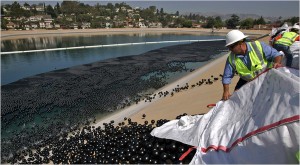
The 35-year-old federal law regulating tap water is so out of date that the water Americans drink can pose what scientists say are serious health risks — and still be legal.
Only 91 contaminants are regulated by the Safe Drinking Water Act, yet more than 60,000 chemicals are used within the United States, according to Environmental Protection Agency estimates. Government and independent scientists have scrutinized thousands of those chemicals in recent decades, and identified hundreds associated with a risk of cancer and other diseases at small concentrations in drinking water, according to an analysis of government records by The New York Times.