Pressure is mounting for the US to become involved in the Syrian civil war. Advocates of intervention have all sorts of motives. Once of the most attractive talking points from the perspective of the interventionists is the Syria's alleged use of chemical weapons on its own people. This short and well focused essay addresses that allegation …. The author is one one of the most seasoned reporters now covering the Middle East.
‘I am not afraid of anything except for God and poison gas,” said an Iraqi officer who had fought in the Iran-Iraq war. “It’s like a ghost. You have no defence against it.” Though not a target of poison gas as a member of the army using it, he knew what it did to its victims.
Poison gas is a terrifying weapon. People are still dying in Iran from the effects of ingesting it a quarter of a century ago. It is one of the few weapons to be banned with partial success between its first use on a mass scale in the First World War and again by Saddam Hussein with even greater intensity against Iranians and Kurds in the 1980s.
It is right, therefore, that the alleged attack by the Syrian armed forces using chemical weapons against Saraqeb, a rebel-held town south-west of Aleppo on 29 April, should be carefully investigated. Doctors told the BBC’s Ian Pannell that after an artillery bombardment they treated eight people with breathing problems, some of whom were vomiting and others who had constricted pupils.
The popular perception of Hezbollah as simply an Islamic terrorist organization has been colored by American-Israeli propaganda (particularly wrt to relations with Iran and Syria), sloppy reporting, and a growing sense of Islamophobia in American culture.
Rami Khouri is a prolific Lebanese intellectual who writes widely on the Middle East. His austere, direct form of writing lays out arguments clearly and concisely. Like all writers of Middle Eastern affairs, his predictions are often wrong, but unlike most, his fault lines, when they occur, are easily traced. In short, Khouri is always a good read and well worth following, because even if his arguments turn out to be erroneous, they are a fount of useful information.
Attached below is his fascinating take on Hezbollah. I reformatted it to highlight his points but have not changed a word or the order of his words. Some readers find my highlighting distracting, others like it; if you are one of the former, the link below will take you to the original.
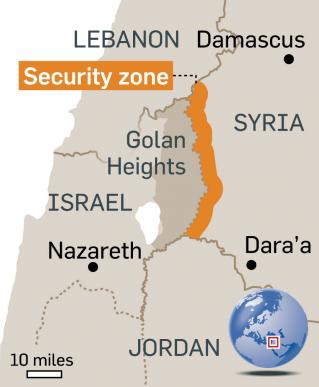
BEIRUT — The most fascinating aspect of the war in Syria this month — and perhaps also the most significant in terms of long-term regional geo-politics — is the direct involvement of Hezbollah, the powerful Lebanese Shiite party and resistance group that is closely allied to Iran and Syria. The significance of Hezbollah’s participation in the battle for the Syrian town of Qusayr comprises several distinct elements:
(Reuters) – The H7N9 virus appears to have been brought under control in China largely due to restrictions at bird markets, but caused some $6.5 billion in losses to the economy, U.N. experts said on Tuesday.
Health authorities worldwide must be on the lookout to detect the virus, the experts said, which could still develop the ability to spread easily among humans and cause a deadly influenza pandemic.
The new bird flu virus is known to have infected 130 people in mainland China since emerging in March, including 36 who died, but no cases have been detected since early May, Health Minister Li Bin told a meeting of the World Health Organization. One case was found in Taiwan in April, making a total of 131.
“The immediate outbreak has been controlled, but it is also unlikely that virus has simply disappeared. We believe we need go another autumn/winter/spring season to know,” said Keiji Fukuda, WHO assistant director-general for health security.
Invasive fire ants have been a thorn in the sides of Southerners for years. But another invasive species, the so-called “crazy” ant that many describe as being worse has arrived and is displacing fire ants in several places.
“When you talk to folks who live in the invaded areas, they tell you they want their fire ants back,” said Edward LeBrun, a researcher at the University of Texas at Austin, in a statement from the school. “Fire ants are in many ways very polite. They live in your yard. They form mounds and stay there, and they only interact with you if you step on their mound.”
Click on Image to Enlarge
Crazy ants, on the other hand, “go everywhere,” invading homes and nesting in walls and crawlspaces, even damaging electrical equipment by swarming inside appliances. [Image Gallery: Ants of the World]
A study published in the April issue of the journal Biological Invasions found that in areas infested with crazy ants, few to no fire ants were present. Exactly how they are able to outcompete fire ants is so far unknown. In areas with crazy ants, the researchers also found greatly diminished numbers of native ant species, according to the study.
From Marketplace Tech comes an interesting article on Google Glass and the projections into the future in regards to similar projects. The article, “Google’s Ray Kurzweil on the Computers that will Live in our Brains,” discusses how everything Google puts its hands on is changing how we search, retrieve and interact with information. As in nearly all articles these days discussing Google Glass Ray Kurzweil, the director of engineering at Google, leads the conversation.
Kurzweil posits that we will eventually move beyond devices that simply allow us to look at the world through a keyhole. Instead, he forecasts that people will be online all the time. He projects that devices post-Glass will ultimately be the size of blood cells able to be sent inside the brain and connect to the cloud around the mid-2030’s.
The article tells us more:
“In Kurzweil’s vision, these advances don’t simply bring computers closer to our biological systems. Machines become more like us. ‘Your personality, your skills are contained in information in your neocortex, and it is information,’ Kurzweil says. ‘These technologies will be a million times more powerful in 20 years and we will be able to manipulate the information inside your brain.’ As that data locked up inside our brain becomes searchable, inimitable human qualities suddenly become easier to emulate. Kurzweil denies that the searching and backup up of the brain itself is a bloodless pursuit, depleted of human emotion.”
Artificial intelligence and the melding of biology and machine is increasingly discussed in the media in reference to Google Glass. Will Glass evolve to Google impants? The bigger question is touched upon in this particular article: is it altruistic intentions or advertising that is driving this kind of technology?
The attack on science by the Theocratic Right and the corporate interests destroying the earth have done great damage, but finally science is pushing back. We'll see.


 back,” said Edward LeBrun, a researcher at the University of Texas at Austin, in a statement from the school. “Fire ants are in many ways very polite. They live in your yard. They form mounds and stay there, and they only interact with you if you step on their mound.”