Nature Tries to Imagine a World Without Mosquitoes/Malaria

02 Infectious Disease, 07 Health, True Cost

Published online 21 July 2010 | Nature 466, 432-434 (2010)

Ecology: A world without mosquitoes

Eradicating any organism would have serious consequences for ecosystems — wouldn't it? Not when it comes to mosquitoes, finds Janet Fang.

(download pdf version)
Every day, Jittawadee Murphy unlocks a hot, padlocked room at the Walter Reed Army Institute of Research in Silver Spring, Maryland, to a swarm of malaria-carrying mosquitoes (Anopheles stephensi). She gives millions of larvae a diet of ground-up fish food, and offers the gravid females blood to suck from the bellies of unconscious mice — they drain 24 of the rodents a month. Murphy has been studying mosquitoes for 20 years, working on ways to limit the spread of the parasites they carry. Still, she says, she would rather they were wiped off the Earth.

That sentiment is widely shared. Malaria infects some 247 million people worldwide each year, and kills nearly one million. Mosquitoes cause a huge further medical and financial burden by spreading yellow fever, dengue fever, Japanese encephalitis, Rift Valley fever, Chikungunya virus and West Nile virus. Then there's the pest factor: they form swarms thick enough to asphyxiate caribou in Alaska and now, as their numbers reach a seasonal peak, their proboscises are plunged into human flesh across the Northern Hemisphere.

So what would happen if there were none? Would anyone or anything miss them? Nature put this question to scientists who explore aspects of mosquito biology and ecology, and unearthed some surprising answers.

Continue reading “Nature Tries to Imagine a World Without Mosquitoes/Malaria”

Reference: Robert Steele at Huffington Post

About the Idea, Collective Intelligence, Earth Intelligence, Ethics, Government, InfoOps (IO), Intelligence (government), IO Multinational, IO Sense-Making, Key Players, Methods & Process, Open Government, Policies, Reform, Threats, Worth A Look

Robert David Steele

Robert David Steele

Recovering spy, serial pioneer for open and public intelligence

Posted: September 28, 2010 10:25 AM

It's Official — Steele Won Virtual Presidency

I held a bi-partisan vote today, with me representing the Democratic Party while I represented the Republican Party. Strict ballot access controls ensured a unanimous outcome — the new Virtual President of the United States of America is Robert David Steele, or for Latinos, Roberto David de Steele y Vivas.

Over the next 45 days, on Tuesdays and Thursdays I will announce one critical policy decision, always in the context of a balanced budget and always with the public interest in mind — this is not going to be pretty, but 45 days from today, every American will be able to compare my virtual track record with the actual track record of those seeking re-election, or in the case of a tiny handful that overcame enormous obstacles, those seeking election for the first time.

Read more…

Thursday: Virtual Sunshine Cabinet Named

Phi Beta Iota: Steele's posts will be buried among 5,999 other bloggers posting twice weekly.  The search bar at Huffington Post works well.  You can also, if you wish, click on the fan logo at this first point, to automatically receive an email alert with the exact URL for each additional post as it appears.

Reference: Clinton Global Initiative Webcast Archives

01 Agriculture, 01 Poverty, 02 Infectious Disease, 03 Economy, 03 Environmental Degradation, 04 Education, 05 Energy, 07 Health, Civil Society, Commerce, Government, International Aid, Movies, Non-Governmental, Policy, Technologies
Permanent Archives

Enhancing Access to Modern Technology

Clean Technology and Smart Energy: Deploying the Green Economy

Democracy and Voice: Technology For Citizen Empowerment and Human Rights

Mobile Revolution: Transforming Access, Markets, and Development

Engineering4Change

01 Agriculture, 01 Poverty, 02 Infectious Disease, 03 Economy, 05 Energy, 07 Health, 12 Water, Gift Intelligence, International Aid, Peace Intelligence, Technologies
website link

Engineering for Change is an online environment bringing together engineers and other problem solvers with NGOs and local communities to address basic quality of life issues such as access to clean water, electricity and proper sanitation. Also see their Twitter feed

Related:
+ Engineers Without Borders
+ Architecture4Humanity
+ Open Architecture Network
+ Entrepreneurial Design for Extreme Affordability
+ D-Lab @ MIT
+ Wisdom from Paul Polak on How to Design for the Market

Video on “Technological Disobedience,” Inventing to Survive and Liberate

01 Poverty, Civil Society, Commerce, Technologies, Videos/Movies/Documentaries

The Technological Disobedience of Ernesto Oroza: In Isolated Cuba, Inventing to Survive

In 1991, Cuba’s economy began to implode. “The Special Period in the Time of Peace” was the government’s euphemism for what was a culmination of 30 years worth of isolation. It began in the 60s, with engineers leaving Cuba for the Unites States, and continues in part today, under the longest trade embargo in modern history.

When Ernesto Oroza, a Cuban-American designer and artist, began studying the technological innovations that have been made during this period, he uncovered a trove of homespun, Frankenstein-like machines that ordinary citizens made for their survival, out of day to day objects. In this episode of Motherboard, we visit Ernesto in Miami to talk about his work and the amazing creations of Cuba’s enterprising DIY inventors.

In the 1970s, a group of scientists and mechanics inspired by Che Guevara formed the National Association of Innovators and Rationalizers (ANIR) as a way of organizing and strengthening this homebrew culture, uniting the ethos of the hacker with the needs of an isolated economy and the call of a socialist revolution. Oroza showed us his meticulous collection of these machines, which he has contextualized as art pieces in a movement he calls “Technological Disobedience.”

Journal: UN–A Study in Contradictions

01 Poverty, 02 Infectious Disease, 03 Environmental Degradation, Government, Non-Governmental
Full Story Online

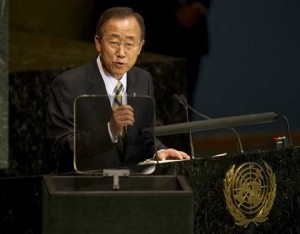
UN Summit Aims to Reduce Poverty, Hunger and Disease

U.N. members resolved a decade ago to reduce extreme poverty, ensure every child finishes primary school and stop the HIV/AIDS pandemic.  They also vowed to reduce child mortality, improve maternal health and reduce the number of people worldwide who do not have access to clean water and basic sanitation.

But a U.N. report earlier this year said several of the Millennium Development Goals are lagging and could fail without additional efforts.

Phi Beta Iota: The UN is an Industrial-Era government-centric organization, and is not making–or even recognizing the need to make–any adjustment to the Information-Era.  In the absence of public intelligence that enables all publics to see the fraud, waste, and abuse in their respective government's spending, and the relative return on investment of spending to achieve the Millenium Goals, the UN is severely handicapped and unlikely to be successful, especially in the midst of a global economic depression.

Journal: NYPD CTD Under Dave Cohen Lauded for Brains

09 Terrorism, Analysis, Law Enforcement, Methods & Process, Officers Call, Peace Intelligence
Full Story Online

The Terror Translators

By ALAN FEUER

The New York Times, Published: September 17, 2010

EXTRACT:

Mr. Rascoff said the working relationship between the civilian and sworn counterterrorism officials in New York was better than the parallel relationships in the Federal Bureau of Investigation because federal agents, unlike the local detectives, were often as highly educated as the analysts they work with.

“F.B.I. agents sometimes look at their analysts and say, ‘So, basically, we do the same job, but I carry a gun and kick down doors while you sit at your desk all day,’ ” said Mr. Rascoff, who has been working in intelligence since 2003, when he was a consultant to L. Paul Bremer, the special envoy to Iraq.

In the C.I.A., Mr. Rascoff added, the relationship between operatives and analysts is often the chilly one between “an author of cables and a reader of cables.”

In the Police Department, he said, there is an “educational, experiential but not intellectual” gulf that can, paradoxically, bring the sides together.

“While it’s sometimes hard to harness those conflicting energies,” Mr. Rascoff said, “when it succeeds, it succeeds wildly.”

READ EVERY WORD!

Tip of the Hat to Niels Groeneveld at LinkedIn.

noble gold