Strategic Context for Understanding 11 Sep Attack on America,
September 15, 2001
Robert S. McNamara
Of all the books I have read or reviewed in the past two years, this is the only one that comes close to addressing the bitter truth about the fundamental disconnect between our perception of ourselves as “the beacon of truth”, and the rest of the world's perception of us as “interventionist, exploitative, unilateralist, hegemonic, and hypocritical.” Those that would seek to understand just how long our Dark Ages will last would do well to start with this book while also buying a copy of the map of “World Conflict and Human Rights Map 2000” available from the PIOOM Project at Leiden University. Beyond that, selected portions of the Shultz et al book on “Security Studies for the 21st Century”, where detailed comments are made about both knowledge gaps among our policymakers and non-traditional threats, are recommended.
There is no question but that the Attack on America of 11 September 2001 has awakened and even frightened the American public. It has elicited conventional assurances from other nation states. What most Americans do not understand, what this book makes brilliantly clear, is that two thirds of the rest of the world is glad it happened. I quote from page 52: “…at least two-thirds of the world's people–Chinese, Russians, Indians, Arabs, Muslims, and Africans–see the United States as the single greatest threat to their societies. They do not regard America as a military threat but as a menace to their integrity, autonomy, prosperity and freedom of action.”
Whether one agrees with their depiction of two-thirds or not (or whether they see the Attack as a well-deserved bloody nose or an atrocity beyond the pale), the fact is that the authors paint–together with the PIOOM map–a compelling picture of billions–not millions but billions–of impoverished dispossessed people suffering from failed states, crime, slavery, starvation, water shortages–and an abundance of media as well as propaganda showing the US fat and happy and living the consumer society dream on the backs of these billions.
Of all the policy people I have followed over the years, Robert McNamara and Bill Colby are the two that have in my view matured and broadened the most after leaving the halls of power. The deep insights that I find throughout this book-a partnership expert between McNamara with the global reality and power game insights, James Blight with the scholarly underpinnings-are extraordinarily applicable to the challenges that we face in the aftermath of the 11 September 2001 Attack on America. In particular, their dissection of the United Nations-what works and what does not-and their recommendations for future initiatives that are multilateralist and focused on the prevention and amelioration of the root conditions that are spawning our terrorist challenges, are vital reading for policymakers, diplomats, warriors, and financial magnates.
I am very concerned by any effort to militarize our response to the terrorist challenge-this is a long war that requires a fundamental restructuring of national intelligence and counterintelligence; a $100 billion a year effort to address the root causes of instability worldwide and a redirection of US foreign and defense policy away from unilateralism (for instance, we must now support the International Tribunal and an international island prison for those convicted of war crimes as well as acts of terror). Our military is still needed, but it too must be restructured to provide for four major capabilities all equally capable: CINCWAR, CINCSOLIC, CINCPEACE, and CINCHOME. I can only hope that this book, which I recommend highly, is read and understood before we start to throw money at the problem in counterproductive ways.
I remember being shocked when a book published by a former prisoner of war revealed all of the CIA's sources and methods for secret writing–one reason terrorists and others make photo-copies of incoming and outgoing correspondence these days….
This book provides an excellent overview of sensitive sources and methods used by the U.S. military to intercept and locate electronic transmissions. It specifically “blows” a cover company, two specific kinds of aircraft, and several U.S. Special Operations Forces standard operating procedures. I suspect that NSA and the CIA Centers dealing with terrorism and with crime and narcotics are having the same difficulties recovering from this book that NSA had when President Reagan inadvertently revealed in public that he was receiving transcripts of Politburo cell phone conversations made while in transit, from their car phones.
Having said that, I find that the author has performed very responsibly as an investigative journalist, and that his story is superior in every respect. I even find that he has withheld some key information out of respect for his sources,and that there are many lessons to be learned from this book about how we might improve our transnational campaign against non-state forces that have vastly more money, ruthlessness, and sheer people power than we do.
I like and recommend this book–it is a real-world story, well-researched and well-told.
Live and Let Die Group Dynamics, Bacteria Are Winning
July 13, 2001
Very very few books actually need to be read word for word, beginning with the bibliography and ending with the footnotes. This is one of those books. While there are some giant leaps of faith and unexplained challenges to the author's central premises (e.g. after an entire chapter on why Athenian diversity was superior to Spartan selection, the catastophic loss of Athens to Sparta in 404 BC receives one sentence), this is a deep book whose detail requires careful absorbtion.
I like this book and recommend it to everyone concerned with day to day thinking and information operations. I like it because it off-sets the current fascination with the world-wide web and electronic connectivity, and provides a historical and biologically based foundation for thinking about what Kevin Kelly and Stuart Brand set forth in the 1970's through the 1990's: the rise of neo-biological civilization and the concepts of co-evolution.
There are a number of vital observations that are relevant to how we organize ourselves and how we treat diversity. Among these:
5.0 out of 5 stars Solving Major Problems Early for 1/50th of the Cost
July 4, 2001
I first heard Kris Wheaton lecture in Europe, and was just blown away by the deep understanding that he demonstrated of why commanders and CEOs are constantly missing the warnings their subordinates and forward scouts are sending back–the huge cost! Kosovo, for example, could have been a $1 billion a year problem if acted upon wisely and early, instead it became a $5 billion a year problem. I like this book very much because it makes his deep insights available to everybody in a very readable, well-illustrated, and concise book.
I strongly recommend this book because it offers the only thoughtful explanation I have ever seen on the conflict between the senior decision-maker's attention span (can only think about $50 billion problems) and the early warning that *is* available but cannot break through to the always over-burdened, sometimes arrogant, and rarely strategic top boss. In this regard, his book is a fine complement to the more historical work by Willard Matthias on “America's Strategic Blunders.”
This book also offers solutions. It is a book that should be required reading for all field grade officers in all military services, as well as state and local governors and majors, university and hospital and other non-profit heads, and of course the captains of industry who spend billions, often unwisely, because they have not established a scouting system that can be heard at the highest levels *in time*. America, among many other nations and organizations, has a habit of ignoring its iconoclasts and mavericks–in an increasingly complex world where catastrophic combinations of failure are going to be more common, such ignorance will eventually become unaffordable and threatening to the national security as well as the national prosperity of those who persist in thinking about old problems in old ways.
There is one other aspect of this book that merits strong emphasis: it focuses on human understanding and human engagement with the world, and makes it clear that technology has almost nothing to do with how well we cope with the external environment that defines our future. There aren't five people in the US government, to take one example, that adequately understand the rich intellectual history of Islam nor the core difference between the Islamic emphasis on knowledge integration as the core value and the Christian emphasis on love as the core value. The author of this book is one of America's foremost authorities on the Balkan conflict and the deep importance of historical and cultural understanding as part of current political and operational competency–we need 1000 more intelligence professionals just like him. This book will inspire and provoke and is a great value for anyone who deals with the world at large.
Subtle–Not for the Impatient–and Useful to Revolutionaries,
June 1, 2001
Malcolm Gladwell
For those aspiring to revolutionary change in any aspect of life (e.g. the Cultural Creatives), this book is a subtle revolutionary manifesto–at a more mundane level it is a sales guide. I like this book because as we all deal with the information explosion, it provides some important clues regarding what messages will “get through”, and what we need to do to increase the chances that our own important messages reach out to others.
This book is in some ways a modern version of Kuhn's “The Structure of Scientific Revolutions.” While more of a story than a thesis, there is a great deal here that tracks with some of the more advanced information theory dissertations, and the book could reasonably be subtitled “The Precipitants of Social Revolutions.”
The most subtle message in this book is that substance is not vital–perception is. The contagiousness of the idea, the life-altering potential of the smallest ideas, and the fact that revolutionary change is always cataclysmic rather than evolutionary, will frustrate those who think that years of intellectual exploration will be rewarded with acceptance.
However, despite the revolutionary nature of the final “tipping point”, there is actually a clear path taking up to 25 years, from the Innovators to the Early Adopters, to the Early Majority, to the Late Majority. My sense is that America today, with its 50 million Cultural Creatives, is about to cross over from the Early Adopters to the Early Majority stage, and will do so during the forthcoming Congressional elections when we see a rise in Independents and more attention to energy and other alternative sustainable lifestyle issues–hence, this book is relevant to anyone who either wants to promote a shift in America or elsewhere away from consumerism (or who wants to go on selling consumerism), or who wants to seriously revisit what many would call the failed strategies of the early environmentalist, human rights, and corporate accountability advocates.
The book ends on an irresistably upbeat note–change is posssible, people can radically transform their beliefs for the common good in the face of the right kind of impetus. Each of us has a role to play, whether as a Connector, a Maven, a Salesman, or a Buyer, and our role will not be defined in rational terms, but rather in social terms. In many ways, this book is about the restoration of community and the importance of relationships, and it is assuredly relevant to anyone who thinks about “the common good.”
Double Value: on Environmental *and* Information Strategy
June 2, 2001
Joe Thornton
This is the best of the several environmentally-oriented books I have reviewed recently, and it offers a double value: not only does it lay out a persuasive social, economic, and political case for abandoning the Risk Paradigm of permissive pollution in favor of an Environmental Paradigm of zero pollution; but it also provides a very fine–really excellent–case for why the current government and industry approaches to information about the environment and threats to the environment are severely flawed. In a nutshell, the current approach divorces “good science” (code for permitting what you can't prove will kill the planet today) from social consciousness and good policy; and the current approach insists on studying risk one contaminant at a time, rather than as a whole.
This book is persuasive; I believe author has the right stuff and should be consulted on major policy issues. I believe the underlying moral values and intellectual arguments that this book makes, about both science and social policy, should be adopted by the Cultural Creatives and the independent voters of America, and that the recommendations of this book are so serious as to warrant country by country translations and promulgation.
This book is exceptional in that is combines a readable policy essay for the non-technical citizen, with deeply documented technical appendices and notes that support a middle ground series of chapters relating scientific findings to long-term policy issues.
From many small actions come revolutionary change–this book is a necessary brick in the road to environmental reform. The bottom line is clear: every year more and more toxins are building up in our blood streams, and this is going to have an overwhelmingly negative impact on the humanity, capability, and survivability of our great grandchildren three generations down–we have not have grandchildren seven generations down if the insights from this book fail to reach the people, and through the people, the policy makers and legislators.
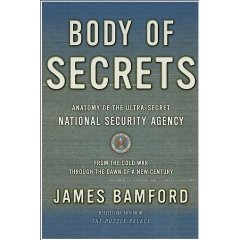
Deeply Researched Facts About the Secret Signals War,
May 12, 2001
James Bamford
I like this book because it is a deeply researched investigation of the National Security Agency, a part of the U.S. government that is always “in harms way”, and because it offers up over 15 genuine journalistic investigative “scoops”, shows how much can be learned about secret matters through persistent and professional exploitation of open sources, and paints a compelling dramatic picture of the honorable and courageous NSA employees, the less capable senior officers in the Joint Chiefs of Staff who risk their lives and do not provide them with emergency plans and air cover, and the man in the middle, LtGen Mike Hayden, whom the book portrays as a truly competent person who “gets it.” This is the stuff of history and a very well-told tale.
Among the “scoops” that I as a professional intelligence officer will list for the sake of showing how wide and deep the book goes, are:
#1. Extremely big scoop. Israel attacked U.S. military personnel aboard the USS Liberty with the intent of simulating an Egyptian attack on US forces that would permit a joint US and Israeli retaliation. Even after the ship was destroyed, with very clear evidence from NSA tapes that the Israeli's deliberately attacked a US ship while the ship was flying US colors, President Johnson is reported to have betrayed his military and his Nation by covering this up, intimidating all survivors, and saying he would “not embarrass our allies.” In consultation with my naval colleagues, I am satisfied that the author has it right.
#2. US SIGINT failed as North Korea invaded South Korea. Our lack of preparedness, in both systems and linguists, was dereliction of duty at the highest levels. Fast forward to Sudan, East Timor, Burundi, Yugoslavia, Somalia, and Haiti.
#3. US “Operations Security” (OPSEC) is terrible! Bad in World War II, bad in Korea, bad in Viet-Nam, bad in Somalia and bad today. This book is a stark and compelling indictment of the incompetence of U.S. military and political leaders who refuse to recognize that the rest of the world is smart enough to collect our signals and predict our intentions with sufficient effectiveness to neutralize our otherwise substantial power.
#4. Eisenhower, as President, controlled the U-2 operations over Russia and lied to the world and the people about his individual responsibility for those missions.
#5. US SIGINT failed in Arabia and against Israel. “The agency had few Arabic or Hebrew linguists and it was not equipped to eavesdrop on British, French, or Israeli military communications.” We are often unable to sort out the truth in conflicts between Arabs and Israel, and this allows Israel to deceive and manipulate American policy makers.
#6. In the early years of the Cold War, the US was the aggressor, and ran incredibly prevocational full bombing runs into northern Russia, simply to test for defenses and to see if it could be done. Young American military personnel were sent as expendable cannon fodder, with the ultimate result that Russia spent billions more on its defenses than it might have if America have been a “good neighbor.”
#7. The Joint Chiefs of Staff was “out of control” during our confrontations with Cuba, and proposed to the President of the United States that U.S. military capabilities be used to murder Americans in order to provide a false cover for declaring war on Cuba.
#8. The most senior military officers serving under Kennedy did not have the moral courage to tell him that the Bay of Pigs was a doomed operation. They allowed hundreds to die and be captured rather than “speak truth to power.” NSA provided ample SIGINT.
#9. Imagery intelligence beat signals intelligence in answering the ultimate question about the presence of Soviet missiles in Cuba. Those who practice “OPSEC” can defeat our SIGINT capabilities.
#10. US telecommunications companies have for years been giving NSA copies of all telegrams sent by foreign embassies and corporations, compromsing their private sector integrity.
#11. US military power is hollow. For both the USS Liberty and the USS Pueblo, a combination of screw-ups put military personnel in harms' way and a combination of incapacities helped get them killed and captured. In all of Korea only six U.S. aircraft were available to help protect the USS Pueblo, and they required several hours to get ready. The South Koreans, ready to launch defense forces instantly, were forbidden to do so, US leaders being more concerned about avoiding provocation of the North Koreans than about protecting U.S. military personnel.
#12. US successes against the Russians and other targets were completely offset by the combination of the John Walker betrayal (turning over the key lists, this has been known) and the Soviet receipt from the Vietnamese (this has not been known) of a complete warehouse of NSA code machines left behind in Saigon. The Soviets have been reading our mail since 1975, and NSA did not want the President or Congress or the people to know this fact.
#13. The North Vietnamese beat us on SIGINT, with 5000 trained SIGINT personnel and a system that stretched from Guam (where the B-52's were launched and the ground crew radios were in the clear) to the day-to-day operational orders going out to helicopters and fighters “in the clear”. The book paints an extraordinarily stark contrast between North Vietnamese competence and US incompetence across all areas of SIGINT and OPSEC.
#14. There are others, but the final scoop is summed up in the author's concluding chapter on NSA's race to build the largest fastest computer at a time when relevant signals are growing exponentially: “Eventually NSA may secretly achieve the ultimate in quickness, compatibility, and efficiency-a computer with petaflop and higher speeds shrunk into a container about a liter in size, and powered by only about ten watts of power: the human brain.”