Stephen E. Arnold: Plagarism Trackers

Advanced Cyber/IO
0Shares
Stephen E. Arnold
Stephen E. Arnold

Plagiarism Trackers


With the Internet it is easier than ever to plagiarize by either stealing or buying someone’s work. The Internet is a double edge sword, however, because there are tools available to people to check a work for veracity and originality. Unless you are a teacher or in some form of academia, you might not be aware of the Web sites that are plagiarism checkers. Through our own research, we have complied a list:


Dustball—A trusted checked since 2002.

Plagiarism Detect—Useful but has problems when Bing changes its API.

Small SEO Tools Plagiarism Checker—A simple free checker.

Plagiarisma—Available in different languages with other useful features and downloadable apps.

Copyscape—Has the unique feature, Copysentry to allow users to monitor plagiarism on the Web.

Plagium—Like many of the other checkers, but has a beta version to check social media.


There is an expression that says, “there are no original ideas anymore.” New ideas spring up all the time, but it takes a lot more work to create something new than it does to make something from scratch. Plagiarism does not benefit anyone, especially the stealer. Use the plagiarism tools to improve your work quality and come up with something new.


Whitney Grace, December 27, 2013


Sponsored by ArnoldIT.com, developer of Augmentext

Marcus Aurelius: Foreign Policy Think Again Piece on Drugs and Drug Routes

08 Wild Cards, 10 Security, 10 Transnational Crime, 11 Society
0Shares
Marcus Aurelius
Marcus Aurelius

I don't work in the intelligence community but, IMHO, the most important issue here is logistics.  Also IMHO, the fight among the drug cartels is a fight for control of the smuggling routes.  Further IMHO, the long-established nexus between DTOs and terrorists suggests that it would be naive to believe that terrorists or VEOs [Violent Extremist Organizations, a more politically correct term] are not already exploiting the drug smuggling routes to move human, physical, and fiscal assets into the United States.

fp logoThink Again: Mexican Drug Cartels

They aren't just about Mexico or drugs anymore.

01 “Drugs Aren't a Foreign Policy Problem.”
02 “The Cartels Are Focused on Drugs.”
03 “But the Violence Is Unique to the Drug Trade.”
04 “At Least the Violence Is Contained to Mexico.”
05 “The Problem Is the War on Drugs. Legalization Would Help.”
06 “Decapitating the Cartels Will Render Them Powerless.”
07 “We Need to Hit Them Where It Hurts: the Wallet.”

Read full article.

Phi Beta Iota: A very strong piece. THINK AGAIN is a feature of the revitalized Foreign Policy offering, in which a number of conventional wisdom premises are brought together and critically challenged.

SchwartzReport: Truths That Matter

Commercial Intelligence, Cultural Intelligence
0Shares
Stephan A. Schwartz
Stephan A. Schwartz

This was the lead story about America in the Guardian. It is what people in the U.K. and, throughout the English speaking world, read about us. This is what we are becoming known for: Hungry children and old people, gun violence, religious fanaticism, corruption, the world's largest gulag, poor education, and inadequate healthcare. So much for the “shining city on the hill.”

Demand for Food Stamps Soars as Cuts Sink in and Shelves Empty
KAREN MCVEIGH – The Guardian (U.K.)

Another factor in the carbon to non-carbon transition trend, is the availability of petroleum. This is a determining factor. The probable result I think is the lowering in the price of oil. Ultimately though climate change will trump all other considerations, even profit.

North America to Drown in Oil as Mexico Ends Monopoly
JOE CARROLL and BRADLEY OLSON – Bloomberg

Here is more on the trend I have been telling you about concerning the reaction of centralized power utilities as they realize that the transition out of carbon-based energy is going to require a new economic model.

Utilities Feeling Rooftop Solar Heat Start Fighting Back
MARK CHEDIAK, CHRISTOPHER MARTIN and KEN WELLS – Bloomberg

Here is a particularly elegant and original Akido move by cities to hold the banks accountable. It will be fascinating to see how this plays out.

Miami and Los Angeles Sue Banking Giants Over the Sub-Prime Mortgage Debacle
MARIAH BLAKE – Mother Jones

NIGHTWATCH: UN & AU Lack Intelligence (Strategic, Operational, Technical) in Central African Republic

08 Wild Cards, Cultural Intelligence, Peace Intelligence
0Shares
Click on Image to Enlarge

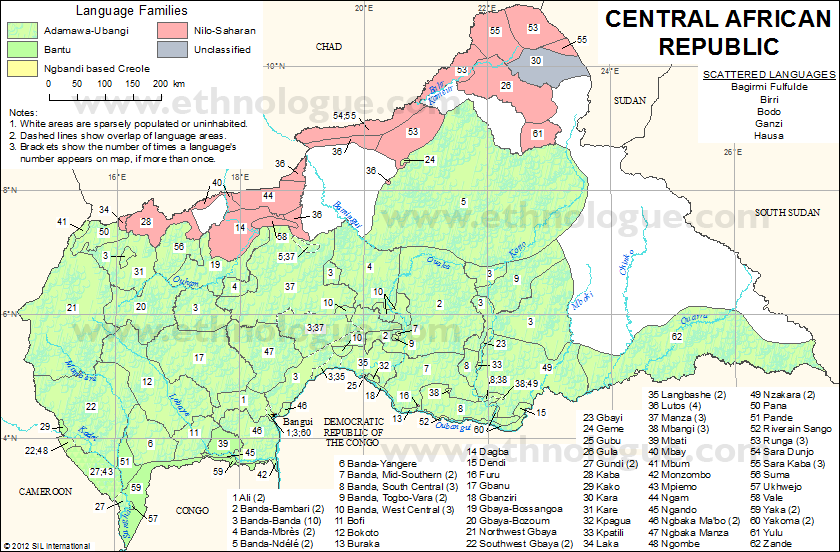
Central African Republic (CAR): Update. Six Chadian peacekeepers were killed on 25 December in Bangui, probably by Christian militias because the Chadians are Muslims.

On the 26th, assailants armed with heavy weapons, according to press reports, attempted to attack the presidential palace in Bangui, but were repulsed by loyal troops.

Some local experts conjectured that the attack was mounted by Christian militiamen who hoped to kill or overthrow the current president, Michel Djotodia – a Muslim and former rebel who overthrew Francois Bozize, the elected Christian president nine months ago.

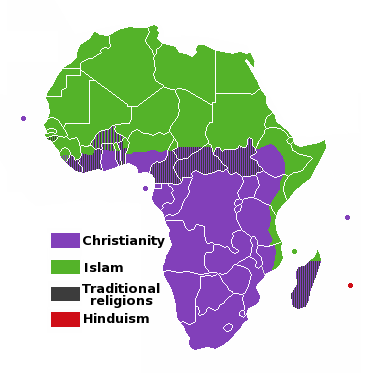
Comment: Most citizens of CAR are Christians. They are not fighting back against the Muslims who seized power by force last March under Djotodia's leadership. The African Union peacekeepers are either in the way or are targets because a large number of them are Muslims, such as the Chadians.

The UN has no idea how to deal with this. The Christians are taking back the capital from the Muslim Seleka rebels, led by Djotodia.

Today's events confirm the judgment that the presence of well-equipped ground forces mounting patrols will have no effect on the violence, and might be making it worse.

Click on Image to Enlarge

Phi Beta Iota: One can only speculate as to how much more effective the UN and the AU would be if they had a real intelligence architecture able to do what the Member states refuse to do — holistic analytics, including cultural and religious intelligence, at all four levels of analysis (strategic, operational, tactical, technical). CAR is on the fault line between Islam to the north and Christianity to the south.

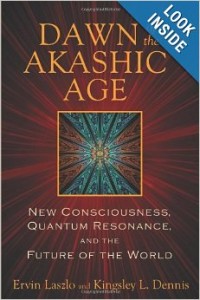
Review: Dawn of the Akshic Age – New Consciousness, Quantum Resonance, and the Future of the World

4 Star, Best Practices in Management, Change & Innovation, Complexity & Resilience, Consciousness & Social IQ, Cosmos & Destiny, Culture, Research, Environment (Solutions), Information Society, Intelligence (Wealth of Networks), Nature, Diet, Memetics, Design
0Shares
Amazon Page
Amazon Page

Ervin Laszlo and Kingsley L. Dennis et al.

4.0 out of 5 stars Superb Appetizer Book — a Potpourri of Genius — Not the Main Plate, December 26, 2013

Buy and read this book for a marvelous panoramic view of the latest thinking circling around the end of the top-down scarcity model that concentrates wealth, and the emergence — sooner than most might expect — of the distributed bottom-up local to global harmonization.

This is a hybrid book — the first two thirds are written by the co-authors (Laszlo and Dennis), while the last third is a collection of eleven very short essays, each generally provocative and each providing me with at least one insight, web site, or book that I was not aware of. The book ends with recommended readings in the following categories that are a also a summary of what the book strives to cover at a very high level:

Continue reading “Review: Dawn of the Akshic Age – New Consciousness, Quantum Resonance, and the Future of the World”

Chuck Spinney: Re-Assessing the Conflict in Syria and Egypt

04 Inter-State Conflict, 05 Civil War, 07 Other Atrocities, 08 Proliferation, 08 Wild Cards
0Shares
Chuck Spinney
Chuck Spinney

The War Continues

2013: Assessing the Conflict in Syria and Egypt

by RAMZY BAROUD

Counterpunch, DECEMBER 26, 2013

2013 has expectedly been a terrible year for several Arab nations. It has been terrible because the promise of greater freedoms and political reforms has been reversed, most violently in some instances, by taking a few countries down the path of anarchy and complete chaos. Syria and Egypt are two cases in point.

Syria has been hit the hardest. For months, the United Nations has maintained that over 100,000 people have been killed in the 33 months of conflict. More recently, the pro-opposition Syrian Observatory for Human Rights concluded that at least 125,835, of which more than third of them are civilians, have been killed.

The UN’s humanitarian agency (OCHA) says that millions of Syrians living in perpetual suffering are in need of aid, and this number will reach 9.3 million by the end of next year.

Read full article.