Swarm Management: People’s friends are better marketers toward those people than you, for the simple reason that they are those people’s friends, and you are not.
Swarmwise chapters – one chapter per month 1. Understanding The Swarm 2. Launching Your Swarm 3. Getting Your Swarm Organized: Herding Cats 4. Control The Vision, But Never The Message (this chapter)
5. Keep Everybody’s Eyes On Target, And Paint It Red Daily (Jun 1)
6. Screw Democracy, We’re On A Mission From God (July 1)
7. Surviving Growth Unlike Anything The MBAs Have Seen (Aug 1)
8. Using Social Dynamics To Their Potential (Sep 1)
9. Managing Oldmedia (Oct 1)
10. Beyond Success (Nov 1)The actual book is expected to be available by June 1, 2013.
Here is more proof of the demise of the American democracy, and the vassal status of the Congress as the non-geographical corporate states become the dominate powers of the age.
Worst Congress Money Can Buy BILL MOYERS and MICHAEL WINSHIP, Editor-in-Chief and Senior Fellow – Salon/ Moyers & Company
This is the bitter truth of the economic policies that have dominated the U.S., and the world since Reagan, through Republican and Democratic administrations. The Sequester alone, I believe, we will discover killed thousands of people.
We are beginning to see the rise of contractor militias operating in the U.S., as this report makes clear. It is an extension of the same thinking that privatized large segments of the Iraq War. The growing relationship between the company that was formerly Blackwater and Monsanto is another example. This is an extraordinarily dangerous trend.
Others are beginning to recognize the great geopolitical shift that I have been writing about for almost 15 years — the rise of the non-geographical corporate states Here is an example.
If you have been reading SR for a while you know my views on the Great Schism Trend, and my belief that it was only a matter of time before social progressives woke up to the benefits of States Rights and to letting the Theocratic Right, as it constantly claims it wants to, take the Red value states and go its own way. It is happening, as this essay makes obvious, and I believe we will hear more and more about this.
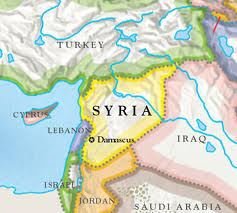
Lebanon/Hezbollah-Syria:Al Ahram reported on 30 April a televised speech by Hassan Nasrallah, the leader of Lebanese Hezbollah. He confirmed that Hezbollah fighters are aiding government troops in Syria.
“A large number of (Syrian rebels) were preparing to capture villages inhabited by Lebanese,” so it was “normal to offer every possible and necessary aid to help the Syrian army, popular committees (pro-government militia) and the Lebanese,” Hassan Nasrallah said in a televised speech.
He warned the Syrian opposition, “You will not be able to take Damascus by force and you will not be able to topple the regime militarily. This is a long battle. Syria has real friends in the region and in the world who will not allow Syria to fall into the hands of America or Israel.”
Comment: Nasrallah arrived in Tehran on Monday to participate in the World Summit of Ulama and Islamic Awakening. This is an Islamic scholars conference.
The timing of Nasrallah's speech suggests that it is a response to the discussion in the US about alleged Syrian use of chemical weapons as a red line for increased US intervention. It signals an escalation of the conflict and reconfirms that the Syrian fighting has become a regional war by proxy.
Al Arabiya reported that the bodies of 30 Hezbollah fighters were returned to Lebanon yesterday, bringing the total number of Hezbollah fighters reported killed to over 130.
1. A Cyber-Survivable Military
2. Redefining Information Operations
3. Command and Control Vulnerabilities to Communications Jamming
4. China's Internet: A Giant Cage
5. Cat and Mouse: How China Makes Sure Its Internet Abides By the Rules
6. Assessing The Effects – A Curse Disguised As A Blessing?
7. Shutting Down the Internet – Thou Shalt Not Kill
8. Internet Controls in Other Countries
9. Masters of the Cyber-Universe
10. The Great Firewall: The Art of Concealment
11. Electronic Warfare: The Ethereal Future of Battle
12. Why China Is Reading Your Email
13. Making Strategic Sense of Cyber Power: Why the Sky Is Not Falling
14. Six U.S. Air Force Cyber Tools Designated As ‘Weapons'
15. Mexican Social Network Manager Quits Post amid Threats from Drug Traffickers
16. U.S. Military Working to Integrate Cyber Weapons into Commanders' Arsenals
17. The Explosive Effects of Rumors in Syria and Insurgencies around the World
18. North Korea’s Threats, Campy Videos Drawing Internet Attention
19. Socialism and the Global Information War
20. Training the CAPOC Soldier
21. Combat on the Online Battlefield
22. New Cyber Rules Put Combat Decisions in Soldiers’ Hands
23. Cyber Warriors Association Points to Evolving Battlefield
24. Is Cyber War the New Cold War?
25. Air Force and Army Disclose Budget for Hacking Operations
26. Military Photographers Ready to Deploy Around the Globe
27. Air Force Academy Wins NSA Cyber Defense Title
28. How People in the Middle East Actually Use Social Media
29. New Electronic Warfare Tool Offers Innovative Approach
30. Jihadi Twitter activism – Introduction
31. SPAWAR Leadership on Information Warfare and the Growing Cyber Threat
32. Pentagon Paying China — Yes, China — To Carry Data
Ayn Rand's central paradigm is a dichotomy between those she calls makers and takers. The makers, in her opinion, are the industrialists. And the takers are people who favor any kind of government social program or anyone who relies on such a program.
But perhaps the most accurate paradigm for the 20th and 21st centuries should be the dichotomy between creators and destroyers. And I can't think of a better way to illustrate the dichotomy than by contrasting the Seva Foundation and it's charitable projects to the project of the Iraq War. Both are different versions of air campaigns. One heals and the other harms. One is enlightened and the other is an expression of a kind of blindness. One quite literally bestows sight and the other relies on blinding people to the truth, because as they say, truth is the first casualty of war. Seva restores sight to the blind. It's planes rain blessings from the sky. The Iraq War rained terror from the skies. Was it an act of terrorism? Does it really matter what we call it? It rained terror. That's the most important fact to remember.
The Iraq War cost $3 trillion. I don't know how much the projects of the Seva foundation have cost over the years, but they would be in the millions not the trillions, and not many millions at that. Imagine what Seva could have done with $3 trillion. And that's the point. If you imagine it then you can see what the world needs to do to bring about world peace. If the nations of the world would start spending money that way, wars would likely become obsolete; because there would be such a feeling of fellowship between the nations of the world that people would start transcending their fears, prejudices, and hatreds. The world would start resembling a paradise, at least when it comes to good will between human beings.
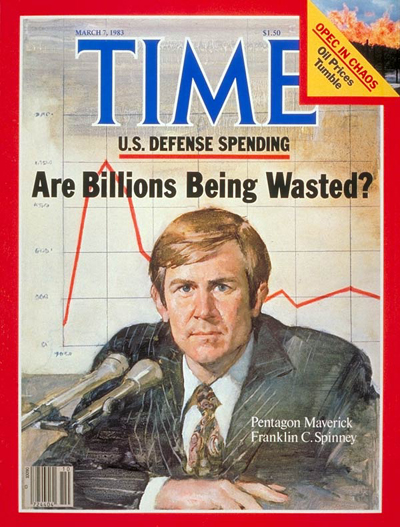
In the attached essay, my very good friend Mike Lofgren raises the question of whether defense spending is good for the economy. This is a current issue because the threat of defense budget reduction is being countered by arguments asserting that these reductions will push the economy into recession. More generally, the political addiction to defense spending has been a major contributor to our nation's economic decline and our political stagnation — i.e., what I have called Americas Defense Dependency, the subject of an essay I wrote last November for Counterpunch. Mike comes at these issues from a different albeit complimentary and equally important angle.
Readers interested in learning more about this important subject will find the work of the late Professor Seymour Melman of Columbia University to be particularly edifying. In his prescient book, Profits Without Production (Knopf, 1983), Melman explained how the growing militarization of our economy was one of the central causes of the decline in America’s manufacturing competitiveness. This decline started in the 1970s, but Melman showed how it grew out of seeds planted by the permanent military mobilization of a huge defense industry in the 1950s.
The 1960s comedy show Laugh-In included an occasional sketch in which co-host Dan Rowan played a comic general whose tag-line was “war is good for business!” In an ironic echo of that skit, an April 27 Washington Post story delivers the same message: “A steep slowdown in defense spending tied to the end of the wars in Iraq and Afghanistan is undercutting the country's economic recovery, new government data released Friday revealed.” An 11.5-percent annual drop in Pentagon spending resulted in slower growth in the gross domestic product (GDP) during the first quarter of 2013 than economists expected.
So did the dozen years of war, with all the deaths, destruction, and expense they entailed, have the perverse silver lining of being good for the economy? Most mainstream economists — who, like cynics, know the price of everything and the value of nothing — would answer in the affirmative.
Gross domestic product, which they tend to treat as a surrogate for economic well-being, is only a tote board of all spending that occurs in an economy. Statistics like GDP are arbitrary, subject to incomplete data, and can mislead us about underlying economic conditions. A dollar spent on a cancer cure has the same worth to the GDP as a dollar spent to bribe an Afghan drug lord. This convention can reach absurd lengths, such as massive hurricane damage possibly increasing the GDP: money must be spent just to get conditions back to the way they were, but it counts it as “growth.”
Based on my almost three decades on Capitol Hill, most of them involved in defense budgeting, I can say authoritatively that military spending evokes an almost mystical reverence among many members of Congress. A $325-billion defense program like the F-35, however technically flawed, typically engenders less floor debate than relatively miniscule domestic programs such as the Corporation for Public Broadcasting.
This post refers to some new and remarkable historical findings (at least for the English-speaking world), stemming from new translation to English from Arabic, that can put more pieces into the the puzzle of the apparently amicable relationship between Israel and Saudi Arabia. The first part of this post is not new, though useful in quoting for context
“The U.S. Department of Defense has released translations of a number of Iraqi intelligence documents dating from Saddam’s rule. One, a General Military Intelligence Directorate report from September 2002, entitled “The Emergence of Wahhabism and its Historical Roots”, shows the Iraqi government was aware of the nefarious purposes of the Wahhabis of Saudi Arabia, often known as Salafis, in serving Western interests to undermine Islam.The report relies heavily on the Memoirs of Mr. Hempher, which describe in detail how a British spy to the Middle East, in the middle of the eighteenth century, made contact with Adbul Wahhab, to create a subversive version of Islam, the notorious sect of Wahhabism, which became the founding cult of the Saudi regime. The movement was temporarily suppressed by the Ottomam armies in the middle of the nineteenth century. But with the assistance of the British [or more specifically, Lawrence of Arabia], the Wahhabis and their Saudi sponsors returned to power and founded their own state in 1932. Since then, the Saudis have collaborated closely with the Americans, to whom they owe their tremendous oil wealth, in funding various Islamic fundamentalist organizations and other American covert operations, particularly the “jihad” in Afghanistan. But the Saudis simulatenously use the immense wealth at their dispossal to disseminate this disruptive brand of Islam to various parts of the world, categorized by some of the largest propaganda campaign in history. Many who defend Wahhabism as a legitimate reform movement of Islam have tried to dismiss the Memoirs as a spurious fabrication. These include Bernard Haykel, Professor in Near Eastern Studies at Princeton University, who, without providing any evidence, presumes the Memoirs to have been created by Ayyub Sabri Pasha.”
But what is new is the claim that the Wahabis have directly Jewish roots (my emphasis):